Key takeaways:
- US Central Command said Monday’s strikes began at 4:45 p.m. ET and targeted Iran’s ability to attack civilians and commercial shipping in the Strait of Hormuz.
- The US Navy-led Joint Maritime Information Center said a blockade of Iranian ports, oil terminals and coastal areas would begin Tuesday night, while neutral transit to non-Iranian destinations would not be impeded.
- Trump demanded a 20% charge on cargo passing through the Strait of Hormuz, despite earlier US statements that international waterways cannot be subject to tolls or fees.
The United States launched a third consecutive night of strikes on Iran on Monday as President Donald Trump moved to reinstate a naval blockade of Iranian ports and demanded a 20% charge on cargo passing through the Strait of Hormuz, escalating a fight over one of the world’s most important shipping lanes.
US Central Command said the latest strikes began at 4:45 p.m. ET and targeted Iran’s ability to attack “innocent civilians and commercial shipping” in the strait. “These strikes will continue imposing a heavy cost on Iranian forces and degrade their ability to attack innocent civilians and commercial shipping in the strait of Hormuz,” the command said.
Trump had earlier told conservative radio host Hugh Hewitt: “We’re going to hit them very hard tonight and we’re going to hit them hard tomorrow – and there’s not a damn thing they can do about it.” He added: “They have nothing. They have nothing going, other than they have big mouths.”
The US Navy-led Joint Maritime Information Center said the blockade would begin Tuesday night and cover Iranian ports, oil terminals and coastal areas. “Any vessel suspected of entering or departing the blockaded area without authorisation is subject to interception, diversion and capture,” it said. “Noncompliant vessels may be legally compelled with force.” The center said neutral transit through the strait to or from non-Iranian destinations would not be impeded.
Al Jazeera reported that the center also said humanitarian shipments would be allowed after inspection, while ships suspected of helping Iran evade the blockade through ship-to-ship transfers could face boarding and noncompliant vessels could be disabled or destroyed.
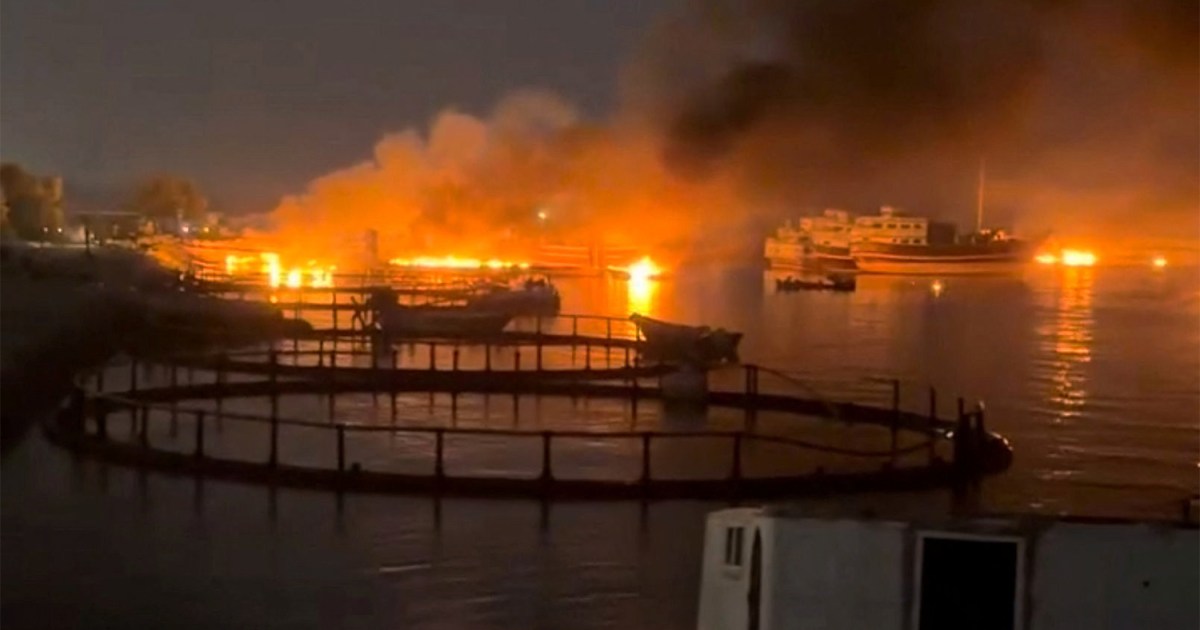
Iranian state television and semi-official news agencies reported explosions overnight along Iran’s southern coast, including Bandar Abbas, Kish and Qeshm islands, and Jam in Bushehr province, Al Jazeera reported. Fars news agency said a projectile hit western Bandar Abbas but caused no casualties, citing the regional governor’s office.
Iranian outlets also reported strikes in the strait. Tasnim news agency said Iranian forces struck several “violating” vessels and shot down a US-made drone near Bandar Abbas. The United Arab Emirates said two of its oil tankers were hit by Iranian cruise missiles in Omani waters in the Strait of Hormuz, killing one Indian crew member and wounding eight others, according to Al Jazeera.
The Islamic Revolutionary Guard Corps accused Washington of threatening global energy supplies. IRGC spokesperson Hossein Mohebi said the US had “seriously endangered the security of the world’s oil and gas supply and must be held accountable,” and said Tehran would “continue to exercise sovereignty over and management of the strait of Hormuz.” Iran’s foreign minister, Abbas Araghchi, said Tehran “has always been the guardian of the strait and will remain so forever.”
Trump said on Truth Social that the US should be known as the “guardian of the strait of Hormuz” and called for a 20% tariff on all cargoes shipped through the passage. In a Fox News phone interview, he said: “We’re going to keep the strait, and we’ll probably run it. We’ll become the guardian of the strait. Maybe we’ll call it the guardian angel of the strait. And we should be reimbursed for that.”
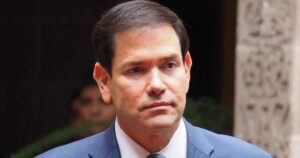
The proposal marks a shift from Washington’s previous position. Secretary of State Marco Rubio said last month: “No country is allowed to charge tolls or fees on an international waterway. That’s existing international law.” The International Maritime Organization said it was awaiting more details but added: “IMO stands firmly against charging fees for passage through straits used for international navigation. There is no legal basis through which to introduce mandatory tolls simply to transit through a strait.”
The fighting follows the near-total collapse of an interim ceasefire reached in June. Trump formally notified Congress on July 10 that fighting with Iran had resumed on July 7, invoking authority to keep US forces in combat for another 60 days without lawmakers’ approval, Al Jazeera reported.
Oil markets reacted sharply. Brent crude rose to about $81 a barrel Monday, with The Guardian reporting a 7.8% increase to $81.92 and Al Jazeera reporting a rise of more than 9%. Ship-tracking firm Kpler said crossings through the strait fell about 52% between July 10 and July 12 compared with the previous week, Al Jazeera reported.




Be First to Comment