Key takeaways:
- The UK plans to provide Ukraine with classified Storm Shadow missile blueprints so Kyiv can produce its own version of the British-French cruise missile.
- Storm Shadow missiles cost about £1 million each, have a range of about 560 kilometers and have already been used by Ukraine against Russian targets.
- Analysts said Ukraine may face major delays because the missiles rely on complex international supply chains and production could take months or years to scale up.
Britain is set to hand Ukraine classified production information for Storm Shadow cruise missiles, a move intended to help Kyiv build its own long-range weapons as it marks 35 years of independence from the Soviet Union and continues to face Russian missile and drone attacks.
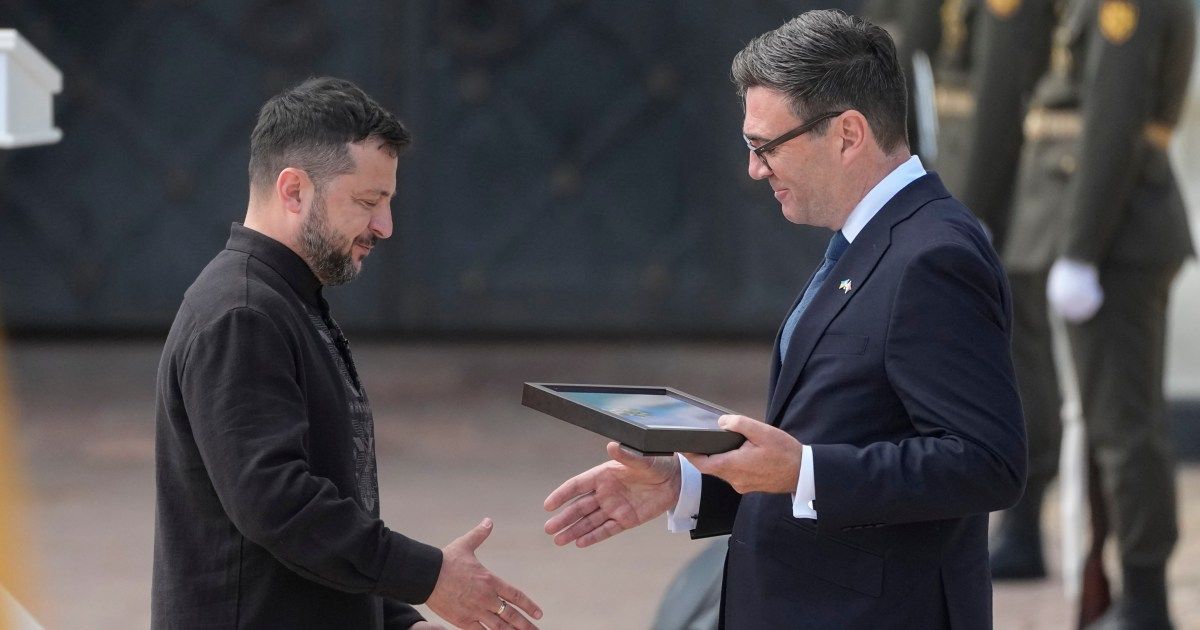
Prime Minister Andy Burnham announced the plan during a visit to Kyiv, his first foreign trip as UK prime minister, appearing alongside Ukrainian President Volodymyr Zelenskyy at an independence ceremony. Burnham described the war as “four and a half years of Russia’s full-scale invasion … aimed at crushing the independence we are here to celebrate.”
“But today and every day, you prove that they have failed,” he said.
The British decision follows a similar move by France and would allow Ukraine to produce a version of the British-French designed missile, known as SCALP in France. Britain and France have already supplied the missiles to Kyiv, and Ukraine has used them to strike military targets inside Russia and Russian-held territory.
Storm Shadow missiles, made by MBDA, were developed in the 1990s and cost about £1 million, or roughly $1 million, each. They have a range of about 560 kilometers, or 350 miles, and can hit targets 240 kilometers, or 150 miles, inside Russia, according to Al Jazeera. The missiles are designed for heavily defended targets and can operate at night and in all weather.
Ukraine’s General Staff said last year that Storm Shadows supplied by Britain had been used against Russian facilities, including a chemical plant and the Novoshakhtinsk oil refinery, Al Jazeera reported. This year, they were used to attack Russia’s Black Sea naval headquarters in Sevastopol, Crimea, the outlet reported.
The blueprint transfer is a significant political signal, showing that some European allies are willing to share sensitive weapons knowledge with Ukraine. But analysts cautioned that it is unlikely to deliver immediate battlefield results.
Douglas Barrie, senior fellow for military aerospace at the International Institute for Strategic Studies, told the BBC that the decision was “notable,” particularly as France and Ukraine work toward local assembly lines. “Any impact, however, will in part depend on how quickly Ukrainian assembled SCALP cruise missiles can be introduced into service,” he said.
“Given that Ukraine has already operated both Storm Shadow and SCALP, familiarity with the missile may help speed the overall process, but this will also be dependent on the extent and pace at which local assembly can be established,” Barrie added.
Ukraine may still struggle to source components for a missile built through complex global supply chains. The BBC reported that production could take months or possibly years, while Karan Vassil, a Eurasia analyst at Sibylline, told Al Jazeera that a new batch of cruise missiles of this complexity could take about two years from contract award to delivery. France and the UK hope to help Ukraine establish a production line by the end of the year, Al Jazeera reported.
Vassil said Storm Shadow/SCALP is “a highly sophisticated weapons system incorporating decades of Anglo-French research and development,” and that licensed production would give Ukraine access to knowledge and industrial processes that would otherwise take considerable time and money to reproduce. He also warned that production would likely depend on international supply chains and that missile factories inside Ukraine would be valuable targets for Russia.
Ukraine has sharply expanded its own arms industry since the start of the war, when its forces relied heavily on Soviet-era weapons. The BBC reported that Ukraine now produces 70% of its own weapons and is on track to build 10 million drones by the end of this year, including long-range drones capable of striking deeper into Russia than Storm Shadows.
Still, Ukraine continues to face urgent shortages in air defence. The BBC reported that Kyiv has nearly run out of US-made Patriot interceptors, the most effective weapon against Russian ballistic missiles, which cost about £3 million each. The United States plans to increase annual Patriot production from about 600 missiles to 2,000, but that will take several years.
Burnham is also expected to co-chair a meeting of the Coalition of the Willing, countries prepared to support Ukraine. The missile-sharing decision comes as European allies seek to bolster Kyiv while US backing remains uncertain, and as Russia increases production of ballistic missiles to about 100 a month, according to the BBC.












Be First to Comment