Key takeaways:
- Andy Burnham was confirmed as Labour leader on Friday and is expected to replace Keir Starmer as prime minister on Monday.
- Burnham pledged to put the cost of living crisis at the centre of government and promised a major shift of power away from Westminster and Whitehall.
- He said Labour would not try to “out-Reform Reform” and promised a broad-church cabinet that reflects different parts of the party.
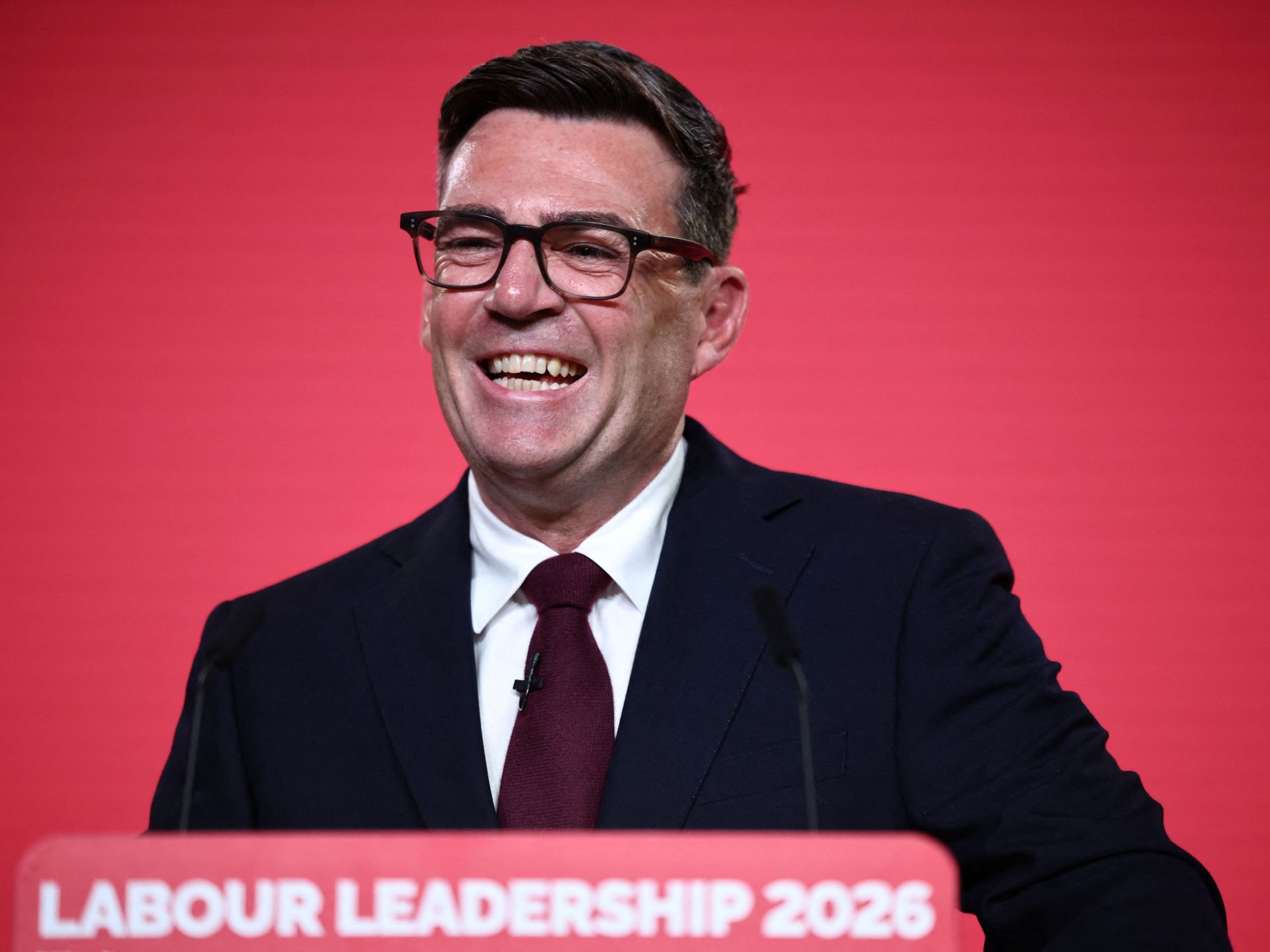
Andy Burnham promised to return hope to “forgotten places everywhere” after being confirmed as leader of Britain’s governing Labour Party, putting the former Manchester mayor on course to become prime minister on Monday.
Burnham, who replaces outgoing Labour leader and Prime Minister Keir Starmer, used his acceptance speech at a special party conference on Friday to set out ambitions that reach beyond a change of personnel in Downing Street. He pledged to unite Labour, confront the rise of Reform UK and shift power away from Westminster in what he described as a fundamental break with decades of economic policy.
“We are united, and we put the power that comes from that unity at the service of people and places who have been waiting too long for politics to let them hope again,” Burnham told Labour MPs and party officials, according to AFP. “And that’s what we’re going to do, everybody, we’re going to give them hope back.”
Burnham paid tribute to Starmer, whom he is set to succeed after Labour MPs moved behind him amid criticism from allies and opponents that Starmer lacked leadership. Starmer’s support had fallen during a difficult period marked by wars in the Middle East and Ukraine, a persistent cost of living crisis and the growing poll strength of Reform UK and other far-right populists, Al Jazeera reported.
Burnham put the challenge from Reform near the top of his agenda. “We won’t try to out-Green the Greens or out-Reform Reform or do what we’ve done in the past, wearing too many Tory clothes,” he said. “From here we do it differently. We win by being us boldly, confidently, authentically us – Labour.”
He also sought to address Labour’s internal divisions, promising a “broad church” cabinet and a political culture in which “everyone is valued, seen and listened to.” He said front-bench appointments would reflect “contribution, experience and commitment.”
The BBC reported that Burnham told journalists before entering the hall he felt “good… ready,” but said even some of his strongest supporters remain unsure how he will deliver on the scale of change he has promised. In his speech, Burnham vowed to banish factionalism from Labour and said Britain had taken a wrong turn in the 1980s, followed by “four decades of neoliberalism” that damaged working-class communities in cities, towns, rural areas and coastal areas.
Reversing that course, he said, would amount to “the most significant change moment in our politics for 40 years.” The BBC noted that the argument amounted to criticism not only of Thatcherism but also of the New Labour governments in which Burnham served.
Burnham said the cost of living crisis would be “front and centre of government” and argued that Britain had given up too much control over key sectors including housing, energy and water. He also described himself as a “pro-business” prime minister.
A central part of his programme is decentralisation. Drawing on his record as mayor of Greater Manchester, where he challenged central government control while developing integrated local transport and housing systems, Burnham promised the “biggest rebalancing” in modern British history. “We will take power back from Westminster and Whitehall and give it to the place where you live,” he said.
The BBC reported that Burnham has previously proposed relocating part of No 10 Downing Street to Manchester, an idea referred to as “No 10 North,” but questions remain about how it would operate alongside the Treasury. Burnham also said he had not yet decided who would hold the most senior jobs in his government, including chancellor, a point the BBC said some Labour MPs may see as a sign of indecision.
Burnham is expected to speak outside No 10 on Monday, when he formally takes office and begins turning his promises into a governing programme.



Be First to Comment