Key takeaways:
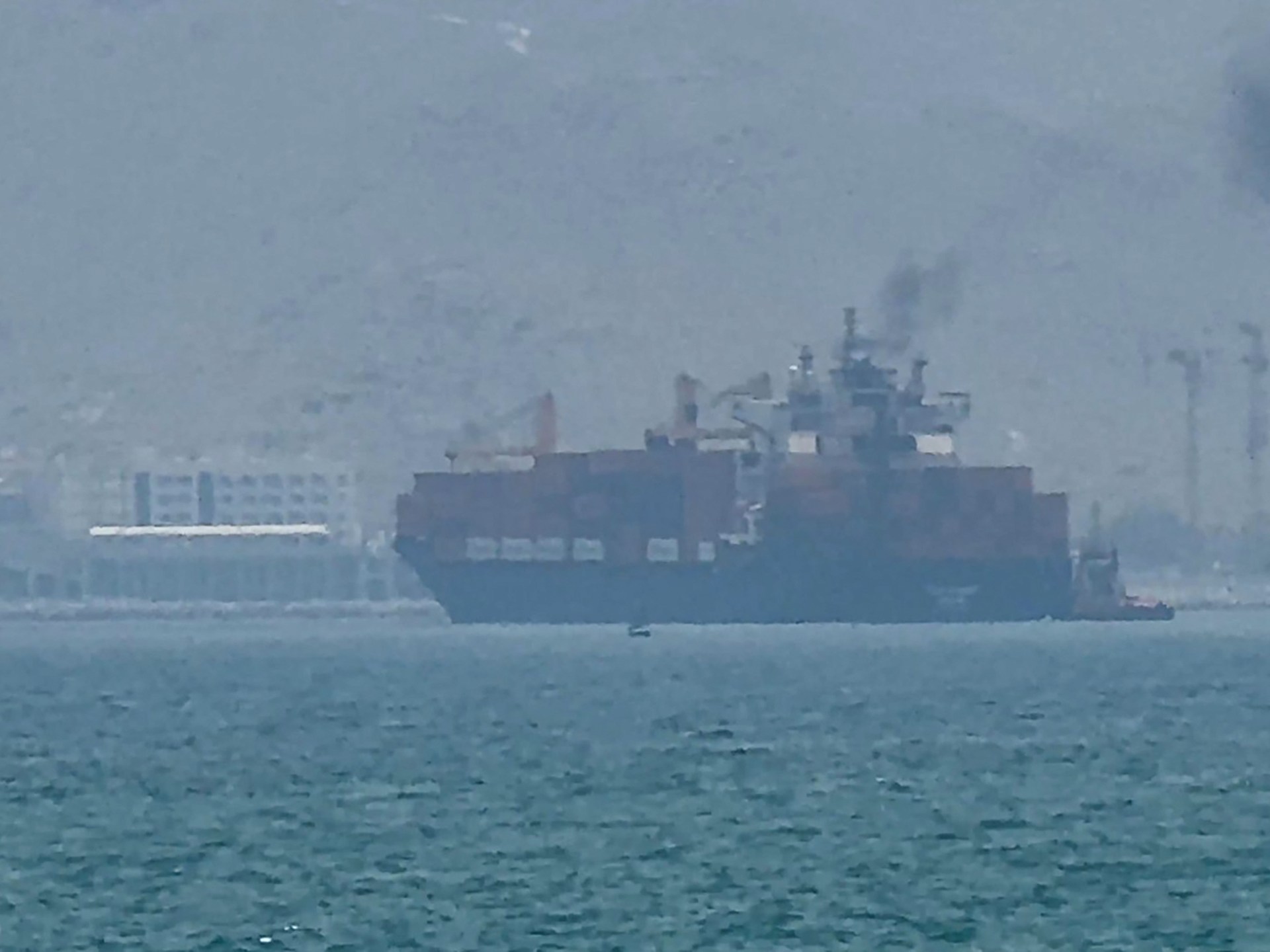
- Trump said the U.S. would reinstate a blockade linked to Iran and charge a 20% fee on all cargo shipped through the Strait of Hormuz.
- Lloyd’s List estimated the fee would cost about $17 million for a fully loaded large natural gas carrier, while a RUSI Europe researcher said a large crude carrier could face a $24 million charge at $60 oil.
- The International Maritime Organization, Hapag-Lloyd and Lloyd’s List said mandatory tolls for passage through an international strait have no legal basis.
President Donald Trump’s plan to charge a 20% fee on cargo moving through the Strait of Hormuz would add millions of dollars to some shipments and could undermine international maritime law, shipping experts, industry groups and the United Nations shipping agency said.
Trump said Monday that the United States would reinstate its naval blockade of Iranian ports and associated vessels and become the “guardian” of the Strait of Hormuz, a narrow waterway used by major energy producers in the Persian Gulf. He said the U.S. would be “reimbursed” for security costs by imposing a 20% charge on all cargo shipped through the passage.
“The U.S.A. will be, from this point forward, known as ‘THE GUARDIAN OF THE HORMUZ STRAIT’,” Trump wrote on Truth Social, adding that the U.S. would be repaid “for any and all costs necessary to do the job of providing safety and security to this very volatile section of the World.” Al Jazeera reported that the U.S. Navy-led Joint Maritime Information Center said the blockade would begin at 20:00 GMT on Tuesday.
The financial impact could be steep. Lloyd’s List estimated that a 20% fee would equal about $17 million for a fully loaded large natural gas carrier. At Brent crude prices near $80 a barrel, about $16 per barrel “will go to Trump,” Amena Bakr, head of Middle East and OPEC+ at Kpler, wrote Monday. Even if Brent fell to $60 a barrel, the charge for a fully laden very large crude carrier carrying about 2 million barrels would be $24 million per shipment, Petras Katinas, a research fellow at the RUSI Europe think tank, told CBS News.
Katinas warned the proposal would be “opening a very dangerous Pandora’s Box” because other countries could decide to impose tolls elsewhere. “So, we are totally undermining international maritime law, which is already in a fragile situation,” he said.
The International Maritime Organization said it was “firmly against charging fees for passage through straits used for international navigation.” The U.N. agency said, “There is no legal basis through which to introduce mandatory tolls simply to transit through a strait.” Its secretary-general, Arsenio Dominguez, told Al Jazeera in April that “countries do not have the right to introduce tolls or payments or charges on these straits.”
Shipping interests made similar arguments. “Whether the going rate is $200 or $20m, there is no legal basis for charging vessels to exercise their right of transit passage through an international strait,” Lloyd’s List editor Richard Meade wrote. Hapag-Lloyd told CBS News it would be “fundamentally wrong to charge tolls for passage through international waters,” distinguishing Hormuz from the Suez and Panama canals, where tolls reflect infrastructure investments.
Secretary of State Marco Rubio had made the same legal point last month when responding to the possibility of Iranian fees. “No country is allowed to charge tolls or fees on an international waterway,” he said. He also warned at a Gulf Cooperation Council meeting in Bahrain on June 25 that allowing such charges could spread “throughout the world like a contagion.”
Brazilian President Luiz Inacio Lula da Silva described Trump’s plan as “piracy,” Al Jazeera reported. “For every ship, the oil owner must pay him 20 per cent,” Lula said. “This used to be considered piracy.”
Andreas Krieg, a senior lecturer at King’s College London, told Al Jazeera the proposal “looks much more like an improvised political remark than a developed policy” and said Washington has “no legal mechanism to impose charges on international shipping through the strait, nor does it physically control the waterway.”
The Strait of Hormuz was open to commercial traffic before the U.S. and Israel launched their joint war with Iran on Feb. 28, CBS News reported. Iran responded by attacking ships and Gulf states, deterring many shippers. About 20% of the world’s oil and natural gas shipments used the strait before the war began. Oil prices rose to about $87 a barrel Tuesday after surging almost 10% Monday following Trump’s announcement.
Iranian Foreign Minister Abbas Araghchi mocked the 20% figure while endorsing the idea of compensation for security. “POTUS is absolutely right,” he wrote. “Whoever provides secure and safe passage of commercial vessels through the Strait of Hormuz should be compensated for this service. Iran has always been the GUARDIAN of the Strait and will remain so FOREVER. 20% is of course too much. We will be fair.”






Be First to Comment