Key takeaways:
- U.S. Central Command said American forces are no longer blocking vessels traveling to or from Iranian ports and coastal areas.
- Iran’s Supreme National Security Council said commercial vessels may transit the Strait of Hormuz without passage fees for 60 days if they follow Iranian routes and schedules.
- The memorandum gives negotiators up to 60 days to address sanctions relief, Iran’s enriched material, its nuclear program and a proposed $300 billion reconstruction fund.
U.S. forces have lifted their blockade on ships entering and leaving Iranian ports, while Iran has suspended transit charges for commercial vessels in the Strait of Hormuz for 60 days, launching a new phase of negotiations aimed at turning a ceasefire into a final agreement.
U.S. Central Command announced Thursday that American forces were no longer impeding vessels traveling to or from Iranian ports and coastal areas in the Gulf and Gulf of Oman. The move is one of the conditions in a memorandum of understanding signed this week by U.S. President Donald Trump and Iranian President Masoud Pezeshkian after a ceasefire intended to end the conflict that began after U.S. and Israeli attacks against Iran on Feb. 28, Al Jazeera reported.
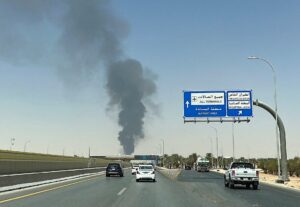
Iran, in turn, has committed to allowing oil tankers and commercial vessels to move through the Strait of Hormuz, a critical waterway where roughly 20% of the world’s oil transited before the war began. Iran’s Supreme National Security Council said commercial ships would not be charged passage fees for 60 days, though vessels must submit requests to Iranian maritime authorities and follow designated routes and schedules because of safety concerns and navigational hazards.
The agreement says Iran will allow commercial vessels to transit the strait “with no charge for 60 days only,” after which “future administration and maritime services” will be determined by Iran, Oman and other Persian Gulf states. NPR reported that Iranian officials have suggested they may later impose “service fees” on ships, a step industry analysts describe as legally questionable on an international waterway.
It remains unclear when large numbers of ships will resume sailing through the strait. NPR reported that fear of Iranian-placed mines remains a concern as the United States and other countries work to clear them. Iranian oil exports, now free of U.S. sanctions under the agreement, are also expected to move through the strait. CENTCOM said the U.S. Navy remains in the area to ensure the ceasefire terms are followed.
Vice President JD Vance said Thursday that the 60-day negotiating period had formally begun and defended the initial agreement at a White House briefing. He said the United States holds “all the cards” and argued Iran would not significantly benefit until it can “verify for us that they are changing their behavior.”
He rejected the idea that lifting the blockade and allowing Iranian oil to flow amounted to a new concession. “They were selling oil for many, many years, well before we ever put the blockade,” Vance said. “We imposed that blockade. They stopped selling oil, and now we’ve lifted the blockade in order to promote the free flow of energy across — across the world.”
Iran’s supreme leader, Ayatollah Mojtaba Khamenei, said in a written statement carried by Iranian state media that he initially had “a different opinion” on the memorandum but approved it after Pezeshkian and other officials pledged to protect “the rights of the Iranian nation and the resistance front” and accepted responsibility for the deal. He warned that Tehran would not accept further demands from Washington. “If the American side wants to be greedy, they [Iran’s leadership] will not accept it,” he said.
Khamenei also endorsed direct talks, saying, “It is obvious that the face-to-face negotiations that will be held in the future will not mean accepting the enemy’s opinion.”
The next round of talks is expected in Switzerland, though Iran’s semi-official Tasnim news agency reported that Tehran had not made a final decision on sending a delegation. Switzerland’s Federal Department of Foreign Affairs said the talks were expected to proceed as planned. Vance is leading the U.S. negotiations and is expected to travel to Switzerland as early as this weekend, NPR reported.
The 14-point memorandum leaves major disputes unresolved, including sanctions relief, Iran’s stockpiled enriched material and the future of its nuclear program. Rafael Mariano Grossi, director general of the International Atomic Energy Agency, welcomed the memorandum and offered help with verification. “Now the technical work starts,” he said.
The document also says the ceasefire extends to Lebanon, though Israel is not a party to the agreement. Israeli Prime Minister Benjamin Netanyahu on Thursday ruled out withdrawing Israeli troops from southern Lebanon for the foreseeable future. Trump, in a social media post, said the United States expects “a complete ceasefire on all fronts,” including Lebanon, Hezbollah and Israel.
The memorandum also includes plans for a $300 billion fund “for the reconstruction and economic development of the Islamic Republic of Iran” in coordination with “regional partners,” with details to be worked out within 60 days.









Be First to Comment