Key takeaways:
- Ukrainian President Volodymyr Zelenskyy joined G7 talks in Evian-les-Bains after Russian strikes killed 11 people in Ukraine’s largest cities.
- Trump said a formal U.S.-Iran agreement is expected Friday in Geneva and that the Strait of Hormuz would be “completely open” that day.
- France and the United Kingdom are backing a possible maritime mission to help restore security in the Strait of Hormuz.
G7 leaders opened a full day of summit talks in France on Tuesday with two wars at the center of the agenda: a preliminary U.S.-Iran agreement aimed at ending a 3 1/2-month conflict in the Middle East and renewed efforts to halt Russia’s war in Ukraine.
Ukrainian President Volodymyr Zelenskyy joined the gathering in Evian-les-Bains at the invitation of French President Emmanuel Macron, who is hosting the summit. The talks began hours after Russia fired hundreds of drones and dozens of missiles at Ukraine’s largest cities, killing 11 people and setting fire to a religious landmark.
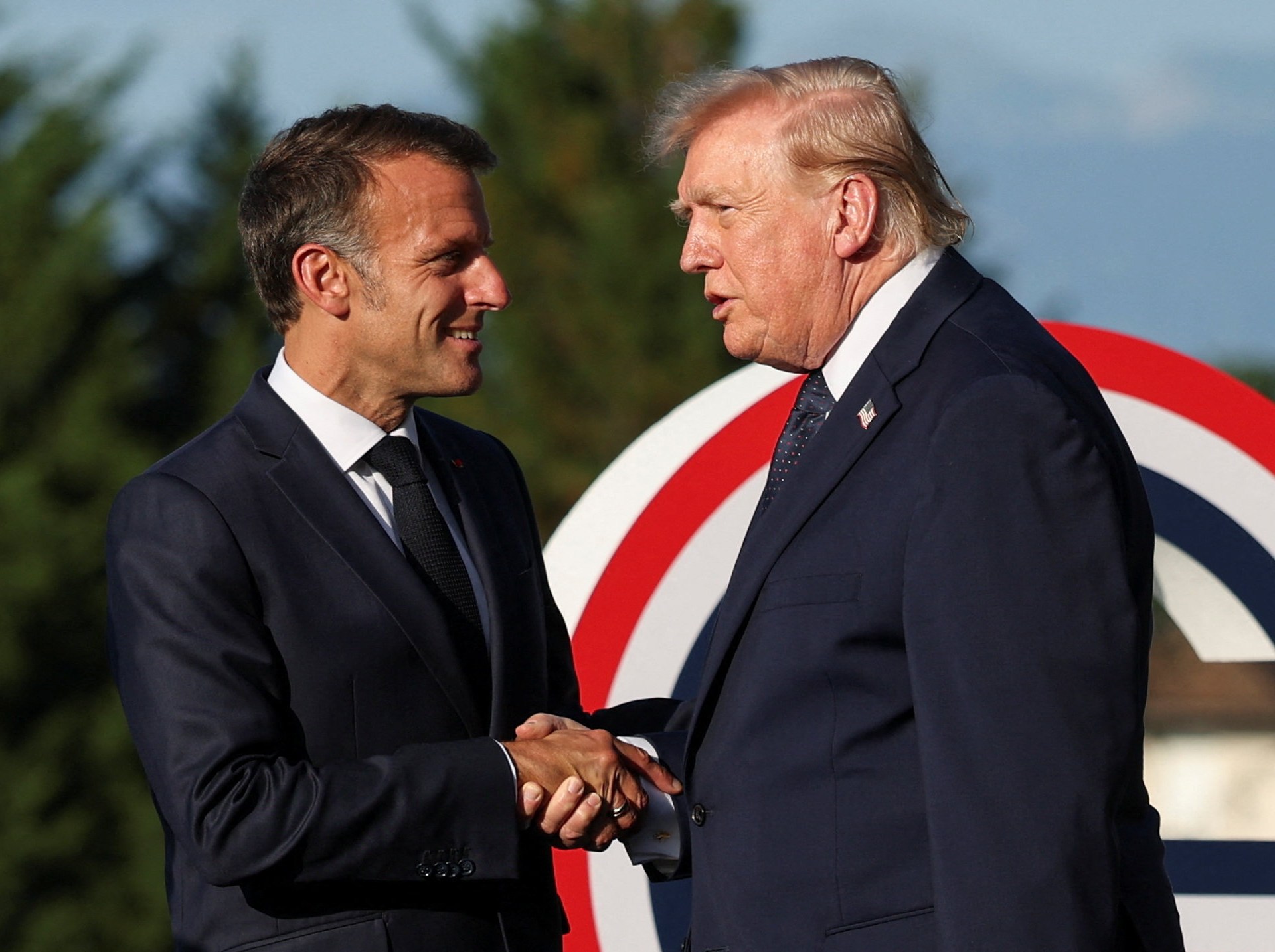
U.S. President Donald Trump said he had spoken Sunday with both Zelenskyy and Russian President Vladimir Putin. “Now that this is finished, we’re going to be focusing on that,” Trump said Monday during a meeting with Macron, referring to the Iran conflict. He later said he thought both Zelenskyy and Putin were “open to do something about the war.”
Macron said he would press Trump to continue supporting Ukraine and increase pressure on Moscow. “The right negotiation is one in which Ukraine and Russia are at the table, but with Europeans and Americans present as well,” Macron said on French television.
European leaders have signaled they want to convince Trump that earlier U.S. proposals to end the Russia-Ukraine war were too favorable to Moscow. Diplomats told Reuters that European nations also want to show they are willing to engage in talks with Putin while tightening sanctions on Russia and increasing military support for Ukraine, arguing that Moscow, not Kyiv, is blocking progress.
Zelenskyy on Monday offered to meet Putin at the G7 summit. Al Jazeera reported that Putin rejected a similar offer earlier this month, saying he saw “no point” in meeting unless a deal was ready.
European Commission President Ursula von der Leyen said Tuesday that Ukraine was “holding the front line and even partially regaining territory.” She added: “Ukraine has developed the capability to strike strategic targets deep inside Russia. And Ukraine has become a world-leading producer of cutting-edge military equipment.” Russia, she said, was under pressure from sanctions: “Putin’s war economy has never been as weak.”
Ukraine on Monday formally began European Union membership negotiations, a process expected to require years of political reforms while the country continues fighting Russia’s invasion. Ukraine views EU membership as a security guarantee for the future, though NATO membership remains its preferred guarantee. The Trump administration has said Ukraine cannot join NATO, and others have been wary of admitting the country while the war continues.
The Middle East dominated another part of Tuesday’s agenda. Macron said a working lunch would focus on reopening the Strait of Hormuz, including a possible Franco-British-led maritime mission and alternative energy routes that bypass the waterway.
Trump has said the strait would be “completely open” on Friday, when a formal agreement with Iran is expected to be signed in Geneva. Al Jazeera reported that the agreement, digitally signed Monday, is expected to open a 60-day window for complex negotiations on issues including Iran’s highly enriched uranium and sanctions relief.
“The Iran deal will bring a lot of success,” Trump said after arriving in Evian-les-Bains. He also said oil prices were falling and stocks were rising.
Before the summit, the leaders of France, Germany, Italy and the United Kingdom issued a joint statement, also signed by Canada, congratulating the United States, Iran and mediators on what they called a “diplomatic breakthrough.” They said detailed negotiations must begin and the deal must be implemented quickly so tanker traffic can resume through the Strait of Hormuz.
Macron said France and other Western partners were “ready to take action very quickly” to help reopen the strait peacefully. Trump downplayed the need for a large international military deployment, saying, “I don’t think we’re gonna need much help,” though he added that “a ship or two” from several countries might be useful.
The G7 includes France, the United States, Canada, Germany, Italy, Japan and the United Kingdom, with the European Union also taking part. Leaders from Egypt, Qatar and the United Arab Emirates were expected to join Tuesday’s Middle East discussions, while Brazil, India, Kenya and South Korea were invited to participate in some sessions as partner countries.




Be First to Comment