Key takeaways:
- Princess Bajrakitiyabha died Thursday evening at King Chulalongkorn Memorial Hospital in Bangkok after collapsing in December 2022.
- She was a lawyer, former Thai ambassador to Austria and U.N.-linked advocate for criminal justice reform, especially for women prisoners.
- Her death leaves Thailand’s royal succession unresolved, with King Vajiralongkorn having not named an heir.
Thailand’s Princess Bajrakitiyabha Mahidol, a lawyer, former diplomat and the eldest child of King Maha Vajiralongkorn, has died at 47 after more than three years in hospital, the Bureau of the Royal Household announced.
The palace said she died at 7:48 p.m. Thursday at King Chulalongkorn Memorial Hospital in Bangkok, where she had been treated since she collapsed in December 2022. “The medical team provided the closest and most intensive care possible, but her condition continued to decline progressively,” the royal household said in a statement Friday, according to the BBC.
CBS News reported that the princess had fallen unconscious due to illness and had been cared for at the hospital for three years. The BBC reported she had been in a coma. Palace statements cited by the outlets said doctors attributed her collapse to a mycoplasma infection; the BBC reported it caused a severely irregular heartbeat, while CBS News reported the palace described it as a bacterial infection usually associated with pneumonia. In May, the royal household said her condition had deteriorated and medical devices and medications were supporting her lung and kidney functions, CBS News reported, citing AFP.
Prime Minister Anutin Charnvirakul called her death a national loss in a televised address. “This loss is not merely bad news announced to the people, but an immeasurable grief in the hearts of the entire nation,” he said. He described the princess as “a pride of Thailand” and said “her commitment to building a society of kindness, justice, and equality, will forever remain as a moral legacy for the nation, a guiding light for generations of Thais.”
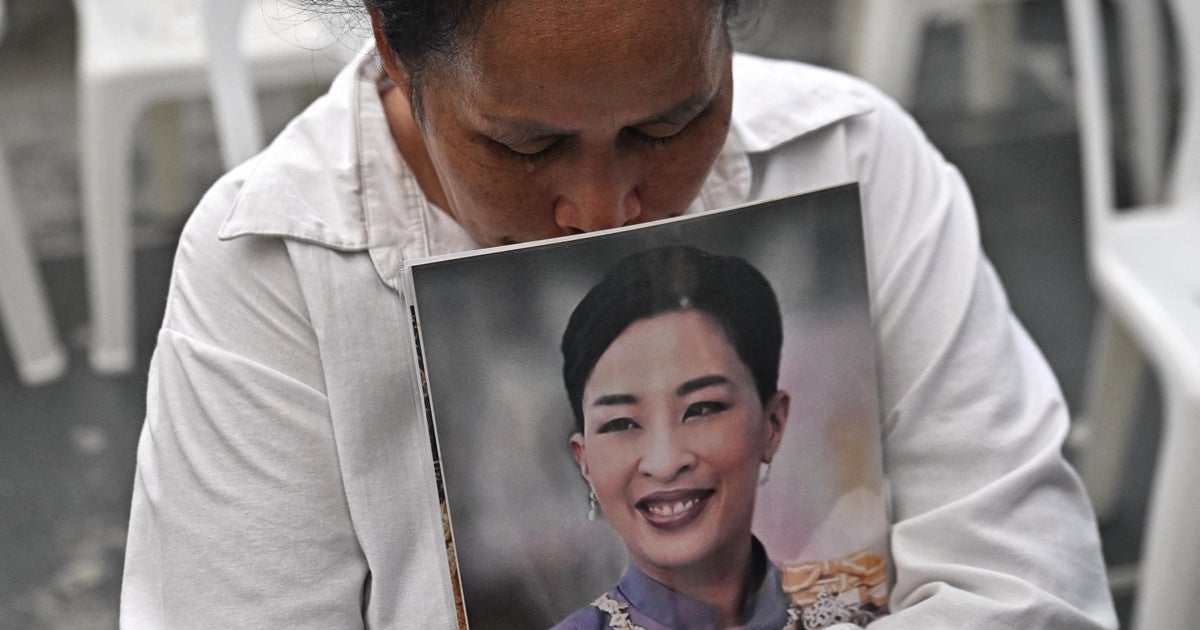
The royal household said she will lie in state at the Grand Palace in Bangkok and that her funeral will be held “with the highest honors according to royal tradition,” according to AFP. At King Chulalongkorn Memorial Hospital, a small group of mourners gathered, many holding framed or laminated photographs of the princess. Pattamaporn Kaewkityakorn said she had arrived Thursday and spent the night there to show support, not knowing the announcement would come the next morning. “I know she was sick, but I wished there were a miracle,” she said. “I was saddened and shocked.”
Born Dec. 7, 1978, to Vajiralongkorn, then crown prince, and Princess Soamsawali, Bajrakitiyabha was also known formally as Bajrakitiyabha Narendira Debyavati. She studied law at Thammasat University and earned a master’s degree in law from Cornell University in 2002, followed by a doctorate there in 2005 with a dissertation on the rights of the accused.
She worked briefly at Thailand’s mission to the United Nations in New York before returning home as a public prosecutor. From 2012 to 2014, she served as Thailand’s ambassador to Austria, where she built ties with the U.N. Office on Drugs and Crime. She later became a UNODC goodwill ambassador and, according to the BBC, the agency’s Ambassador for the Rule of Law in Southeast Asia.
Bajrakitiyabha was known for criminal justice reform work, especially efforts focused on women in prison. Her Kamlangjai, or “Inspire,” project helped rehabilitate incarcerated Thai women before their release. She also advocated better living conditions for women prisoners and efforts to combat violence against women. Her work contributed to the U.N. General Assembly’s adoption of the “Bangkok Rules” on the treatment of female prisoners.
“Society cannot grow if there is instability and injustice,” she said in a 2013 interview with The Associated Press. “Without the rule of law, without a good justice system, it’s always chaos. I think the rule of law is a very important pillar to development, to economic growth, and of course to human rights.”
The princess was also a fitness enthusiast who took part in long-distance runs, the BBC reported. In 2021, King Vajiralongkorn made her a chief of staff in his private bodyguard, with the rank of general.
Her death comes amid uncertainty over Thailand’s royal succession. King Vajiralongkorn, 73, has not named an heir. Prince Dipangkorn Rasmijoti, the king’s youngest child, is widely regarded as the presumptive heir because sons take precedence in Thailand’s line of succession, though the BBC reported that a 1974 constitutional amendment allows a woman to take the throne. Bajrakitiyabha’s public service and her father’s apparent trust in her had fueled speculation that she could play a major future role, possibly as queen or regent.
She is survived by her parents and siblings.










Be First to Comment