Key takeaways:
- U.S. Ambassador Mike Waltz said Trump paused attacks on Iran to give talks “a little bit of room,” while maintaining that all options remain on the table.
- Iran said it halted retaliatory operations, but warned the conflict would widen if U.S. attacks continue.
- U.S. Central Command said its naval blockade of Iran remains in effect, while Iranian media reported warning shots at six vessels and a tanker explosion after a mine strike.
The United States and Iran held fire for a second straight day Sunday, a sudden break in nearly two weeks of nightly attacks that officials said was meant to give diplomacy room to work.
U.S. Ambassador to the United Nations Mike Waltz said President Donald Trump had paused attacks on Iran to allow talks more time. Speaking to Fox News, Waltz said Trump was “giving talks some space, he’s giving it a little bit of room.” He said negotiators had been engaged “at every level” in recent weeks, and especially in recent days.
Waltz stopped short of saying Trump had ruled out further escalation. Asked on NBC whether the president had decided against expanding the conflict for now, he said: “I wouldn’t go that far at all. The president is keeping all options on the table.”
Iran also said it had halted attacks in the Gulf. “Our strategy has essentially been retaliatory. We have also halted our retaliatory operations,” Iranian army spokesman Mohammad Akraminia said, according to AFP. He warned, however, that the conflict would widen if the United States continued its attacks.
The pause follows renewed fighting that effectively unraveled a ceasefire struck in June. Under a memorandum of understanding signed that month, Iran and the United States agreed to halt military operations, reopen the Strait of Hormuz and seek a deal to end the war within 60 days. But after Iranian forces attacked tankers in the strait on July 13, the United States resumed airstrikes and reinstated its naval blockade on Iranian ports. Iran retaliated with attacks on U.S. military facilities and bases across the Middle East, killing four American soldiers. U.S. strikes have since killed dozens of people, according to Iran’s health ministry.
Diplomatic efforts have centered in part on Oman. CBS reported, citing two regional sources, that the U.S. decision to pause bombing was made because of the arrival of an Omani delegation in Tehran. Iranian Foreign Ministry spokesman Esmaeil Baghaei said Iran and Oman held several rounds of technical talks Friday and Saturday on management of the Strait of Hormuz. He said the talks about marine traffic were “useful and progress was made,” and that “technical and political consultations” were continuing.
Al Jazeera, citing Turkiye’s Anadolu news agency, reported that Pakistani and Qatari mediators had intensified communications with Washington and Tehran after both sides responded to a de-escalation formula.
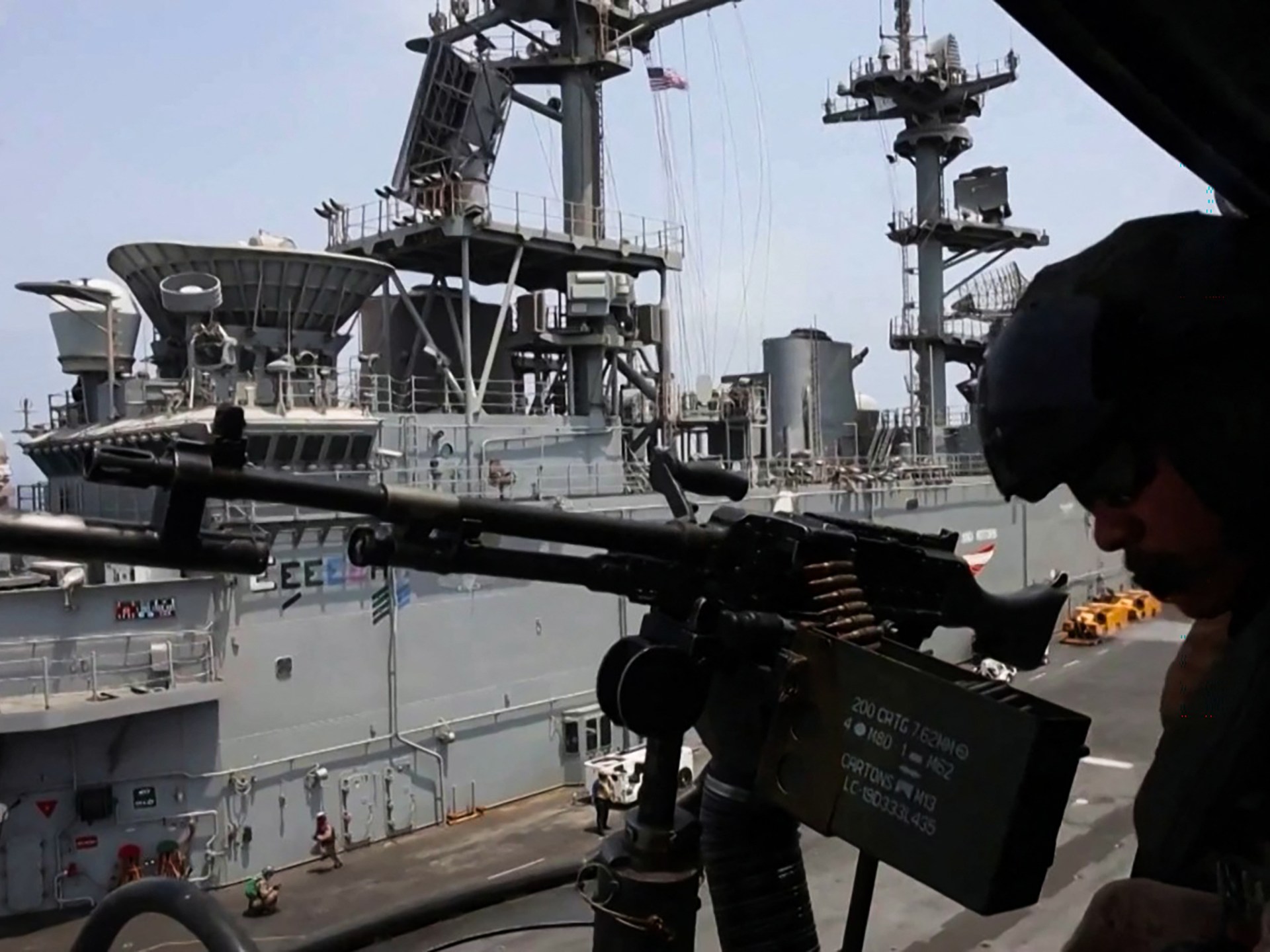
The Strait of Hormuz remains a major flashpoint. U.S. Central Command said Sunday that its naval blockade of Iran “remains in full effect,” adding that as of Saturday it had redirected 12 commercial vessels, disabled two that did not comply with directions and boarded two “to ensure total compliance.” Iranian media reported that the Revolutionary Guard Corps stopped six vessels from transiting the strait over the previous 24 hours by firing warning shots. Tasnim News Agency reported that an oil tanker exploded after hitting a mine after leaving an Iranian-approved route.
Waltz rejected a New York Times report that administration officials had warned expanded hostilities could dangerously drain a diminished U.S. stockpile of missile interceptors and other air defense munitions. “The US military… has everything that it needs to conduct this campaign as effectively as it needs to be,” he said.
Trump had not spoken publicly on the latest developments as of Sunday evening, but the BBC reported that he posted computer-generated images on Truth Social depicting U.S. military planes bombing Iranian ships and Kharg Island.
In Britain, Defence Secretary Wes Streeting said he would meet U.S. Defense Secretary Pete Hegseth in the coming week to discuss the strait. “When it comes to securing maritime freedom and free commercial shipping in the Strait of Hormuz, that’s where we are absolutely aligned,” Streeting told the BBC.
Oil prices hit $100 a barrel earlier in the week for the first time since May amid fears over global energy supplies. A CBS/YouGov poll found 57% of Americans frustrated about the conflict and 19% optimistic. Trump is set to meet Israeli Prime Minister Benjamin Netanyahu at the White House on Tuesday.








Be First to Comment