Key takeaways:
- The 1st U.S. Circuit Court of Appeals refused to lift an injunction blocking Trump’s mail-in voting order in 23 states that sued.
- Trump’s March order sought to create lists of eligible voters and restrict Postal Service delivery of mail ballots to people on approved lists.
- The appeals court rejected the Justice Department’s argument that the lawsuit was premature because agencies had not finalized implementation policies.
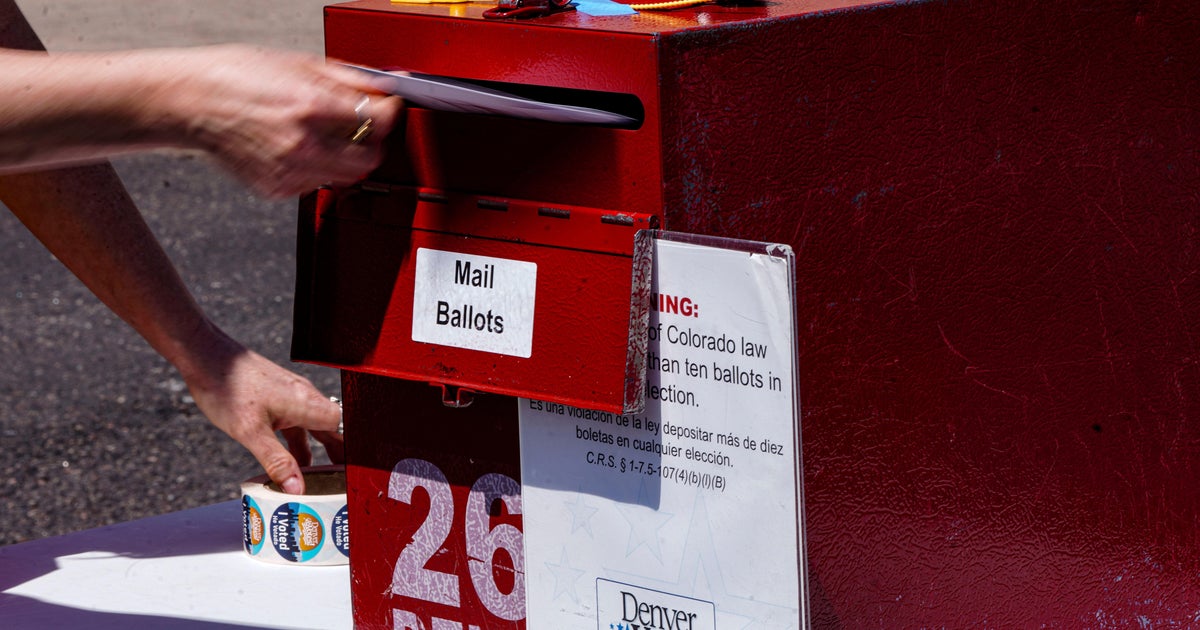
A federal appeals court has kept in place a ruling that blocks President Donald Trump’s administration from enforcing key parts of his executive order on mail-in voting in 23 states, rejecting a bid to revive the policy before elections in November that will decide control of Congress.
The Boston-based 1st U.S. Circuit Court of Appeals ruled Saturday that the administration could not move ahead, for now, with provisions aimed at creating a federal list of eligible voters and limiting U.S. Postal Service delivery of mail ballots to people on approved lists. The decision leaves intact a June 25 injunction issued by U.S. District Judge Indira Talwani in Boston.
The order applies only to the states that sued. Democratic officials in 23 states and the District of Columbia challenged Trump’s March executive order in federal court, arguing that the Constitution gives states and Congress — not the president — authority to set election rules.
Trump said the order was designed to prevent noncitizens from voting. “The cheating on mail-in voting is legendary,” he said in the Oval Office before signing it.
State election officials said the measures could be abused and would create confusion as election deadlines approached.
The appeals court, in a 2-1 ruling, rejected the Justice Department’s argument that the lawsuit was premature because federal agencies had not yet finalized policies to carry out Trump’s directive.
“As the district court reasoned, the [executive order] lays out a clear set of rapidly approaching deadlines by which states must coordinate with federal officials and comply with new voting procedures – all while the states must also ensure that their officials and the public understand the evolving set of rules that would govern the upcoming September and November elections,” the judges wrote, according to The Guardian. “The Plaintiff States have no practical choice but to respond to the [order] now.”
Trump’s March order required federal officials to create what CBS News described as a “state citizenship list” of eligible voters. CBS reported that the order directed the director of U.S. Citizenship and Immigration Services and the commissioner of the Social Security Administration to assemble the list, and ordered the Postal Service to deliver mail ballots only to people on it.
The Guardian reported that the directive ordered the Department of Homeland Security to compile and send states a list of confirmed U.S. citizens eligible to vote, drawing from citizenship and naturalization records and other federal databases. It also required the Postal Service to deliver ballots only to voters on each state’s approved mail-in ballot list.
The Guardian reported that USPS recently moved to implement the directive by issuing proposed rules requiring states to provide names and barcodes tied to mail-in ballots. The order also directed the Justice Department to prioritize investigation and prosecution of state and local election officials who issue federal ballots to people deemed “not eligible” to vote, the outlet reported.
Talwani, who was nominated by former President Barack Obama, concluded that key parts of the order were unconstitutional. The Guardian reported that she found Trump lacked authority to direct DHS to compile voter eligibility lists for states and that USPS lacked statutory authorization to adopt binding regulations on mail-in voting. She also said Trump could not use the order “to intimidate local election officials to use the necessarily incomplete confirmed citizenship lists as a resource, lest they face criminal prosecution.”
The Guardian reported that a federal judge in Washington, D.C., earlier rejected a related Democratic effort to block Trump’s order on similar grounds. The Justice Department warned that without a favorable ruling from the 1st Circuit, it may have to ask the Supreme Court to intervene.
The White House and Justice Department did not immediately return CBS News’ request for comment Sunday.



Be First to Comment