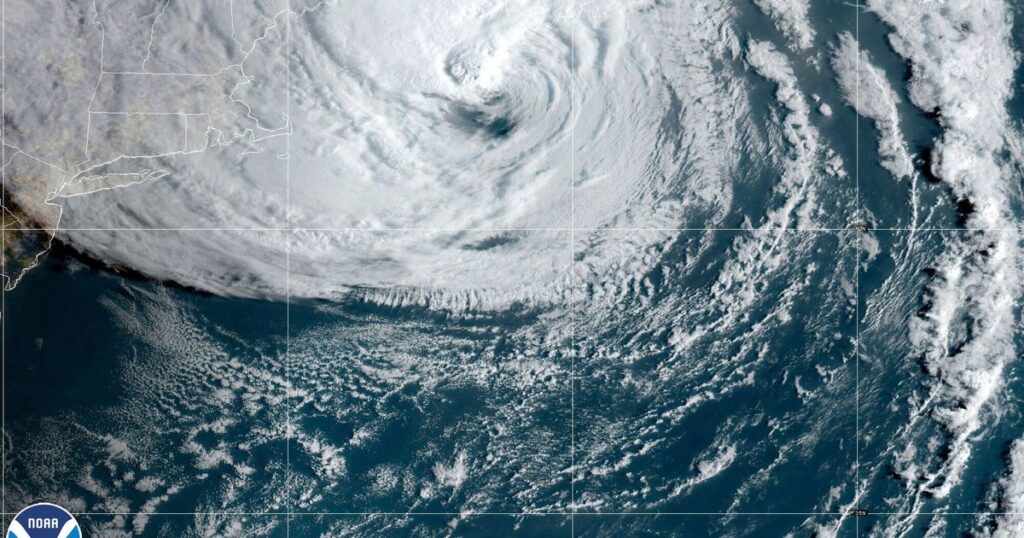
Millions of people in coastal New England and eastern Canada are under storm watches and warnings as Post-Tropical Cyclone Lee threatens the region with hurricane-force winds, torrential rain, and coastal flooding. Lobsterman Bruce Young had his 38-foot vessel transported to the local airport, while Steve Train, a commercial lobster fisherman on Long Island, had just finished hauling 200 traps out of the water. Residents in the area are urged to take precautions and make final preparations as the storm approaches, with the National Hurricane Center continuing to monitor the storm and provide updates.
Posts tagged as “The National Hurricane Center”
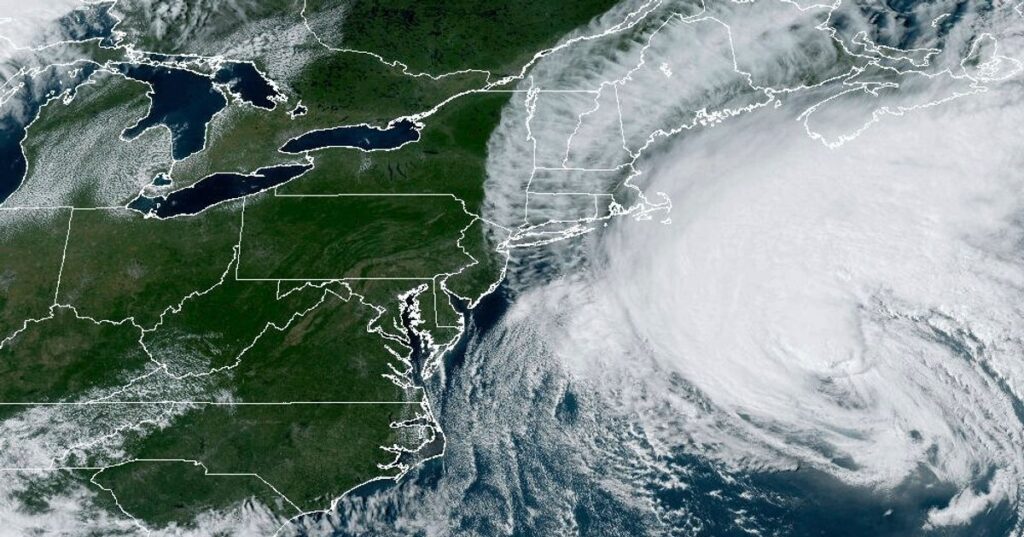
Residents of Bar Harbor, Maine are preparing for the arrival of Hurricane Lee, which is expected to bring tropical storm conditions and flooding to parts of coastal New England. The storm is projected to be 400 miles wide with tropical-storm-force winds, creating worries of power outages in Maine. Utility workers from as far away as Tennessee have begun taking up positions in preparation for the storm, and residents are urged to take all necessary precautions to protect their property and stay safe.

A hurricane watch has been issued for parts of the northeast United States and Canada, stretching from Stonington, Maine to the U.S.-Canadian border. A tropical storm watch has also been issued for parts of Nova Scotia, New Brunswick, Rhode Island, Maine and Massachusetts, including Martha's Vineyard and Nantucket. The hurricane is expected to bring heavy rainfall and coastal flooding to the region on Friday night and Saturday, with the potential for life-threatening flooding late Friday and Saturday.
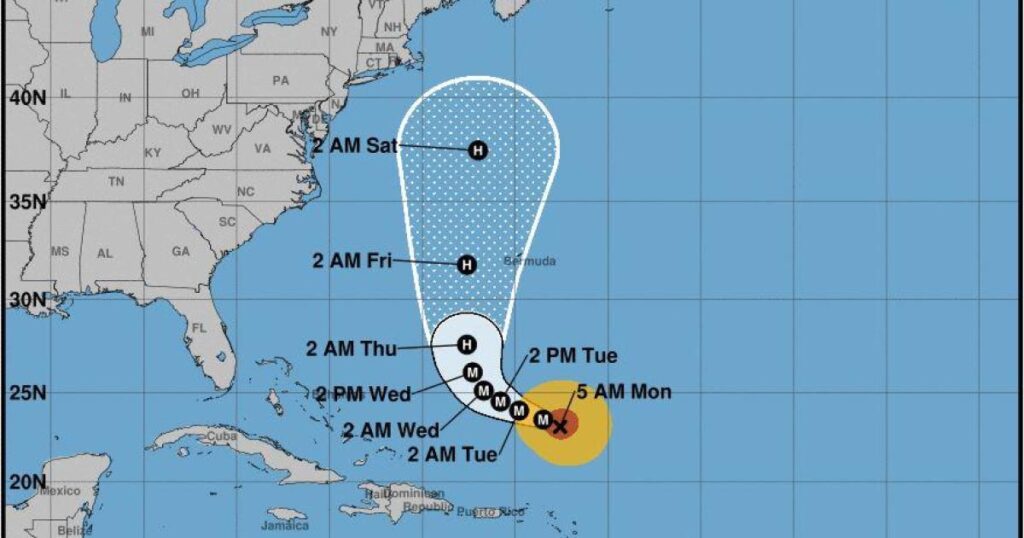
Hurricane Lee is intensifying in the western Atlantic, causing hazardous surf and rip current conditions along the southeastern US coast which will spread northward in the coming days. The storm is predicted to remain a major hurricane this week and pass between Bermuda and the East Coast by the end of the week, staying offshore of New York City. Residents are advised to take precautions and stay informed of the latest updates from the National Hurricane Center.
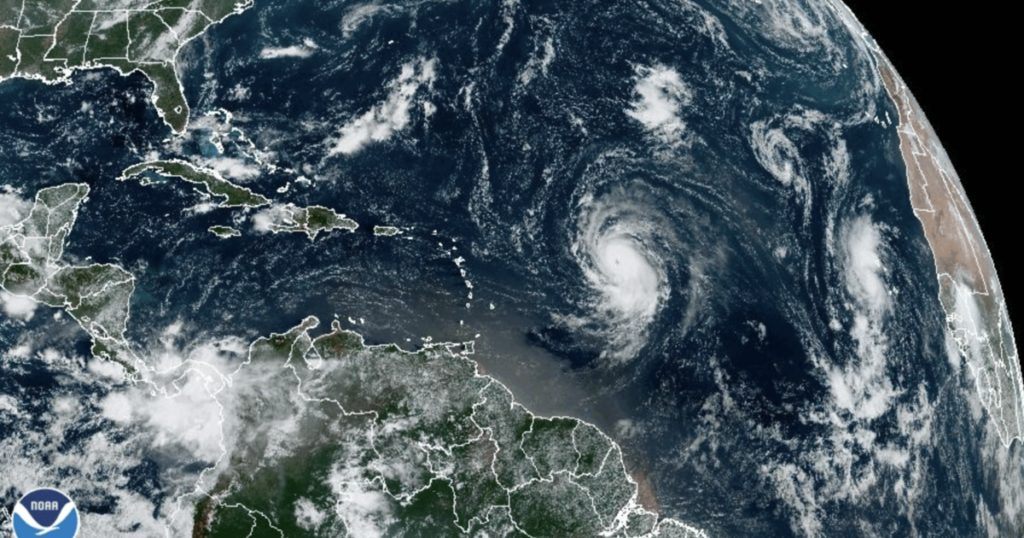
Hurricane Lee has explosively intensified into a Category 5 storm in the central tropical Atlantic Ocean, packing winds of up to 160 miles per hour and expected to remain a major hurricane through early next week. Tropical storm conditions are possible on some islands, although the hurricane is not expected to make landfall. Residents in the Caribbean are advised to monitor the storm and take necessary precautions.
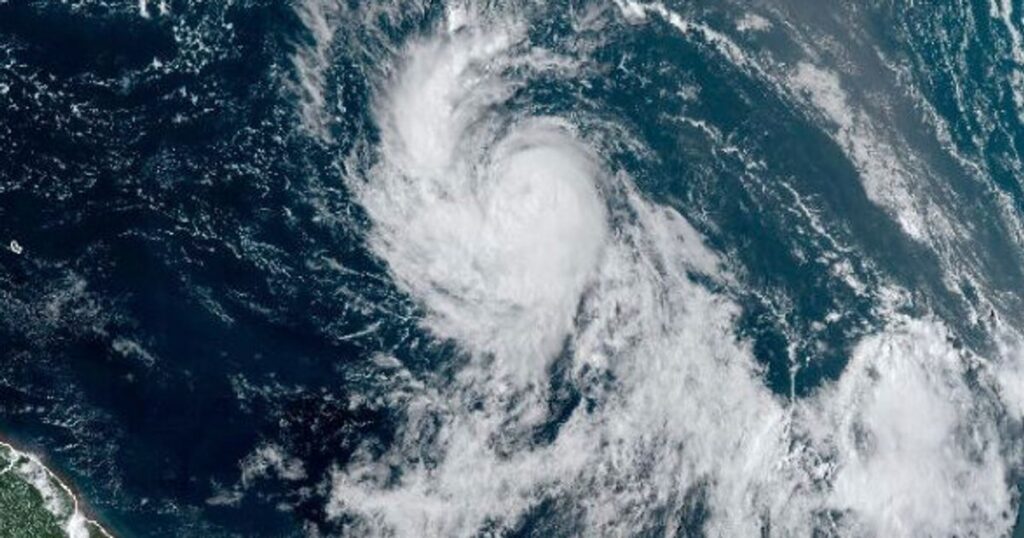
The National Hurricane Center (NHC) has issued a warning that Tropical Storm Lee is expected to rapidly intensify and become an “extremely dangerous major hurricane” by early Friday. Forecasters predict that Lee will intensify into a Category 4 hurricane with winds potentially as high as 155 mph, and the NHC is advising residents of the Leeward Islands to monitor the storm and take necessary precautions to protect themselves and their property. Residents are urged to stay informed and follow the instructions of local officials.
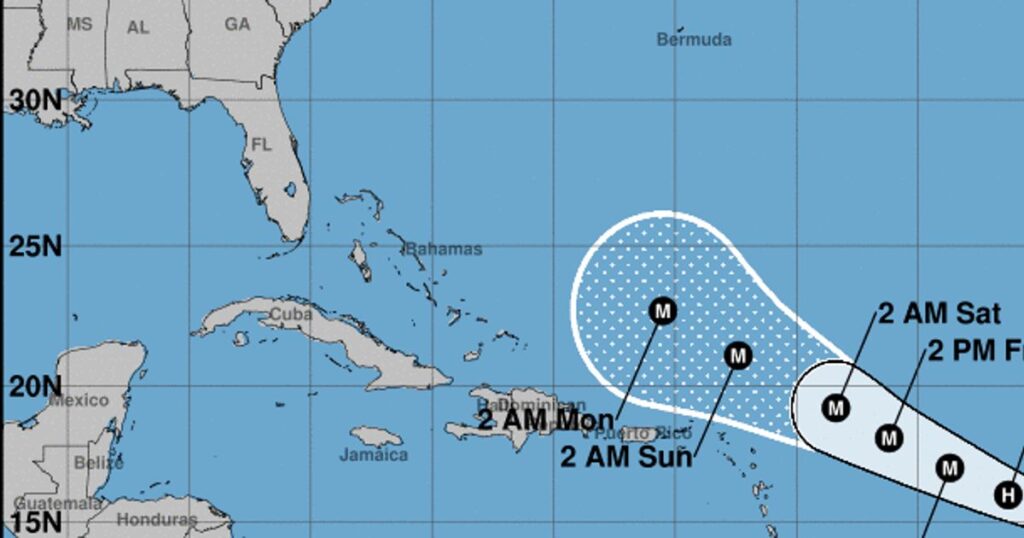
Tropical Storm Lee has formed in the Atlantic Ocean and is expected to become a major hurricane by the end of the week. It is located 1,230 miles east of the Lesser Antilles and is moving west-northwest at 14 mph (22 kph). The National Hurricane Center is urging people in the Caribbean to monitor the storm's progress and to be prepared for potential impacts. This is the twelfth named storm of the 2021 Atlantic hurricane season, which is expected to be an active one.
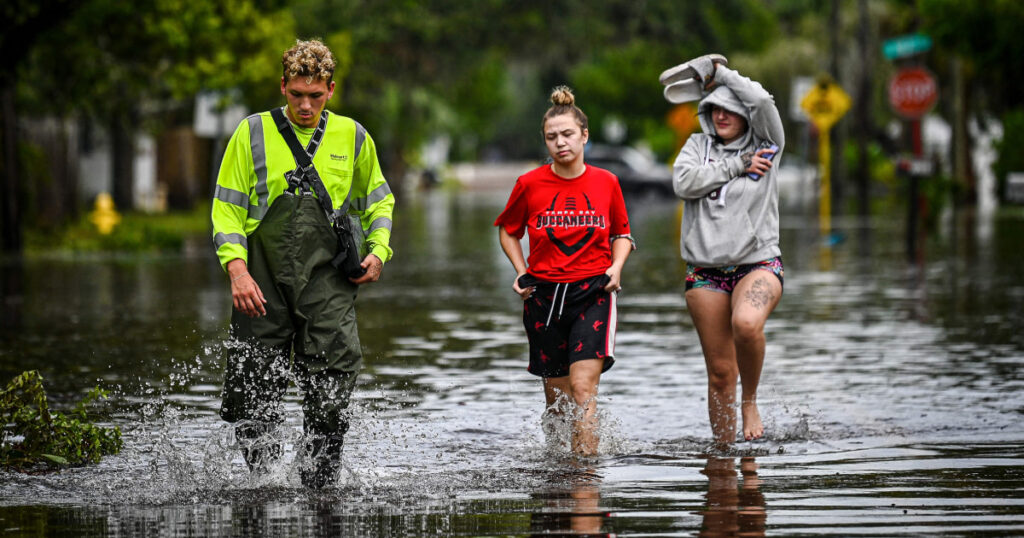
Tropical Storm Idalia made landfall in Florida as a Category 3 hurricane and is now bringing flooding to the coast of South Carolina. The National Hurricane Center has issued a storm surge warning for the area, and North Myrtle Beach, Garden City, and Edisto Island have already reported ocean water spilling onto beachfront streets. Residents in the affected areas are advised to stay informed and take all necessary safety precautions.