Secretary of State Marco Rubio announced a major restructuring of the State Department, aligning with the Trump administration's "America First" policy, which includes a 15% reduction in domestic staff and the closure or consolidation of over 100 global bureaus. The initiative aims to streamline operations, enhance efficiency, and better position the United States for success by reallocating resources to foster innovation and address contemporary challenges. Undersecretaries have been given 30 days to develop plans for implementing these changes, marking a significant shift in the department's operational strategy and reflecting broader goals of reducing government size.
Posts tagged as “Alaska State Trooper”
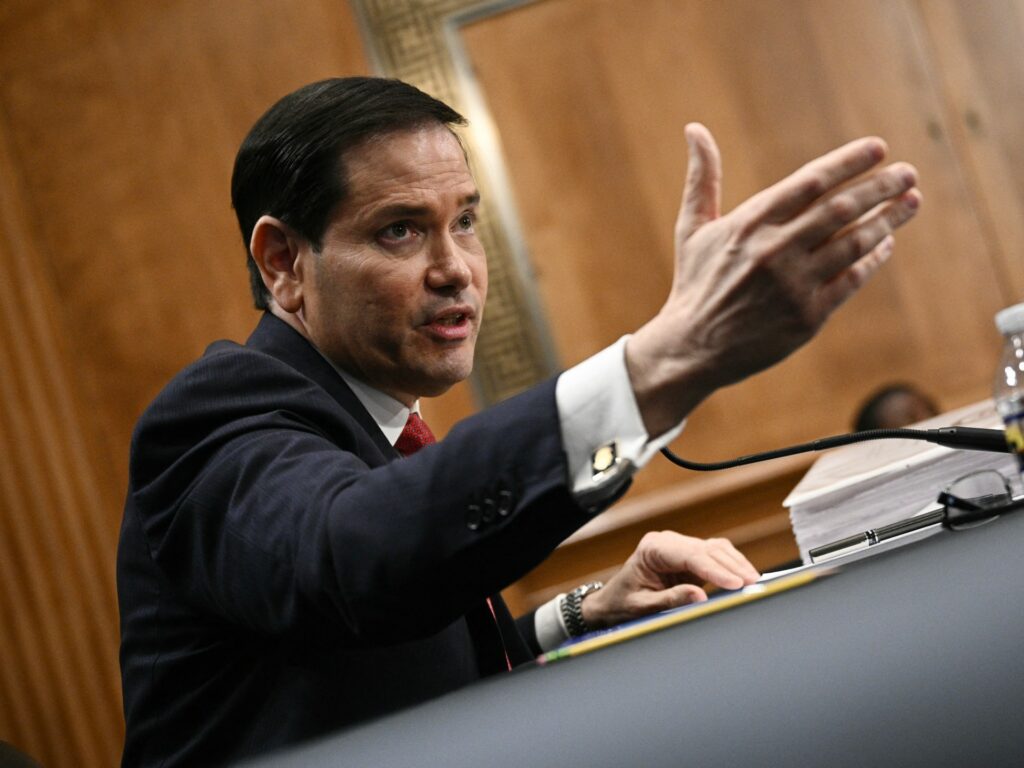
Senator Chris Van Hollen revealed that the Salvadoran government initially tried to block his visit to Kilmar Abrego Garcia, a Maryland resident recently deported to El Salvador and imprisoned in harsh conditions, though they later allowed the meeting. The deportation, part of a White House initiative later acknowledged as a mistake by U.S. officials, has sparked criticism and raised concerns about U.S. immigration policies. Separately, Secretary of State Marco Rubio suggested the U.S. might abandon efforts to end the war in Ukraine, signaling a potential shift in American foreign policy.
A significant protest occurred near the White House, where individuals gathered to oppose President Donald Trump's policies, particularly highlighting the wrongful deportation of Kilmar Abrego Garcia as a violation of due process rights. Protester Susie Stern emphasized the need for fair treatment under the law for everyone, regardless of their background. In a related development, Secretary of State Marco Rubio suggested the U.S. might withdraw from negotiations to end the war in Ukraine, reflecting the growing tensions and uncertainties in U.S. foreign and domestic policies.
U.S. Secretary of State Marco Rubio announced that the United States might soon reassess its involvement in peace talks between Russia and Ukraine if significant progress is not made, emphasizing the urgency of reaching a decision within days. This statement reflects growing impatience within the U.S. administration, which has been actively seeking a resolution since President Donald Trump took office, but has yet to achieve the desired outcome despite various diplomatic efforts. The potential shift in U.S. strategy represents a critical moment in the international response to the conflict, with the coming days being crucial in determining the success of current diplomatic initiatives or the need for a new approach.
Mohsen Mahdawi, a Palestinian student at Columbia University, was detained by federal agents during a citizenship interview, with his legal team arguing that this violates his First Amendment rights due to his involvement in protests against the Israel-Gaza conflict. The Trump administration is reportedly using an obscure law to justify his deportation, claiming he poses "adverse foreign policy consequences for the United States," a provision also cited in another activist's case. This situation reflects broader concerns about the administration's crackdown on foreign students and the potential implications for their immigration status, highlighting tensions between immigration policies and the rights of activists.
The Trump administration has submitted a memorandum to a Louisiana immigration court, citing national security concerns to justify the deportation of Mahmoud Khalil, a Columbia University student involved in protests against U.S. foreign policy. The legal argument is based on a provision in the Immigration and Nationality Act of 1952, which allows for the deportation of noncitizens deemed detrimental to national foreign policy interests. The case has garnered attention due to its unusual legal basis and potential implications for student activists and noncitizens engaged in political protests, possibly setting a precedent for future cases at the intersection of immigration law and national security.
Ksenia Karelina, a dual U.S.-Russian national previously imprisoned in Russia on treason charges, has been released and is returning to the United States, as announced by U.S. Secretary of State Marco Rubio. Her release, reportedly part of a prisoner swap between the U.S. and Russia, underscores ongoing diplomatic negotiations concerning individuals detained on espionage or treason charges. Karelina's case highlights the complexities of international legal and diplomatic proceedings, particularly for dual nationals caught in geopolitical tensions.
The Trump administration's increased scrutiny of foreign students participating in pro-Palestinian activities has led to the detention and visa revocation of several students at U.S. universities, raising concerns about First Amendment rights. This has sparked a debate over the balance between national security and individual rights, particularly following recent incidents at institutions like Tufts University and Columbia University. As universities express support for their international students, the situation underscores the tension between immigration policies and the rights to political expression, with broader implications for academic freedom and free speech in the U.S.