Key takeaways:
- CENTCOM said U.S. forces struck a ground control station on Qeshm Island after Iran launched drones at civilian mariners and missiles toward Bahrain and Kuwait.
- The U.S. military said it disabled the Botswana-flagged M/T Lexie with a Hellfire missile after the tanker failed to comply with directions during blockade enforcement.
- President Trump said U.S.-Iran conversations were continuing, while Iran’s Tasnim news agency reported Tehran had halted talks until Israel stopped fighting in Lebanon.
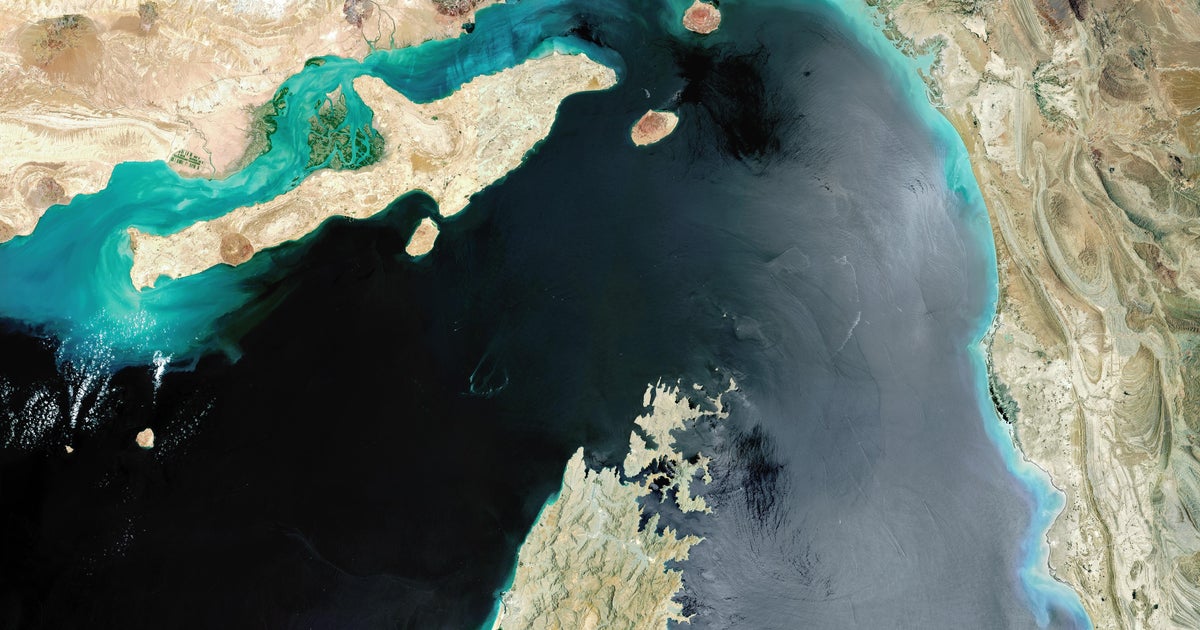
U.S. forces struck an Iranian military site on Qeshm Island and shot down Iranian drones and missiles Tuesday, the latest test of a fragile ceasefire that has halted most direct fighting but failed to end clashes around the Strait of Hormuz.
U.S. Central Command said the “self-defense strikes” targeted a ground control station on Qeshm Island, which sits near the strategic oil corridor. CENTCOM said the action came after Iran launched three drones toward “civilian mariners” in regional waters and fired ballistic missiles at U.S. allies in the Persian Gulf. Three missiles fired at Bahrain were intercepted by air defenses, while two aimed at Kuwait “fell short or broke apart enroute,” the command said.
“CENTCOM forces remain vigilant and ready to defend against unwarranted Iranian aggression during the ongoing ceasefire,” the U.S. military command said.
Iran’s Islamic Revolutionary Guard Corps gave a different account of the exchange. It said its strikes were a response to an earlier U.S. action Tuesday that disabled an oil tanker sailing toward Iran by firing a missile into its engine room. Iranian state media also reported that the IRGC attacks followed a U.S. strike on a communications tower south of Qeshm Island.
The IRGC said it had targeted the headquarters of the U.S. Navy’s Fifth Fleet in Bahrain and a “vessel belonging to the American Zionist enemy.” CENTCOM denied that claim, writing on X that reports the Fifth Fleet had been struck were “FALSE.” The IRGC also said “disrupting the security of the Strait of Hormuz will carry a heavy price for the aggressive US military,” according to the BBC.
Earlier Tuesday, CENTCOM said U.S. forces had enforced blockade measures against the Botswana-flagged M/T Lexie as it moved through international waters toward Kharg Island. The command said the unladen oil tanker’s crew “ignored repeated warnings” and failed “to comply with directions from US forces multiple times over a 24-hour period” before a U.S. aircraft fired a Hellfire missile into the engine room. The BBC reported that Iran had not publicly commented on the tanker strike and that it had contacted Botswana’s government for comment.
The U.S. military began enforcing a blockade of vessels entering and leaving Iranian ports on April 13. Since then, six commercial vessels have been disabled and 122 others redirected, CENTCOM said, according to the BBC. Iran has barred ships from passing through the Strait of Hormuz without its permission, a move that has paralyzed shipping traffic in the crucial oil corridor.
The United States and Iran entered a ceasefire on April 7, pausing most direct hostilities in a three-month war. But the agreement has been repeatedly strained by military actions at sea and across the Gulf region.
Diplomacy has also faltered. U.S. and Iranian negotiators have held indirect talks on extending the ceasefire, lifting the U.S. blockade, reopening the Strait of Hormuz and beginning broader discussions on Iran’s nuclear program. Those talks have not produced a deal.
Iran’s semi-official Tasnim news agency said Monday that Tehran was halting all conversations with Washington until Israel stopped fighting in Lebanon, where it is conducting an offensive against Iran-backed Hezbollah. President Trump rejected that account Tuesday.
“The conversations between us have been going on continuously, including four days ago, three days ago, two days ago, one day ago, and today,” Trump wrote on Truth Social, calling the claim that the two sides were no longer speaking “false and erroneous.”
Secretary of State Marco Rubio, appearing before Congress for the first time since the war began, said U.S. negotiators had not offered Iran sanctions relief in exchange for reopening the strait. “Right now, everything that’s been discussed with them is that … any sanctions relief is condition-based, which means it has to be in return for the reason why those sanctions were put in place in the first place, which is their nuclear programme,” he said.
“The war is over,” Rubio said during another exchange, as lawmakers questioned the administration’s strategy for ending the conflict.








Be First to Comment