Key takeaways:
- Trump said wildfire smoke from Canada is costing the United States billions of dollars and should be added to tariffs Canada is paying.
- About 888 fires were active in Canada on Friday, with nearly 3 million hectares burned, according to figures cited by the BBC.
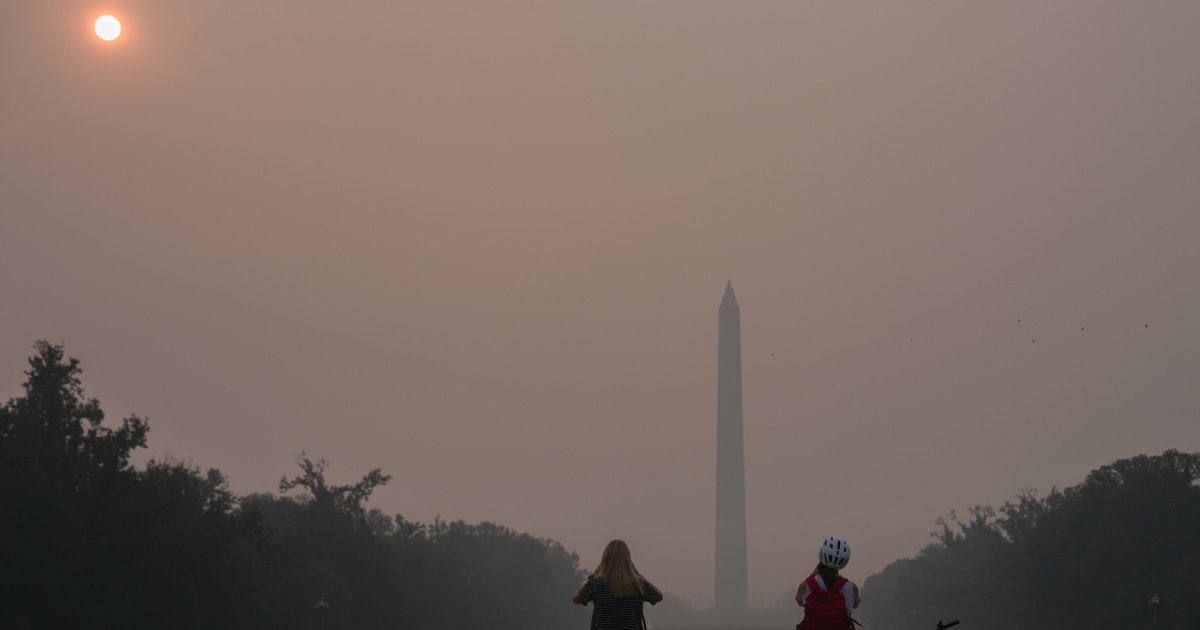
- Air quality alerts affected more than 100 million people in the United States as smoke reached major cities including Chicago, Detroit, New York and Washington.
President Donald Trump threatened Friday to raise tariffs on Canada, blaming the country for wildfire smoke that has spread across large parts of the United States and triggered unhealthy air alerts for millions of people.
“We are holding Canada responsible for the fact that they are not properly maintaining their Forests, and Brush therein, and the United States is being unnecessarily invaded by filthy, polluted, and unhealthy air, the quality of which is dangerous, and totally unacceptable!” Trump wrote on Truth Social. He accused Canada of “Willful Negligence” and said the issue is “costing the United States Billions of Dollars,” adding that “the cost of this pollution must of necessity be added to the TARIFFS Canada is currently paying.”
Trump said he would speak with Canadian Prime Minister Mark Carney “to find out what they are going to do about it.”
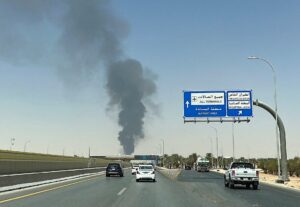
As of Friday, about 888 fires were actively burning in Canada, according to the Canadian Wildland Fire Information System, with most burning out of control. Nearly 3 million hectares of land in Canada have already been destroyed, the BBC reported. More than 190 fires were burning in Ontario, some out of control, while British Columbia reported more than 59 active fires, including 39 that started in the previous 24 hours.
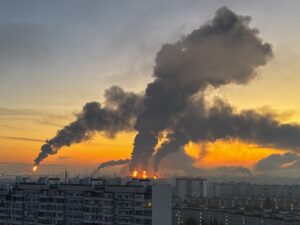
The smoke has affected cities across the Midwest, Northeast and Mid-Atlantic, including Minneapolis, Chicago, Detroit, Cleveland, Pittsburgh, Philadelphia, New York City and Washington. Air quality alerts remained in effect for more than 100 million people Friday, NBC News reported. The BBC, citing Swiss air quality tracker IQAir, said Detroit had the worst air quality in the world Friday, followed by Chicago, Washington and New York in seventh place.
Canada did not directly respond to Trump’s tariff threat. Carney’s office referred CBS News to a statement from Emergency Management Minister Eleanor Olszewski, who said Canada is “working with urgency alongside provincial and territorial partners” and has spent billions of dollars on forest fire prevention in recent years.
“Canada and the United States have a long history of working together to fight wildfires on both sides of the border — it is a history that both countries benefit from and that we are building on during this challenging wildfire season,” Olszewski said, noting Canadian firefighters helped during last year’s Los Angeles wildfires.
Carney, asked Thursday about criticism from U.S. lawmakers, pointed to climate change and U.S. energy policy. “Fighting climate change is the responsibility of all countries, including the United States,” he told reporters, according to CBS News. NBC News reported that Carney also said in French that Canada is investing in clean energy while “the United States are reducing their footprint worldwide.”
Several Republican lawmakers have pressed Canada over the smoke. Michigan Reps. John James, Lisa McClain, John Moolenaar and Jack Bergman wrote to Carney this week that “our patience has run out,” accusing Canada of “chronic under-investment in forest thinning, fuel reduction, and prescribed burns.” They said, “Our constituents are breathing the consequences of this failure right now.” Republican Sen. Bernie Moreno of Ohio floated sanctions, and Rep. Nick Langworthy of New York wrote that “there should be consequences” if Canada does not take “meaningful action.”
Ontario Premier Doug Ford rejected the criticism and urged U.S. officials to help. “Maybe what you should do rather than complain is send support, send help, because we have done the exact same thing for our American friends,” Ford said. He said Michigan and Massachusetts had offered assistance and that Ontario has more than 150 fire crews, over 80 water bombers and helicopters fighting the fires.
Experts cited by the BBC said the causes are more complex than forest management alone. “Weather doesn’t care about international borders,” said Dr. Patrick James of the University of Toronto. Dr. Anabela Bonada of the University of Waterloo said, “Climate change is a global issue, and it would be inaccurate to suggest that Canada alone caused or could have prevented these wildfires.”









Be First to Comment