President Trump's announcement of new tariffs, including a 10% tax on all U.S. imports and additional tariffs on imports from 90 countries, has raised concerns about a potential global trade war and caused stock market volatility. The administration is defending the tariffs while seeking to mitigate their economic impact through negotiations with trading partners and engaging with concerned business groups. Despite fears of increased consumer costs and a potential recession, the administration remains committed to the tariff plan and is working to reassure the business community with pro-growth policies.
Posts tagged as “4th U.S. Circuit Court of Appeal”
President Donald Trump announced that the United States will engage in direct negotiations with Iran regarding its nuclear program, warning of "great danger" if Iran does not abandon its nuclear ambitions. Concurrently, the Israel Defense Forces reported an incident where soldiers opened fire on individuals allegedly threatening civilian safety, resulting in one fatality. In the Israeli-occupied West Bank, the funeral of 14-year-old Palestinian-American Amir Mohammed Rabee, who was shot and killed, underscores the ongoing regional tensions as the U.S. prepares for talks with Iran.
The Supreme Court ruled 5-4 in favor of the Trump administration's use of the Alien Enemies Act of 1798 to expedite the deportation of individuals alleged to be members of the Tren de Aragua gang, provided they are afforded due process. This decision overturns a previous federal judge's order that had halted these deportations due to concerns about the lack of legal proceedings. The Supreme Court emphasized the importance of jurisdiction, noting that the detainees are held in Texas, and redirected the legal proceedings to a more appropriate venue, highlighting the ongoing debate over immigration policy and the application of historical statutes.
Chief Justice John Roberts has temporarily stayed a lower court's order requiring the return of Kilmar Armando Abrego Garcia, who was mistakenly deported to El Salvador, to allow the Supreme Court more time to review the case. The Justice Department sought emergency relief from the Supreme Court as the Trump administration faced a deadline to bring Abrego Garcia back, raising significant questions about the criteria for deportation. This case underscores the complexities of immigration enforcement and deportation processes, with the Supreme Court's forthcoming decision potentially impacting similar future cases.
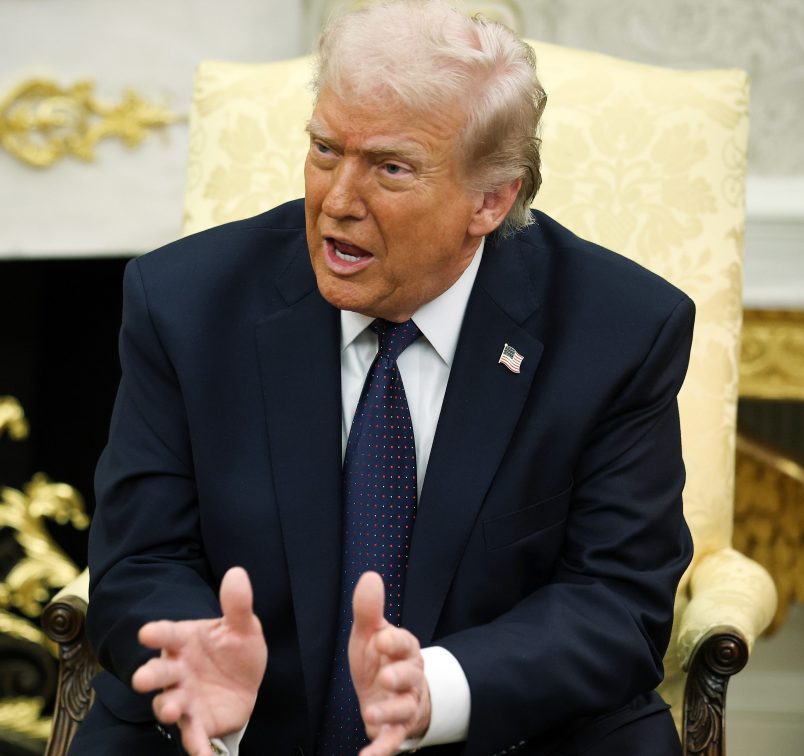
President Donald Trump announced that he will proceed with implementing new tariffs on Wednesday, despite concerns about their impact on the stock market and global economy, emphasizing that countries can adjust trade relations with the U.S. through fair trade deals or by paying tariffs. During a meeting with Israeli Prime Minister Benjamin Netanyahu, Trump also mentioned ongoing talks with Iran, warning of "great danger" if discussions do not go well, and addressed the topic of tariffs on Israel and other countries. Netanyahu indicated that Israel plans to address its trade relationship with the U.S., as part of a broader dialogue involving multiple nations adjusting to the Trump administration's trade policy changes.
Global financial markets are experiencing significant turbulence due to investor concerns over the economic impact of tariffs imposed by the Trump administration, with U.S. stock futures and international markets showing substantial declines. The imposition of tariffs has introduced a new dynamic in international trade relations, affecting both allies and adversaries, and raising concerns about the potential unraveling of globalization. As markets and governments worldwide monitor the situation, the tariffs have the potential to significantly alter the global economy and impact the financial well-being of billions.
Wall Street executives are increasingly expressing concerns about the Trump administration's trade policies, particularly the newly implemented tariffs, following a significant stock market downturn. Jamie Dimon, CEO of JPMorgan Chase, warned that these tariffs could lead to increased inflation and a slowdown in the U.S. economy, reflecting a broader unease among corporate leaders. A CNBC survey revealed that 69% of CEOs anticipate a recession, with many planning workforce reductions, while figures like Bill Ackman criticize the tariffs for undermining confidence in the administration's economic strategy.