Key takeaways:
- The RSPB said experts believe the up-to-1,200-year-old Major Oak died after it produced no leaves this spring.
- Conservationists said compacted soil from millions of visitors, structural supports and climate-related heat waves and droughts contributed to the tree’s decline.
- The Major Oak will remain standing in Sherwood Forest as a monument and wildlife refuge, and saplings from the tree have been planted around the world.
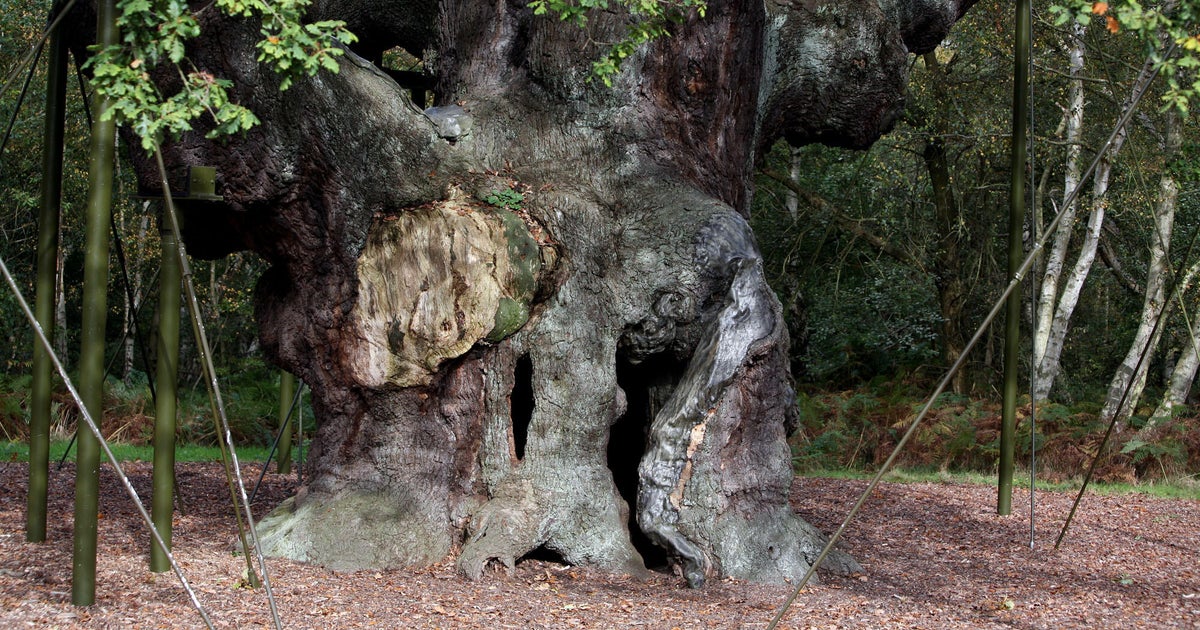
The Major Oak, the ancient Sherwood Forest tree long linked to the legend of Robin Hood, is believed to have died after as many as 1,200 years, conservationists said, ending the life of one of Britain’s best-known trees but not its role in the forest.
The Royal Society for the Protection of Birds, which manages Sherwood Forest in Nottinghamshire, said scientific experts concluded the oak had died after it failed to produce leaves this spring. The tree, considered one of Britain’s biggest oaks, drew millions of visitors over its lifetime with its massive limbs, sprawling canopy and hollow trunk.
“The tree’s failure to produce leaves this year is heartbreaking for everyone,” Hollie Drake of the RSPB said in a statement.
The exact cause of death is impossible to determine, the RSPB and tree experts said. But conservationists cited a combination of pressures, including centuries of tourism, soil compaction, structural supports and the effects of climate change, including recent heat waves and droughts.
For generations, visitors came to see the tree’s gnarled branches and hollow trunk, which legend says sheltered Robin Hood, the outlaw said to have stolen from the rich and given to the poor while evading the sheriff of Nottingham. At one time, visitors climbed into the hollow trunk, which the BBC reported was actually caused by fungi. A fence was placed around the tree in the 1970s, but conservationists said the surrounding soil had already been heavily compacted by footfall, making it harder for rainwater, oxygen and nutrients to reach the roots.
The oak also had been held up over the years with cables, poles and supports for some of its largest branches. The RSPB said those “well-intentioned structural intervention” efforts were likely among the major contributors to its decline.
Ed Pyne, a senior conservation adviser at the Woodland Trust, called the Major Oak “perhaps the most famous ancient tree in the UK” and said its loss was “incredibly tragic.” In a statement, he said ancient trees such as the Major Oak are the “conservation white rhinos of the U.K.” whose decline is often less visible.
“Saving them is vital to the health of the world we live in and yet most disappear quietly, without the recognition or care given to the Major Oak,” Pyne said.
Chloe Ryder, RSPB Sherwood Forest estates operations manager, said the cause of death was “complicated,” but agreed tourism had played a role. Staff had done “everything they can” since taking over the site to keep it alive, she told the BBC.
“But there wasn’t anything more that we could be done unless you invent a time machine, really,” Ryder said.
The tree’s name traces to Major Hayman Rooke, a former British Army soldier whose 1790 book on oak trees helped bring the first waves of tourists to Sherwood Forest. The forest is also known for oaks used in the ships of Vice Admiral Horatio Nelson’s Royal Navy and in the roof timbers of St. Paul’s Cathedral in London. The Major Oak was spared from the saw.
Dame Judi Dench, a Woodland Trust patron and ambassador, paid tribute to the tree, saying it had inspired “countless stories, poems, paintings and people for more than 1,000 years” while providing a home for wildlife.
The RSPB said the oak will remain standing as a monument and wildlife refuge as it decays over the coming decades. Saplings from the tree have been planted around the world.
“Although this marks the end of the Major Oak as a living tree, it does not mark the end of its story,” the RSPB said.







Be First to Comment