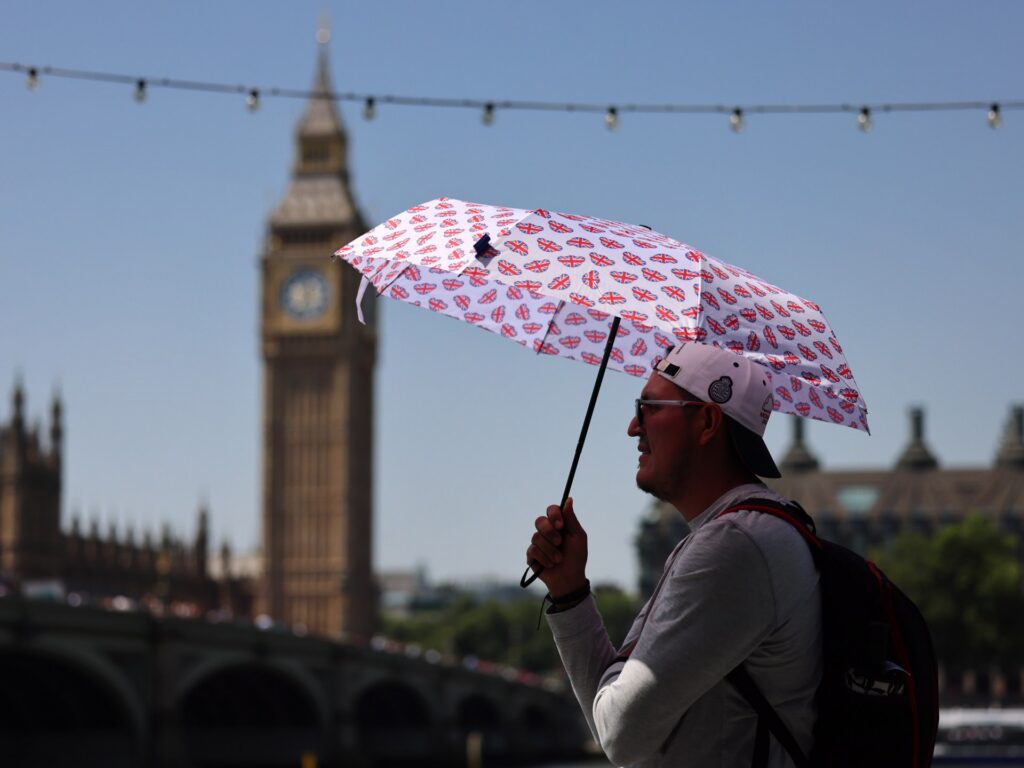
England recorded its warmest June since records began, with a provisional peak of 37.7C in Norfolk and rare extreme heat warnings across parts of the country. The heatwave also affected much of Europe, where authorities reported more than 1,000 heat-related excess deaths in both France and Spain.
Posts tagged as “The Copernicus Climate Change Service”

European Union monitors said global sea surface temperatures reached their highest June levels ever observed. Scientists warned that El Niño and climate change could drive more records in the months ahead.

The WHO says Europe’s heatwave has been linked to more than 1,300 excess deaths since June 21. Germany, Poland and the Czech Republic set new temperature records as extreme heat moved east.

Paris is limiting public drinking and takeaway alcohol sales as a record heatwave strains hospitals. The heat has broken records across Europe, with scientists linking its intensity to human-caused climate change.

France has reported 40 drownings since Thursday as a severe heat wave drives people into rivers and other unsupervised waters. Record heat has disrupted schools, transportation, landmarks and labor across several European countries.

The Major Oak, the ancient Sherwood Forest tree associated with Robin Hood, is believed to have died after failing to produce leaves this spring. Conservationists cited tourism, soil compaction, structural supports and climate-related heat and drought as factors in its decline.

A federal judge ordered the Trump administration to restore history and science materials removed from national parks and public monuments. The ruling pauses further changes and gives officials 21 days to reinstall affected displays.
NOAA says El Niño has begun in the tropical Pacific, with a 63% chance it becomes one of the strongest events recorded since 1950. Scientists warn it could intensify global heat and disrupt weather, food supplies and economies into 2027.