Key takeaways:
- A federal jury convicted Hadi Matar of engaging in an act of transnational terrorism and providing material support to Hezbollah.
- Matar is already serving a 25-year New York state prison sentence for the 2022 attempted murder of Salman Rushdie.
- Rushdie testified that he was stabbed 15 times and suffered severe injuries, including loss of sight in his right eye.
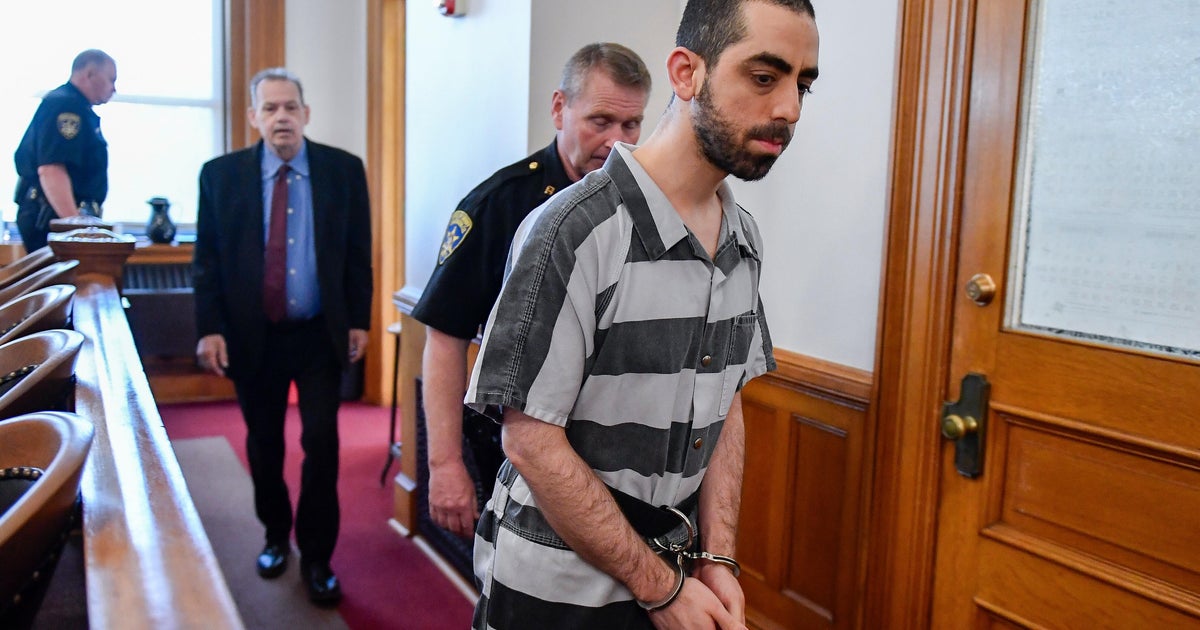
A federal jury in New York convicted Hadi Matar on Wednesday of terrorism offenses in the 2022 stabbing of Salman Rushdie, adding a potential life sentence to the 25-year state prison term Matar is already serving for trying to kill the author on a lecture stage.
Matar, 28, was found guilty of all federal charges against him, including engaging in an act of transnational terrorism and providing material support to Hezbollah, the Lebanese armed faction designated as a terrorist organization by the United States, the United Kingdom and many other countries. A message from The Associated Press seeking comment was sent to Matar’s attorneys.
Rushdie, the British-Indian novelist who has lived for decades under a death threat tied to his 1988 novel “The Satanic Verses,” testified during the trial in Buffalo about being stabbed 15 times at the Chautauqua Institution in western New York. He had been about to speak on writers’ safety when his attacker climbed onto the stage behind him and began stabbing as the audience gasped.
“I was on the stage, lying down, with an enormous pool of blood all around me,” Rushdie testified, according to the BBC. “It was an enormous and expansive lake of blood.” He told jurors: “I can’t say what his ambitions or his aim was, but the wounds were dispersed across my body.”
The attack left Rushdie gravely wounded. He lost sight in his right eye, and his left hand and liver were badly damaged. During testimony, the BBC reported, Rushdie lifted the darkened lens on his glasses to show the wound to his eye and said the knife came “within millimetres from my brain.” He also credited a firefighter with saving his life by providing medical care.
Prosecutors said Matar was motivated by a 1989 fatwa, or religious edict, issued by Iran’s late Supreme Leader Ayatollah Ruhollah Khomeini calling for Rushdie’s death over “The Satanic Verses.” They also argued that Matar was influenced by a 2006 speech by the late Hezbollah leader Hassan Nasrallah calling for the fatwa to be enforced, and that he plotted the attack for two years.
“The defendant decided no one was going to do it, so he had to do it,” Assistant U.S. Attorney Timothy Lynch said in his closing statement, according to The Buffalo News as cited by the BBC. “The defendant is the one who answered that call.”
Court exhibits showed Matar repeatedly discussed the fatwa in messaging apps in 2021 and 2022, according to CBS News. The messages showed him saying Rushdie had attacked Islam and that Rushdie’s survival had emboldened others to insult the faith. Prosecutors said Matar first talked about wanting to “expose” Rushdie, then about killing him. In a private note to himself, he wrote: “We need to kill him ASAP,” according to Lynch.
Defense lawyer Nathaniel Barone argued the government had no proof of what was in Matar’s mind. Defense attorneys also argued the attack was not motivated by terrorism and questioned Rushdie about whether he should have expected backlash to “The Satanic Verses.” Rushdie responded: “I don’t believe the book is on trial. Somebody else is on trial.” Matar did not testify.
“The Satanic Verses” drew critical acclaim in the United Kingdom but sparked protests in parts of the Muslim world over passages some believers considered blasphemous. Rushdie went into hiding for years after the fatwa was issued and received 24-hour police protection from the British government for a decade. Iran’s government distanced itself from the fatwa in 1998, but it was never rescinded.
Rushdie has since published a memoir about the attack, “Knife: Meditations After an Attempted Murder,” and returned to fiction with “The Eleventh Hour.”





Be First to Comment