Key takeaways:
- England’s June mean temperature reached 17.1C, the highest in records dating to 1884 and nearly 3C above average.
- Lingwood, Norfolk, provisionally reached 37.7C on June 26, the UK’s highest June temperature on record.
- France reported around 1,000 excess deaths during the heatwave, while Spain recorded 1,029 excess deaths attributable to extreme heat.
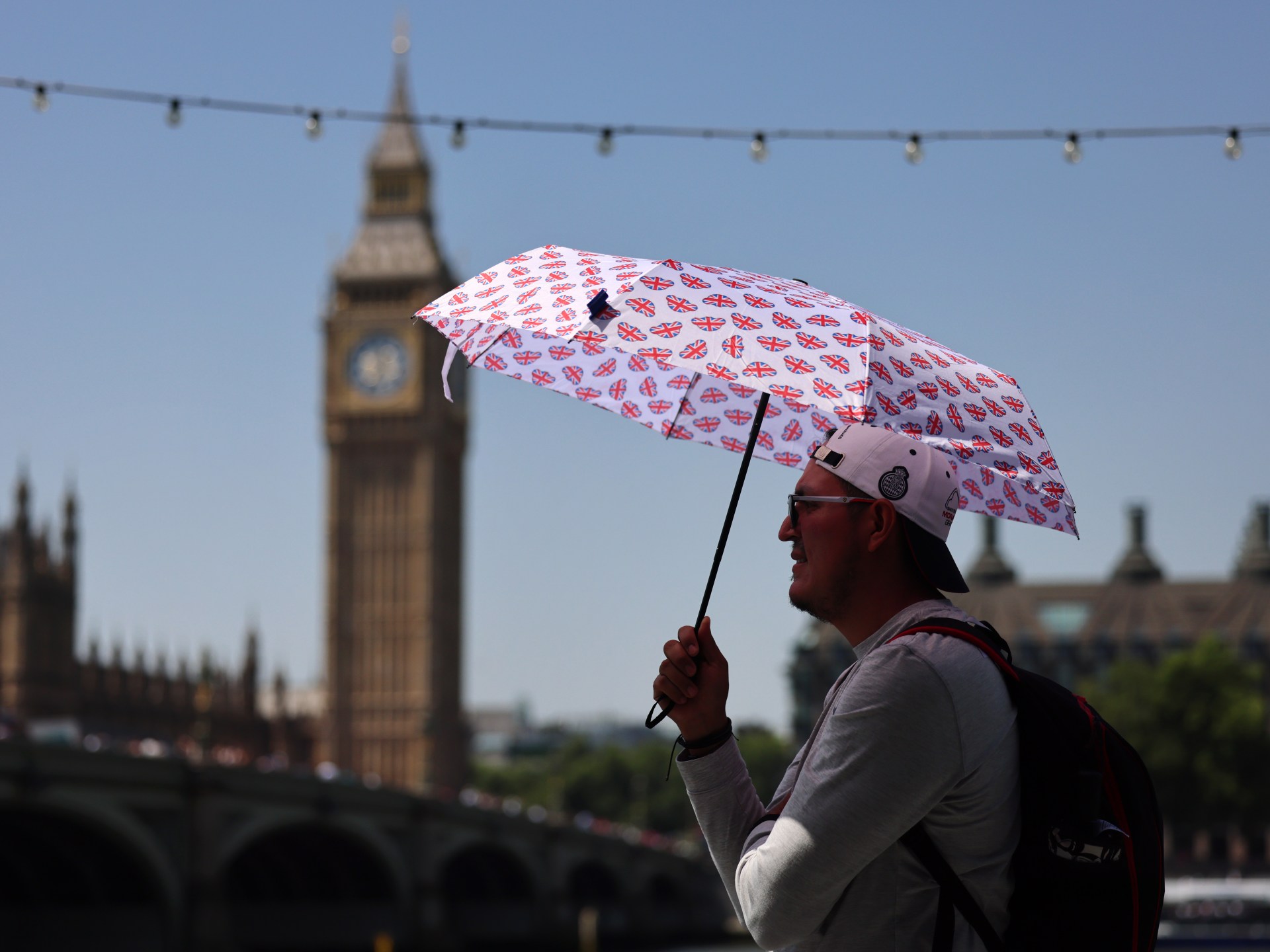
England has recorded its warmest June since records began, after a late-month heatwave drove temperatures to unprecedented levels and brought rare extreme heat warnings across parts of the country.
Provisional figures from the Met Office show England’s mean temperature in June reached 17.1C, the highest in records dating to 1884 and nearly 3C above average. The United Kingdom as a whole recorded its second-warmest June, while Wales had its second-warmest June on record.
“The exceptional warmth was driven by an intense and record-breaking heatwave at the end of the month,” the Met Office said in a statement cited by Al Jazeera.
The heat was persistent by day and night. The Met Office reported “exceptionally warm overnight temperatures,” and the BBC said frequent tropical nights, when temperatures do not fall below 20C, helped push average temperatures higher. Al Jazeera reported that Cardiff Bute Park provisionally set a new UK June record for the highest overnight minimum, with temperatures falling no lower than 23.5C on June 25.
The UK’s highest June temperature on record was provisionally set on June 26, when Lingwood in Norfolk reached 37.7C. That surpassed the previous June record of 35.6C, first set at Camden Square in London in 1957 and equalled at Mayflower Park in Southampton during the 1976 heatwave.
Wales also recorded its hottest June day, reaching 35.9C in Cardiff on June 25, the BBC reported. That beat the previous Welsh June high of 33.7C. Northern Ireland equalled its June record with 30.8C in Castlederg, County Tyrone.
Rare red extreme heat warnings were issued for parts of England and Wales. In some parts of eastern England, the BBC reported, the warning remained in force for an unprecedented three-day run. Temperatures topped 30C in some places in the UK for seven consecutive days from June 21 to June 27, according to Al Jazeera.
The heatwave caused widespread disruption. Al Jazeera reported that more than 1,000 schools and nurseries closed, while public transport was affected as overhead wires and signalling equipment came under strain from the heat. The outlet also reported that critics said the country was poorly prepared for the conditions, and that climate experts have urged the UK government to adapt infrastructure for warmer summers amid rising demand for fans and air conditioners, which remain uncommon in British homes.
The June record followed an earlier May heatwave, when temperatures reached 35.1C at Kew in London, breaking a May record of 32.8C set in 1922 and equalled in 1944, the BBC reported.
Extreme heat also spread across Europe. The BBC reported that June temperature records were set in countries including Hungary, Austria, the Netherlands, Switzerland and Denmark. France recorded its hottest day on record by national 24-hour average temperature, with temperatures across the country averaging 30C for the first time, according to forecasters at MeteoFrance cited by the BBC.
Health authorities are still assessing the impact. France’s national health ministry reported around 1,000 excess deaths during the heatwave, many among people older than 65, according to the BBC. Spain recorded 1,029 excess deaths attributable to extreme heat. Al Jazeera reported that more than 1,000 deaths linked to the heat were recorded in France alone.
The BBC said the full death toll across Europe may take weeks or months to become clear, though it is not expected to match the August 2003 heatwave, when an estimated 30,000 to 70,000 people died.
Scientists have linked the increasing frequency and intensity of heatwaves to climate heating. Al Jazeera reported that World Weather Attribution scientists blamed climate change for the dangerous conditions across Europe and said phasing out fossil fuels is essential to reverse the trend. Spanish forecasters noted, according to the BBC, that half of Spain’s 12 recorded June heatwaves since 1975 have occurred in the past decade.











Be First to Comment