Key takeaways:
- Brent crude traded above $105 to $107 a barrel Thursday, while U.S. crude topped $100 for the first time since May.
- The national average U.S. gasoline price rose to about $4.27 to $4.28 a gallon, while diesel climbed to $5.97.
- Market odds of a Federal Reserve rate hike next week rose to roughly 70% to 75% after higher oil prices and wholesale inflation data.
Oil prices jumped Thursday to their highest levels since May, intensifying inflation concerns, lifting bond yields and increasing market expectations that the Federal Reserve could raise interest rates next week.
Brent crude rose above $107 a barrel for the first time since May, while U.S. crude topped $100 a barrel, NBC News reported. Al Jazeera reported that Brent crude futures were up $4.05, or 4%, at $105.26 a barrel by 1215 GMT, while West Texas Intermediate crude rose $3.99, or 4.15%, to $100.04.
The latest move came as attacks on oil tankers escalated in the Middle East and as traders priced in the risk of further supply disruptions. Al Jazeera reported that Iran said it had attacked 10 ships near the Strait of Hormuz on Wednesday after the U.S. hit five Iranian oil tankers. Iran’s Islamic Revolutionary Guard Corps said it would escalate its response to any further attacks. Iran-aligned Houthis also seized control of Yemen’s port of Mocha on Thursday, further threatening Red Sea traffic, while Gulf traffic remains restricted through the Strait of Hormuz.
President Donald Trump’s remarks Wednesday night also added to market concerns. Trump said he was not looking for a deal with Iran and said he did not expect oil prices to fall until “right after” the November midterm elections.
“Right after the election, oil prices are going to be tumbling downward,” Trump told reporters. “They’re going to be tumbling down, and we’ll get them down.”
Analysts said the market is increasingly treating the conflict as a longer-lasting threat to supply. “The move reflects a market still pricing in persistent geopolitical risk, with Persian Gulf tensions showing no credible path to de-escalation,” ING analysts said Thursday, according to NBC News.
“The recent run-up in prices lays bare the market’s approach: this conflict will last longer than anticipated even a month ago, let alone at the beginning of the summer. If oil supply and exports are diminished, the oil balance remains tight and prices remain elevated,” PVM analyst John Evans told Al Jazeera.
Commodities experts warned earlier this week that Brent could rise to $120 or even $150 a barrel if the stalemate with Iran continues. NBC News reported that dozens of nations agreed earlier this year to release 400 million barrels to limit prices in the early months of the war, while the U.S. Strategic Petroleum Reserve is now at its lowest level since the 1980s. Bloomberg News reported that Saudi Arabia told OPEC its crude output fell last month to the lowest level since 1990 because of renewed hostilities with Iran; NBC News said it could not immediately confirm that report.
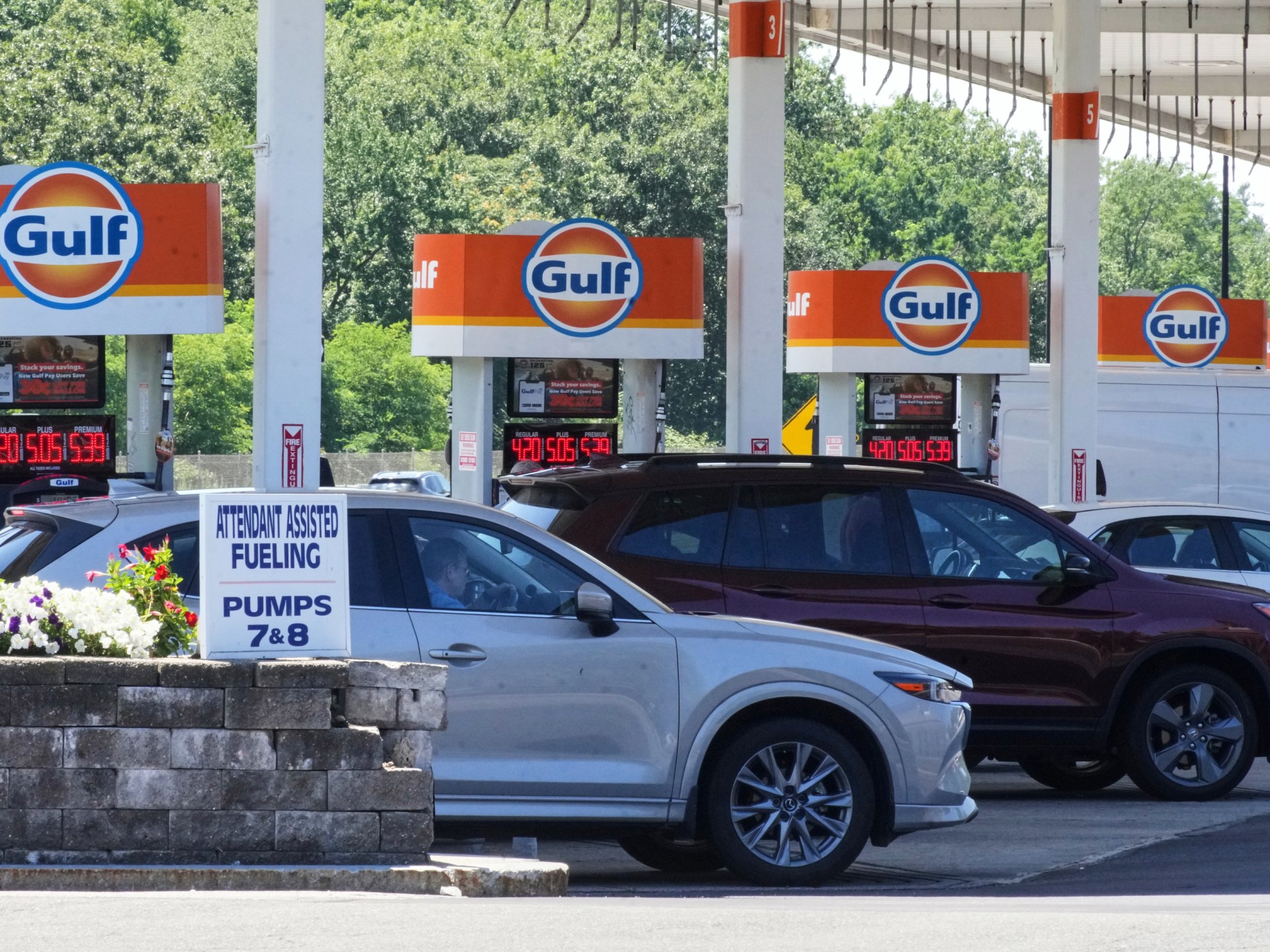
Higher oil prices quickly showed up for consumers. The national average gasoline price rose another 5 cents overnight to $4.27, according to NBC News. Al Jazeera, citing the American Automobile Association, put the average near $4.28 a gallon. Diesel rose 3 cents overnight to $5.97.
The pressure extended across financial markets. The S&P 500 fell 0.6%, the Nasdaq Composite dropped 0.7% and the Dow Jones Industrial Average lost 350 points. Treasury yields climbed, with the 10-year yield touching 4.93%, its highest level since 2023, and the 30-year yield reaching 5.35%, its highest since 2007. The average 30-year fixed mortgage rate rose to 7.07%, the highest since May 2025, according to Mortgage News Daily.
Inflation data added to the pressure. The Bureau of Economic Analysis reported that wholesale business inflation rose 0.4% from June to July, while the Producer Price Index rose 5.4% from a year earlier. Diane Swonk, chief economist at KPMG, called the report “worrisome,” writing on X that price increases were “heavily in diesel and heating fuel.”
Markets increasingly expect the Fed to act. NBC News reported odds of a rate hike next week rose to about 75% after the data and the European Central Bank’s rate decision, while Al Jazeera, citing CME Group data, reported traders saw a close to 70% chance, up from 61% a day earlier.
The ECB raised interest rates Thursday, citing inflation. “The conflict in the Middle East continues to generate inflation pressures, and inflation is set to remain well above target for an extended period,” its governing council said. ECB President Christine Lagarde said that meant at least into “the first half of 2027.”







Be First to Comment