Key takeaways:
- The Supreme Court refused to hear Trump’s appeal, leaving intact a 2023 civil verdict and $5 million judgment for E. Jean Carroll.
- Trump had argued that the trial judge improperly allowed testimony from other women and the “Access Hollywood” tape into evidence.
- A separate defamation judgment of more than $83 million against Trump remains on appeal.
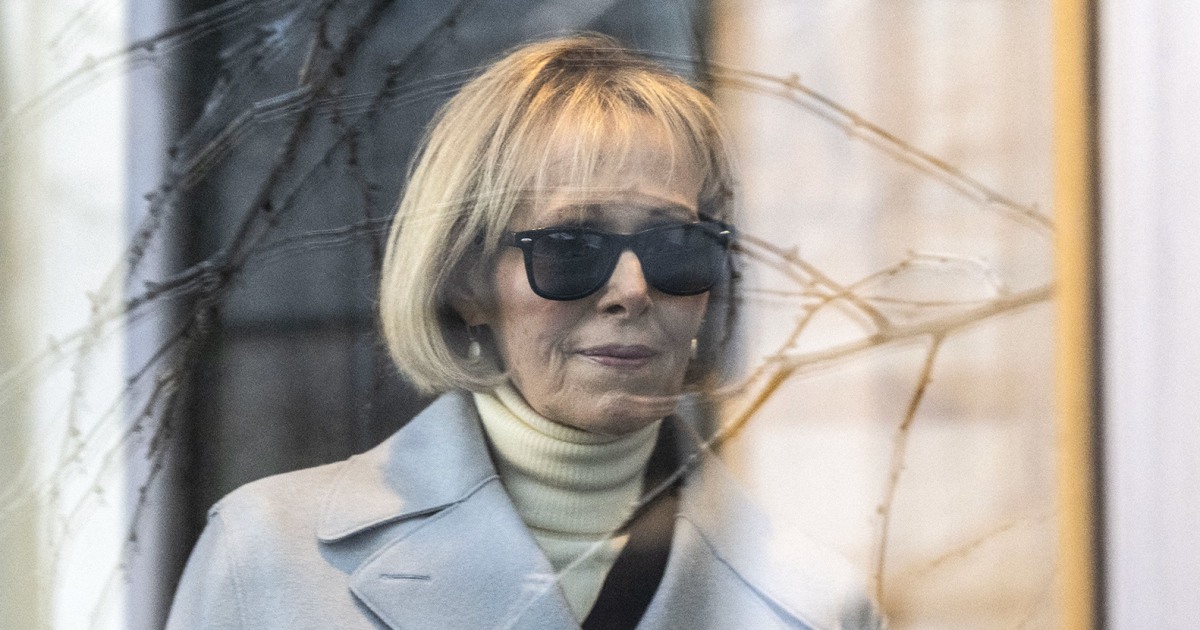
The Supreme Court on Monday refused to hear President Donald Trump’s appeal of a civil verdict finding him liable for sexually abusing and defaming writer E. Jean Carroll, leaving in place a $5 million judgment against him.
The justices gave no explanation for declining the case, as is customary. Their decision ends Trump’s attempt to overturn the 2023 jury verdict in the lawsuit Carroll brought in federal court in Manhattan over her allegation that Trump assaulted her in a department store dressing room in the mid-1990s and later defamed her by denying the claim.
A unanimous federal jury of six men and three women found in 2023 that a preponderance of the evidence supported Carroll’s claim that Trump sexually abused her during an encounter in a New York City department store. The jury rejected Carroll’s claim of rape as defined under New York’s penal code, but found Trump liable for sexual abuse and defamation. Jurors deliberated for less than three hours after an eight-day civil trial. Trump did not attend the trial, and his lawyers called no witnesses.
Carroll, a former magazine columnist, first publicly made her allegation in 2019 in a book excerpt published in New York Magazine. She later sued in part under a New York state law aimed at assisting survivors of sexual assault from years ago. Her defamation claims in the case stemmed from statements Trump made after his first term in office, including calling her claims a “con job” and “hoax.” The BBC reported that the defamation claim involved a 2022 post on Trump’s Truth Social platform denying her allegation.
Trump has repeatedly denied Carroll’s allegations. His lawyers argued in court filings that Carroll never reported the alleged incident to police, that there were no witnesses, and that her claims were “implausible.” They said she waited until Trump was president to bring her claims so she could “maximize political injury to him and profit for herself.”
Trump’s appeal focused heavily on evidence allowed by U.S. District Judge Lewis Kaplan, who oversaw the trial. Trump argued Kaplan should not have permitted testimony from Jessica Leeds and Natasha Stoynoff, two women who accused Trump of sexual misconduct. Trump has denied those allegations. His lawyers also challenged the decision to let jurors see the “Access Hollywood” tape, in which Trump could be heard speaking disparagingly about women and describing grabbing women’s genitals in vulgar language.
Carroll’s lawyers said the evidence was properly admitted because it addressed Trump’s alleged prior conduct and a pattern, or “modus operandi.” They also noted that the 2nd U.S. Circuit Court of Appeals upheld the verdict, concluding that the challenged evidence did not determine the outcome of the case. The appeals court denied Trump’s appeal in December 2024 and rejected a request for the full court to rehear the case in June 2025.
Roberta Kaplan, Carroll’s attorney, said the Supreme Court’s decision “affirms once and for all the jury’s unanimous verdict that President Donald J Trump sexually assaulted and defamed E Jean Carroll.” She added: “His multiple efforts to appeal that verdict have all failed and today’s ruling ends his quest to avoid accountability for his actions.”
A spokesman for Trump’s legal team called the case a “Democrat-funded” hoax. “President Trump will keep winning against Liberal Lawfare, as he continues to focus on his mission to Make America Great Again,” the spokesman said.
Carroll has a separate defamation judgment against Trump that was not before the Supreme Court in Monday’s action. In that case, a federal jury awarded her more than $83 million over statements Trump made while serving his first term in office. Trump has appealed that verdict and has argued that the claims should be dismissed on the basis of presidential immunity.








Be First to Comment