Key takeaways:
- The framework calls for the Lebanese Armed Forces to restore effective authority over all Lebanese territory after verified disarmament of non-state armed groups.
- Hezbollah was not a party to the Washington talks and has demanded that Israel withdraw from Lebanon unconditionally.
- Lebanese authorities say at least 4,192 people have been killed, more than 11,600 injured and more than 1.2 million displaced since the current hostilities began.
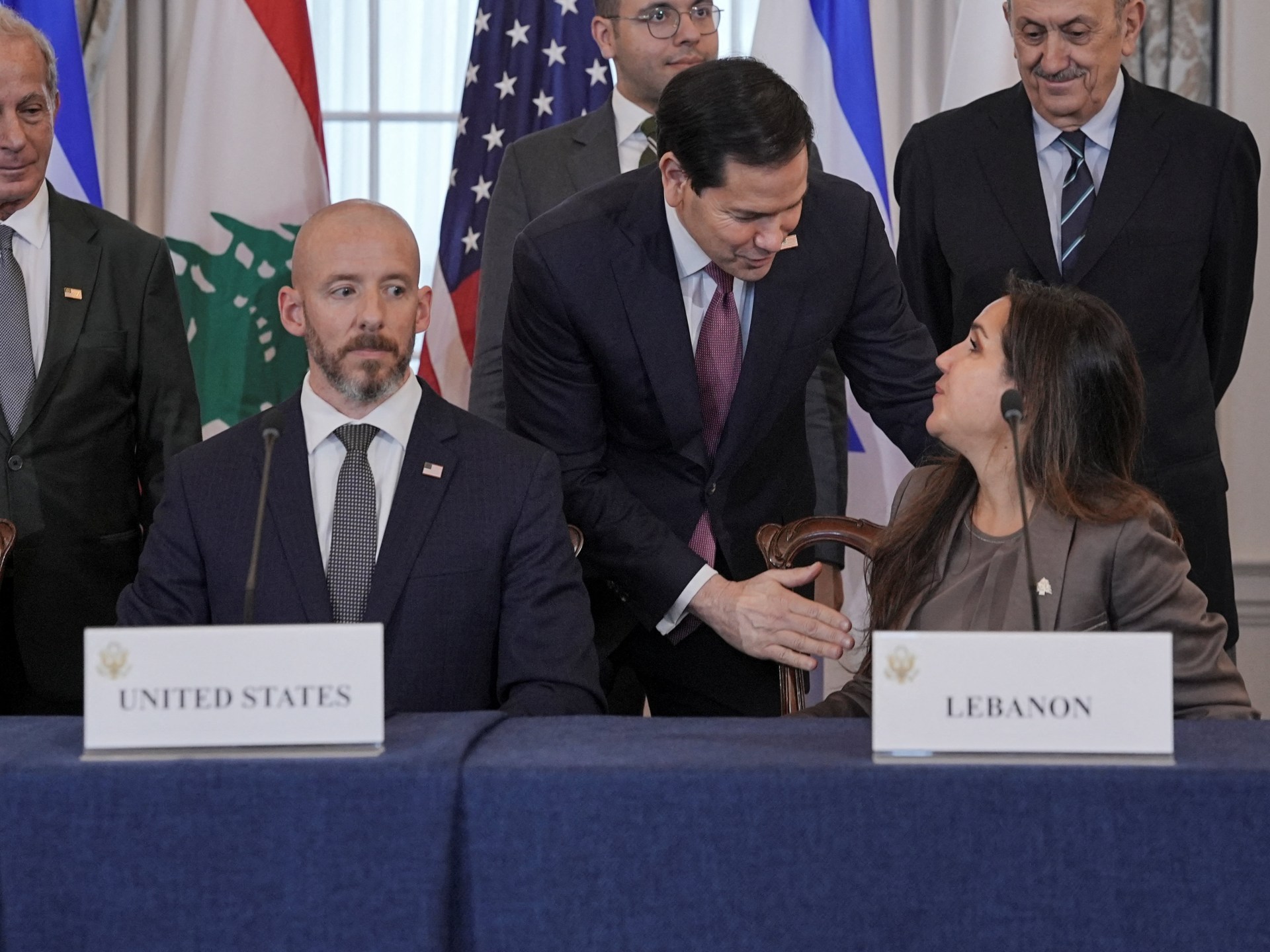
Israel and Lebanon signed a US-brokered framework agreement in Washington on Friday that American officials described as a first step toward ending fighting along the border, even as Israeli forces and Hezbollah continued to clash in southern Lebanon.
US Secretary of State Marco Rubio said the deal would start to put in place “a framework for lasting peace and security” and called it “the beginning of the beginning”. He added: “There is a lot of work ahead. Today is the first step. The first step is sometimes the hardest one.”
The agreement followed months of direct talks brokered by the United States, which is also a signatory to the trilateral framework. Hezbollah, the Iranian-backed Lebanese group fighting Israel, was not part of the talks, and it remains unclear whether it will accept provisions requiring non-state armed groups to disarm.
The 14-point framework says Israel and Lebanon “affirm” each state’s right to “live in peace” and express a “mutual desire to live in security as neighboring sovereign states”. It also calls for a “cessation of all hostile or adverse actions in international political or legal fora” between the two countries and pledges work toward the release of detainees and the return of any remains.
At the same time, the document says nothing prevents either government from exercising its “inherent right to defend” itself.
Rubio said the agreement “establishes a clear and structured process to restore Lebanon’s sovereignty, disarm [Hezbollah] and dismantle its terrorist infrastructure, and enable Israel to return to its borders once that threat to its citizens is removed”. The framework calls for the Lebanese Armed Forces to restore “effective sovereign authority over all Lebanese territory, pending the verified disarmament of non-state armed groups and dismantlement of associated infrastructure”.
The deal also creates a US-supported military coordination group to help implement the framework. It outlines two pilot zones, one south of the Litani River and one north of it, where the Lebanese military would gradually assume full security responsibility after the disarmament of non-state armed groups and the dismantling of their infrastructure.
Lebanese President Joseph Aoun called the agreement a first step toward restoring sovereignty and “the beginning of the path for displaced people to return to their liberated towns under the sovereignty of the Lebanese state”. Lebanese Prime Minister Nawaf Salam said on social media that it “aims to achieve Israel’s withdrawal from all Lebanese territories”, while also describing it as a continuation of previous agreements and United Nations resolutions placing all Lebanese territory under state military authority.
Israeli Prime Minister Benjamin Netanyahu said after the signing that Israeli forces would remain in southern Lebanon until Hezbollah disarms. He said Israel was “allowing the Lebanese army to begin organising to take over some territory” in the two pilot zones.
The scale of Israel’s current presence in Lebanon is described differently by outlets. The BBC reported that the Israeli army is occupying around 5% of Lebanese territory, while Al Jazeera reported that Israel continues to occupy approximately one-fifth of Lebanon.
Fighting has eased in intensity in recent days but has not stopped. Israel and Hezbollah have traded cross-border fire, with each side accusing the other of violating earlier ceasefire arrangements. Al Jazeera reported that on Friday an Israeli air raid killed two people in Mayfadoun, strikes hit Nabatieh al-Fawqa, and the Israeli military dropped leaflets demanding residents leave al-Mansouri.
Hezbollah has demanded that Israel leave Lebanon unconditionally. Its secretary-general, Naim Qassem, has said there should be “no normalisation” with Israel, and Hezbollah member of parliament Hassan Fadlallah said any attempt by the Lebanese army to enforce a Washington-brokered agreement would lead to “civil war”.
The conflict has killed at least 4,192 people in Lebanon since the current round of hostilities began, according to the Lebanese health ministry. More than 11,600 have been injured and more than 1.2 million displaced, Lebanese authorities say. Israeli authorities say 36 Israeli soldiers and four civilians have been killed on both sides of the border during the conflict.



Be First to Comment