Key takeaways:
- U.S. and Gulf officials said Israel and Hezbollah agreed to a ceasefire beginning at 4 p.m. local time Friday.
- Lebanon’s health ministry said Israeli attacks since midnight killed at least 47 people and wounded 97.
- U.S.-Iran talks on a memorandum of understanding were called off after the intense Israel-Hezbollah fighting in southern Lebanon.
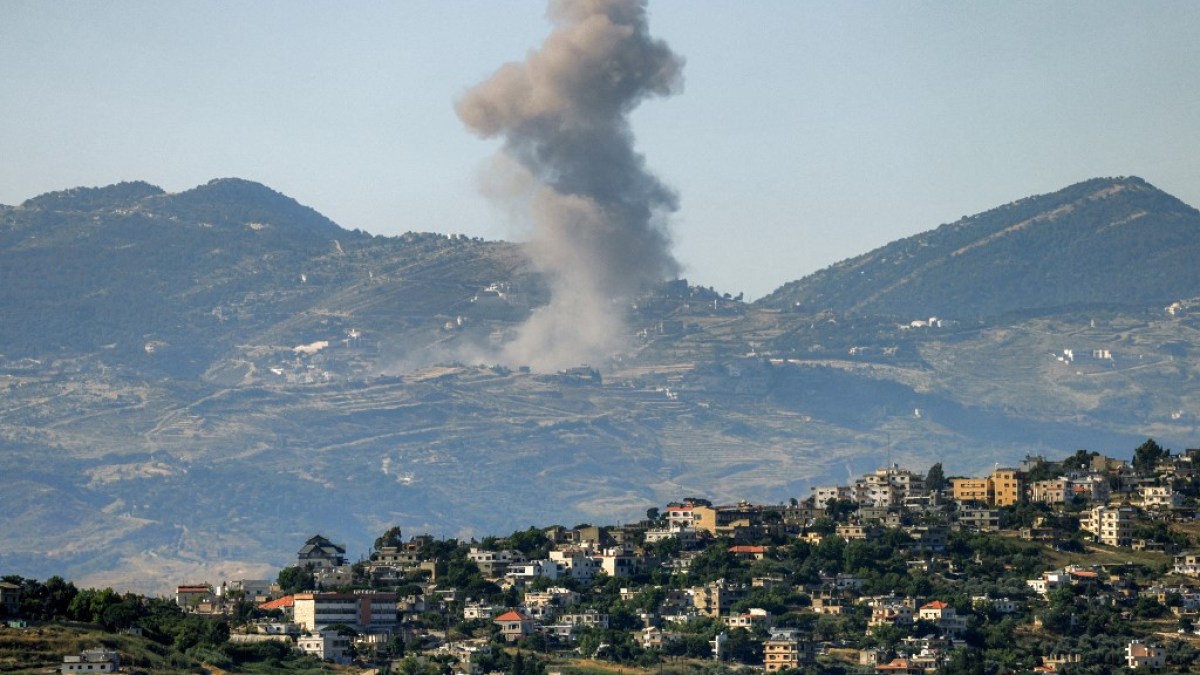
Israel and Hezbollah agreed to a ceasefire Friday, U.S. and regional officials said, but Israeli strikes and shelling continued in southern Lebanon within hours of the deadline, deepening doubts over a fragile deal tied to wider efforts to end hostilities involving the United States and Iran.
Officials and diplomats from the United States and the Gulf told news agencies the ceasefire was due to begin at 4 p.m. local time, or 13:00 GMT. A senior U.S. official told Reuters: “We understand that after the exchange of fire earlier today, Israel and Hezbollah are now in a ceasefire.” A Gulf diplomat told AFP the truce was brokered by Qatar, the United States and Iran and was aimed at preventing the fighting in Lebanon from derailing a broader push to turn an interim U.S.-Iran agreement into a lasting regional peace deal.
Lebanon’s health ministry said Israeli attacks that began at midnight and continued through Friday killed at least 47 people, including women and children, and wounded 97. In the Nabatieh district, the ministry said nine people were killed in Harouf, seven in Haboush and six in al-Duweir, including a child. Lebanon’s state news agency described the overnight bombardment across Nabatieh as one of the most intense of the war.
After the ceasefire deadline, rescue officials in Nabatieh told the BBC there had been at least 12 air strikes. Al Jazeera reported continued artillery shelling and at least 12 Israeli air raids in southern Lebanon after the deadline.
“It doesn’t feel much like a ceasefire,” Al Jazeera’s Heidi Pett reported from Tyre. “Instead, there is a sense of deja vu. Each time a ceasefire is announced, we see a renewed burst of military activity on the ground.”
The escalation followed clashes in southern Lebanon in which Hezbollah said it ambushed an Israeli group, destroyed three tanks with guided missiles and targeted troops with rocket and artillery fire. Israel said four soldiers were killed, including a battalion commander.
An Israeli military spokesperson, Effie Defrin, said Israel would “continue to remove immediate threats, respond to Hezbollah’s violations, and do whatever is necessary to protect our civilians.” A senior Israeli official told Reuters: “If Hezbollah does not attack us, then for us it is not a time of war.”
Hezbollah has not formally confirmed the ceasefire, but a Hezbollah official told Al Jazeera it would hold if Israel abided by it. Hezbollah Secretary-General Naim Qassem said Friday: “The project to eliminate Hezbollah has failed, and the Israelis will withdraw from every last inch of our land.” He also denounced what he called “the criminal Israeli war on Lebanon,” accusing Israel of killing civilians and children and destroying property to force the group to its knees.
The fighting has also strained diplomacy around a memorandum of understanding that declared a ceasefire in Lebanon as well as between the United States and Iran. Talks between Washington and Tehran on the agreement were called off Friday after the intense fighting, officials told the Associated Press. Iranian officials did not travel as planned to Switzerland, saying the fighting in Lebanon had to stop first, while U.S. Vice President JD Vance also postponed his trip.
Iranian Foreign Minister Abbas Araghchi accused Israel of seeking “permanent war” and warned that any breach of commitments in the memorandum would be attributed to Washington. His comments followed a post by far-right Israeli National Security Minister Itamar Ben-Gvir, who wrote after the deaths of the Israeli soldiers: “All of Lebanon must burn.” Ben-Gvir also said that “for every tear of an Israeli mother, a thousand Lebanese mothers must weep.”
The U.N. welcomed reports of the ceasefire. Spokesperson Stephane Dujarric said the United Nations continued to call on the parties to cease hostilities, respect existing ceasefire arrangements and pursue dialogue as “the only viable path” to long-term stability on both sides of the Blue Line.
The next round of Lebanese-Israeli talks is due in Washington from June 23 to 25, the U.S. State Department said. Lebanese President Joseph Aoun told U.S. Secretary of State Marco Rubio that a “comprehensive ceasefire” must be the “fundamental basis” for any direct negotiations with Israel.
Since the latest conflict began, more than 3,900 people have been killed and more than 11,600 wounded in Lebanon, according to the country’s health ministry. Around 1 million people remain displaced, and dozens of communities in the south have been completely destroyed.



Be First to Comment