Key takeaways:
- U.S. officials said Trump, Vice President JD Vance and Iranian Parliament Speaker Mohammad-Bagher Ghalibaf digitally signed the memorandum, with a formal ceremony expected Friday.
- U.S. officials said no frozen Iranian assets have been released, while Iran’s Revolutionary Guard said Tehran will receive half of about $24 billion before final negotiations begin.
- Israel said it is not bound by the U.S.-Iran agreement in Lebanon, while Pakistani and Lebanese officials said the deal includes halting hostilities there.
The United States and Iran have digitally signed a memorandum of understanding aimed at extending a ceasefire, reopening the Strait of Hormuz and setting up negotiations on Iran’s nuclear program, U.S. officials said Monday, while uncertainty grew over whether the agreement will halt the fighting in Lebanon.
A senior U.S. administration official said President Donald Trump, Vice President JD Vance and Iranian Parliament Speaker Mohammad-Bagher Ghalibaf signed the document remotely. A formal signing ceremony is still expected Friday, with Vance, Trump’s son-in-law Jared Kushner and U.S. special envoy Steve Witkoff expected to attend. Iranian Foreign Minister Abbas Araghchi said negotiating teams were expected to meet Friday, “likely in Switzerland.”
The full text has not been released. Trump told reporters at the G7 in France that it may come out after Friday. “This is a very powerful document and I want it to be released,” he said. “So probably pretty soon. I would say after, sometime after Friday.”
U.S. officials said nuclear issues will be prioritized during a 90-day negotiation window, with talks intended to begin in the first 30 days. “We want to put nuclear discussions and everything out up front,” one senior U.S. official said, adding that sanctions relief and other economic measures would depend on Iran providing assurances that it is not building a nuclear weapon or “funding radicalism” in the region.
Vance told CBS News that the United States had discussed how to destroy Iran’s enriched uranium stockpile and would work with the International Atomic Energy Agency and Iran on the issue. He said he did not “think the U.S. military forces are going to be necessary,” but did not rule out a U.S. role. “What the President has made very clear is the United States will be there to confirm that that enriched stockpile of material is destroyed,” Vance said. According to the IAEA, Iran has about 900 pounds of highly enriched uranium believed to be buried under rubble at a nuclear facility hit by U.S. and Israeli strikes a year ago.
The financial terms remain disputed. Iran’s Revolutionary Guard said Iran will receive half of roughly $24 billion in long-frozen funds before final negotiations begin during a 60-day ceasefire extension. Two senior U.S. officials said no frozen assets have been released by the United States or any other country. One said Washington may unfreeze some Iranian assets and sanctions in phases as “small gestures” once technical negotiations begin, depending on reciprocal Iranian steps.
The agreement has immediate implications for shipping. It calls for reopening the Strait of Hormuz, a vital waterway that accounted for roughly 20% of global crude transit before the war. Trump said Monday that ships were “starting to move” along a southern route he called “totally safe, secure, and pristine.” But the international Joint Maritime Information Center said the U.S. naval blockade remained in place and warned mariners not to transit the strait without “explicit direction.” U.S. Central Command said Sunday that the blockade had “redirected 142 commercial ships that complied and disabled 9 vessels that did not comply.”
Shipping groups also urged caution. BIMCO said official information did “not offer sufficient information regarding key aspects such as timings and safe routes.” Maersk welcomed the agreement but told Reuters that “publicly available details are still limited” and said there were “no changes to our operations in the region.”
In Lebanon, the deal raised hopes among displaced residents but also deep doubts. Pakistani Prime Minister Shehbaz Sharif said the agreement included “the immediate and permanent termination of military operations on all fronts, including in Lebanon.” Lebanese President Joseph Aoun said people were looking for “practical steps that bring a definitive end to the cycle of violence and open the way to stability, security, recovery and reconstruction.” Parliament Speaker Nabih Berri thanked Iran and the United States for including a clause “on halting Israeli aggression against all of Lebanon.”
Israel said it is not bound by the U.S.-Iran agreement to end its fight with Hezbollah or withdraw forces from Lebanon. “We oppose the withdrawal of the Israeli army from Lebanon, despite all current and future pressures,” Israeli Defence Minister Israel Katz said Monday.
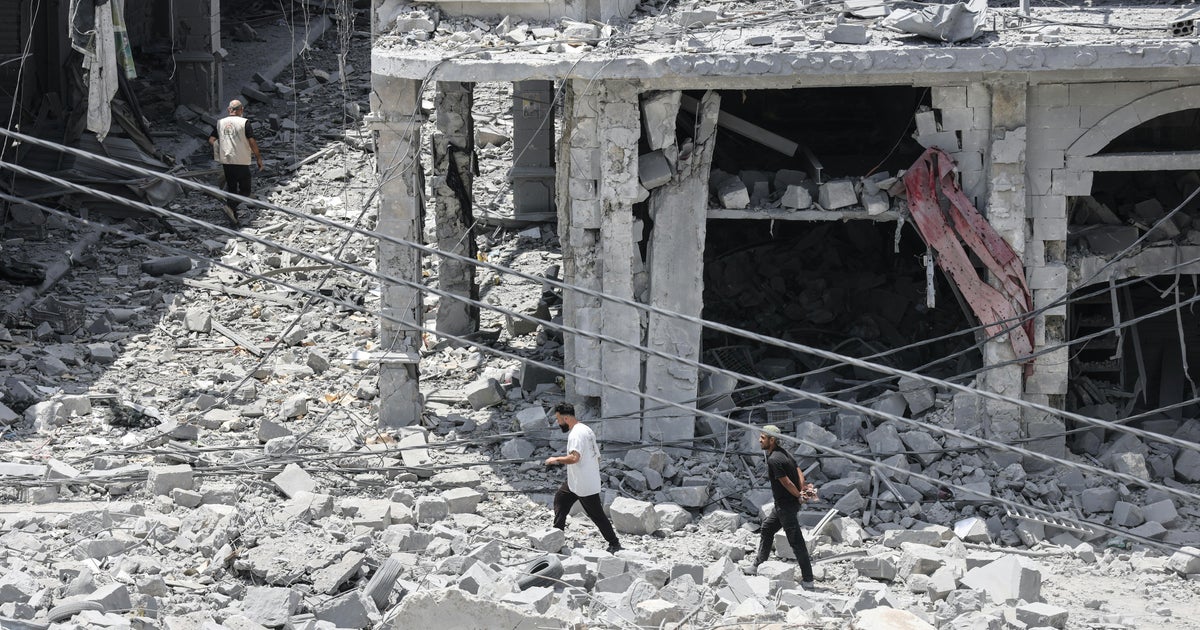
Lebanon’s army urged displaced residents to delay returning to southern border villages, citing the “risk of Israeli violations and attacks.” Still, some went back. In Nabatieh, Kamal Kamal found his coffee roastery and warehouse destroyed. “When I opened it in the seventies, I was still a young man… now nothing is left,” he said. “How my life has been spent in vain here!”



Be First to Comment