Key takeaways:
- AI companies would be asked to share powerful models with the federal government up to 30 days before release for voluntary review.
- The order bars mandatory licensing or pre-clearance requirements for new AI models.
- Federal agencies including the Pentagon, Treasury Department, CISA, NSA and Defense Department will have roles in AI scrutiny and cybersecurity protections.
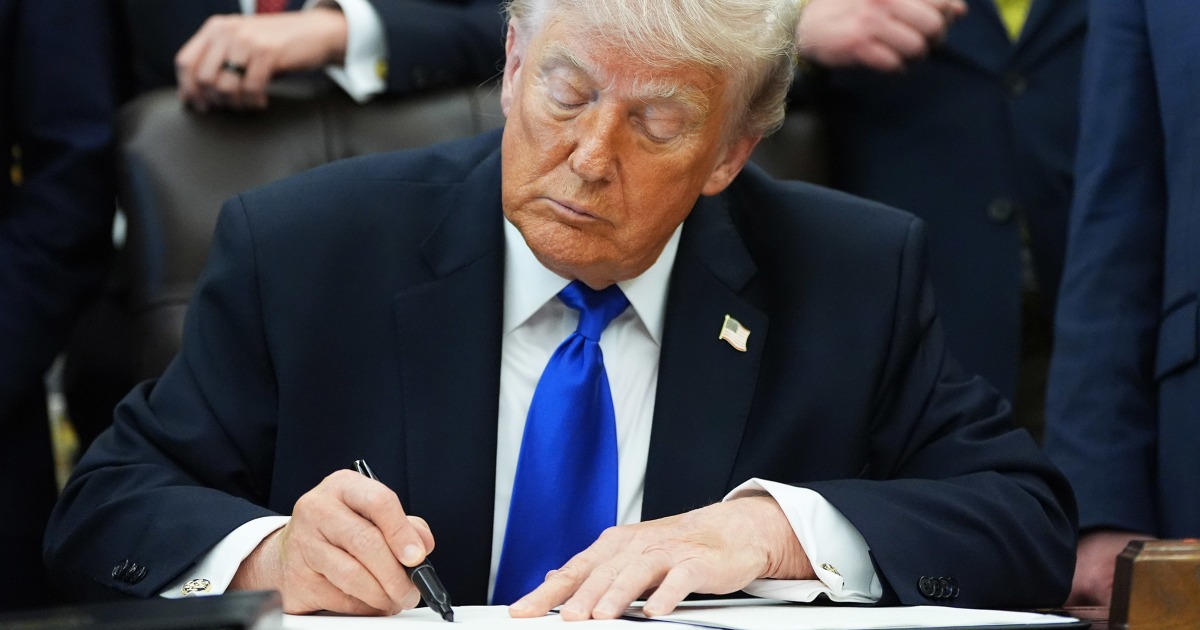
President Donald Trump signed an executive order Tuesday asking artificial intelligence companies to give the federal government early access to their most powerful models for safety and security reviews before release.
The order creates a voluntary framework for federal vetting of advanced AI systems, stopping short of mandatory licensing or pre-clearance requirements for companies building new models. Under the order, companies would be asked to share cutting-edge models with the government up to 30 days before releasing them to other trusted partners or the public.
“Advanced AI capabilities make our Nation stronger, but also introduce new national security considerations that require coordinated action across executive departments and agencies,” the order says. It says the Trump administration will “work closely with industry to ensure that the best and most secure technology is deployed rapidly to confront any and all threats to our country.”
The order directs agencies including the Pentagon, the Treasury Department and the Cybersecurity and Infrastructure Security Agency to strengthen cybersecurity defenses for critical infrastructure. The National Security Agency and the Department of Defense will help determine which AI models require scrutiny, while the Treasury Department will play a key role in finding vulnerabilities in AI models, The Guardian reported.
The administration also directed the government to hire more cybersecurity and AI professionals and to strengthen cybersecurity systems at key infrastructure sites, including hospitals and banks, according to The Guardian.
The measure relies on cooperation from leading AI companies, including Anthropic, OpenAI and Google. It also follows earlier federal arrangements with major AI developers. Last month, the Trump administration struck a deal with Microsoft, Google DeepMind and xAI to review early versions of new AI models before release, The Guardian reported. The Center for AI Standards and Innovation, part of the Commerce Department, already has similar agreements with OpenAI and Anthropic. The Guardian reported that the federal government recently removed details of the Microsoft, Google DeepMind and xAI agreement from its website, though the reason was unclear.
Federal officials have described this kind of information sharing as standard practice and important for national security. Some free speech advocates, however, have warned that too much government control could lead to censorship, The Guardian reported.
The executive order had been in development for months. NBC News reported that it was originally scheduled to be signed in late May, when the White House invited tech CEOs to attend a signing ceremony and held a press briefing with senior officials. Trump pulled the order at the last minute and later told reporters he was concerned it could slow American companies in their competition with Chinese firms.
“We’re leading China, we’re leading everybody, and I don’t want to do anything that’s going to get in the way of that lead,” Trump said at the time.
The new order comes as federal officials and AI safety experts have raised concerns about the capabilities of the latest models. In April, Anthropic’s Mythos Preview model drew attention in Washington for what NBC News described as a superhuman ability to find critical and severe vulnerabilities in widely used operating systems. The Guardian reported that Anthropic’s Mythos has raised concerns among AI safety experts, governments and technology companies because of its ability to exploit vulnerabilities at unprecedented scale in widely used software.
The order also signals a shift from Trump’s earlier lower-regulation approach to AI. One of his first actions as president was to revoke a Biden-era executive order that established standards for safely developing AI, The Guardian reported. Trump also announced another AI-focused executive order in December aimed at preventing states from regulating AI, creating a federal task force to challenge state AI laws.











Be First to Comment