Key takeaways:
- Iran suspends indirect negotiations with the U.S. citing ceasefire violations amid Israel's military actions in Lebanon.
- Israel deepens its ground offensive in Lebanon, seizing Beaufort castle and targeting Hezbollah positions in Beirut.
- Iran signals opening new conflict fronts including threats to the Bab el-Mandeb strait via its Houthi allies.
- About 70 commercial ships have transited the Strait of Hormuz over the past three weeks with U.S. Central Command assistance.
- Iran executed two men convicted of arson and other charges related to January 2025 protests after Supreme Court upheld their sentence.
Iran announced on Monday that it is suspending indirect negotiations with the United States in response to Israel’s expanding military offensive in Lebanon, according to Iran’s semi-official Tasnim news agency. The move complicates ongoing efforts to end the conflict that began on March 2 and has resulted in thousands of casualties.
Tasnim, which is aligned with Iran’s Islamic Revolutionary Guard Corps (IRGC), reported that Iran’s negotiating team will halt “talks and the exchange of texts through mediators” due to what it describes as violations of the ceasefire by the U.S. and Israel, particularly Israel’s operations in Lebanon. Iranian Foreign Minister Seyed Abbas Araghchi posted on X that the ceasefire between Iran and the U.S. applies “unequivocally on all fronts, including in Lebanon,” warning that “the U.S. and Israel are responsible for the consequences of any violation.”
President Donald Trump said he was not informed of Iran’s decision in advance. In a brief call with NBC News, he remarked, “It’s an appropriate thing to say, because they’re better negotiators than they are fighters,” but added, “It doesn’t mean we’re going to go and start dropping bombs all over there. We’ll keep the blockade.”
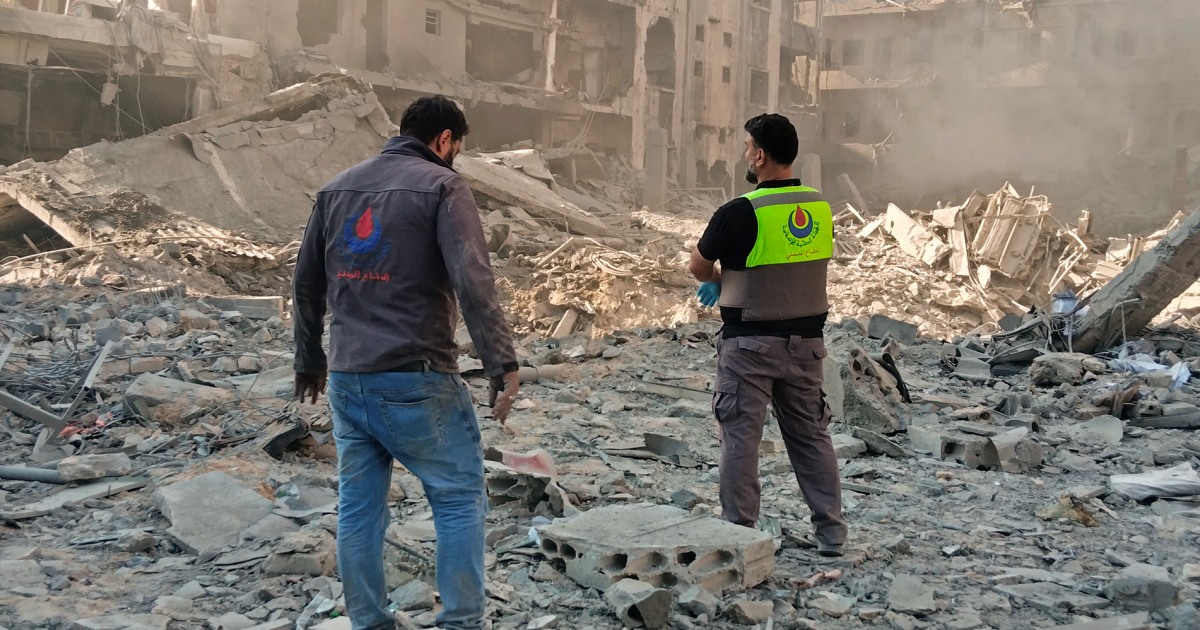
The conflict has seen a recent escalation as Israel deepened its ground incursion into Lebanon, marking its most significant operation there in 26 years. Israeli forces seized the medieval Beaufort castle on Sunday, miles north of the border, and Prime Minister Benjamin Netanyahu ordered strikes on Hezbollah-controlled southern suburbs of Beirut, calling them “terror headquarters.” The Israel Defense Forces (IDF) issued evacuation warnings to residents of the southern Beirut suburb of Dahiyeh, signaling imminent attacks.
The Lebanese health ministry reported that at least 3,422 people have been killed and over 10,395 wounded since the war began on March 2. The IDF has confirmed 26 Israeli soldier deaths during the fighting.
Meanwhile, Iran’s Tasnim news agency indicated that Iran and its regional proxies are preparing to open “other fronts” in the conflict, including threatening the Bab el-Mandeb strait, a vital maritime chokepoint through which about 14% of global maritime trade passes. The IRGC has reportedly instructed its Houthi allies in Yemen to attack commercial shipping in the Bab el-Mandeb, escalating the conflict beyond the Strait of Hormuz, where Iran has threatened closure and levied tolls.
A U.S. official told CBS News that about 70 commercial ships have transited the Strait of Hormuz over the past three weeks with help from U.S. Central Command, which has been communicating with vessels about a safer path farther from Iran that the U.S. Navy cleared about a month ago.
On Monday, a Panama-flagged container ship, MSC Sariska V, was struck by an unknown projectile in the Persian Gulf near Iraq, causing a large explosion and damage above the waterline. This incident is among 44 confirmed maritime attacks in the region since the conflict began.
The ongoing violence has also disrupted diplomatic efforts. German and Norwegian ministers canceled a planned visit to Beirut due to the deteriorating security situation. The U.N. Security Council scheduled an emergency session on Monday to address the Israel-Hezbollah war.
Oil prices surged more than $6 per barrel following Iran’s announcement and the intensifying conflict, with Brent crude rising nearly 7% to $97.47 a barrel. Despite the spike, U.S. stock markets remained near record highs, though companies with high fuel costs, such as United Airlines and Carnival, experienced losses.
Iran also faces internal turmoil, having executed two men convicted of multiple charges related to protests in January 2025, according to Mizan News, the judiciary’s media outlet. The men, identified as Mehrdad Mohammadinia and Ashkan Maleki, were convicted in connection with an arson attack on the Jafari Mosque in Kooy-e Nasr, as well as charges including destruction of public property, clashes with security forces, blocking streets, and disrupting public order. They were hanged on Monday morning after the Iranian Supreme Court upheld their sentence. Human rights groups have criticized Iran for alleged forced confessions and a sharp increase in executions since the conflict began.
The suspension of talks and ongoing conflict highlight challenges to the fragile U.S.-Iran ceasefire and complicate diplomatic efforts amid the Israel-Hezbollah war.







Be First to Comment