Key takeaways:
- More than 3,000 data centers operate in the United States, with another 1,500 proposed, according to CBS News.
- Loudoun County, Virginia, received about $1.2 billion in data center property tax revenue in fiscal 2026, roughly 39% of its county budget, NPR reported.
- An Economist/YouGov poll cited by NPR found about two-thirds of Americans oppose new data center construction in their communities.
A surge in data center construction tied to artificial intelligence is turning once-routine zoning fights into major political flashpoints across the country, uniting residents across party lines and forcing elected officials to defend projects that promise tax revenue but bring fears about power, water, noise and control.
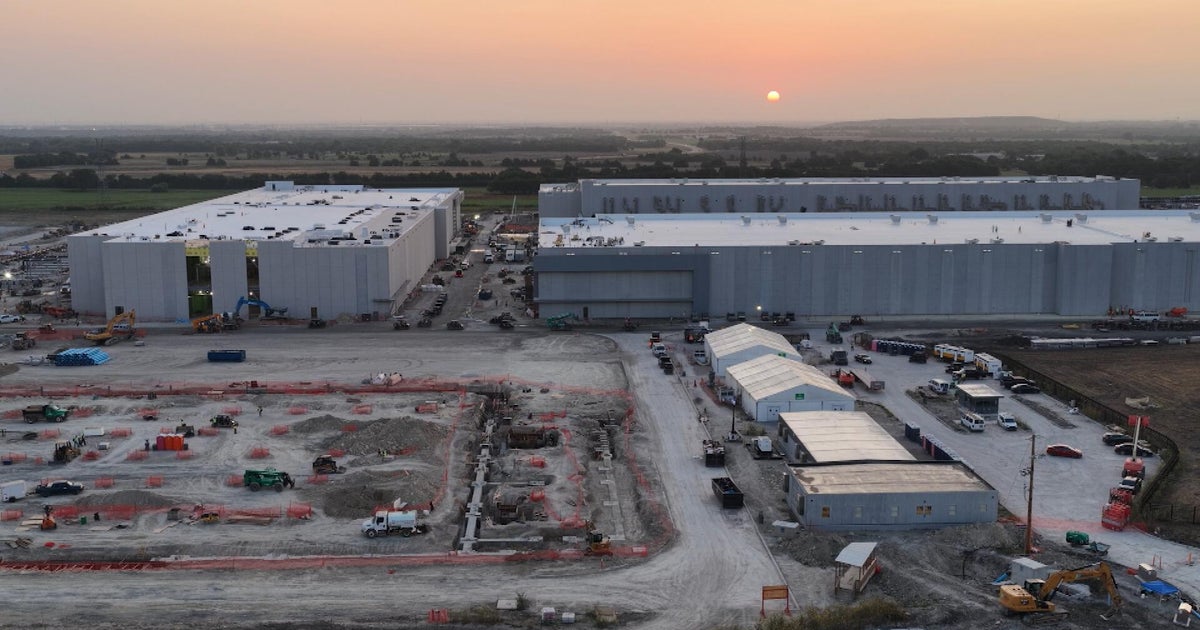
More than 3,000 data centers operate in the United States, with another 1,500 proposed, CBS News reported. The facilities — vast warehouses filled with computer chips — have become the physical backbone of AI, cloud computing and data storage. But as their scale grows, so does resistance.
In Red Oak, Texas, outside Dallas, Marine veteran and mother of five Jazmin Villegas is fighting a proposed Compass development that would place 10 two-story data centers on agricultural land roughly the size of Manhattan’s Central Park. “It’ll be nothing but data center buildings, concrete,” Villegas told CBS News while describing the area near her farm.
Asked why she became a leader in the opposition, Villegas said, “Just because I’m not in uniform doesn’t mean that my service to this country has ended.” She said residents do not know whether pollution, chemicals, water use, air impacts or noise could affect the community. After the city council approved the project despite public opposition, she said she was angry, but not defeated: “Oh. Challenge accepted.”
The fight in Red Oak mirrors conflicts playing out in Virginia, Arizona, Minnesota, Pennsylvania, Indiana and other states. NPR reported that opposition groups have formed around concerns about secrecy, environmental strain and the role of elected officials in approving projects. According to the Data Center Opposition Report cited by NPR, about 640,000 people are active in the anti-data center movement, and 220 new groups formed from June through August.
Darrell West, a senior fellow at the Brookings Institution, told NPR that data centers have “upended politics as we know it.” He said the backlash reflects more than local land-use complaints. “People just feel like they no longer have control over the technology, [and] that worries them,” West said. “This is a real grassroots movement. It’s ordinary people all across the country, both Republicans and Democrats.”
Polling shows broad skepticism. NPR cited an Economist/YouGov poll of nearly 1,600 adults finding that about two-thirds of Americans oppose new data center construction in their communities. CBS News reported that more than 60% of Republicans, independents and Democrats say they do not want a data center where they live.
In Loudoun County, Virginia, home to the world’s highest concentration of data centers, the issue is dividing Democrats. Supervisor Juli Briskman, who has pushed to slow development, is challenging Board Chair Phyllis Randall in next year’s primary. Randall has supported data centers for their tax revenue while calling them “a double-edged sword” for nearby residents, NPR reported.
The industry’s economic case is strongest in places such as Loudoun County, where data centers generated about $1.2 billion in property tax revenue in fiscal 2026, about 39% of the county budget. Dan Diorio of the Data Center Coalition told NPR that property and vehicle tax rates have fallen as a result. Loudoun County confirmed its real property tax rate has dropped about 30% over the past decade because of data center revenue.
Still, residents cite rising electricity costs, water use and noise. In Loudoun County, people living near the Vantage VA2 data center say natural-gas-fired turbines create a low rumble and high-frequency whine. In Chandler, Arizona, residents worry about water used for cooling in a state with shrinking supplies. CBS News reported that electricity bills in Loudoun County have surged in the last year at least partly because of growing power demand, while its analysis found golf courses nationwide use more than twice as much water as data centers.
Michael Webber, a University of Texas professor who studies water and energy, said the scale of AI facilities is unprecedented. “In the old days, and by old days I mean, like, two years ago, a large data center might have been five megawatts,” he told CBS News. “A new data center for AI might be 1,000 megawatts.” His advice to companies is blunt: “Don’t be a jerk. Don’t take the water. Don’t break the grid. Don’t ruin the land.”
Politicians are responding. Texas Gov. Greg Abbott, who once promoted the state as a global center for Google AI data centers, paused approvals in August for new centers drawing from the state power grid until they complete an audit, CBS News reported. His Democratic challenger, Gina Hinojosa, is calling for a temporary moratorium and has made the issue central to her campaign. In Virginia, Gov. Abigail Spanberger signed an executive order seeking tighter limits on development, NPR reported.
For some voters, the issue is changing political calculations. Dave Lowe, a lifelong conservative Republican who lives near the proposed Red Oak site, told CBS News he will not vote by party this time. “I’m going to vote for the candidate that is willing to speak up, and put up, and do something to help us with this issue,” he said.










Be First to Comment