Key takeaways:
- Spanish police began moving more than 3,000 migrants from Ceuta’s beaches to a temporary port camp with capacity for 1,700 people.
- More than 72,000 migrants crossed into Ceuta from Morocco in late July; estimates of those still in the enclave range from at least 10,000 to 13,000.
- Police used force during the operation, with reports of shots or rubber bullets fired into the air and officers striking people with batons.
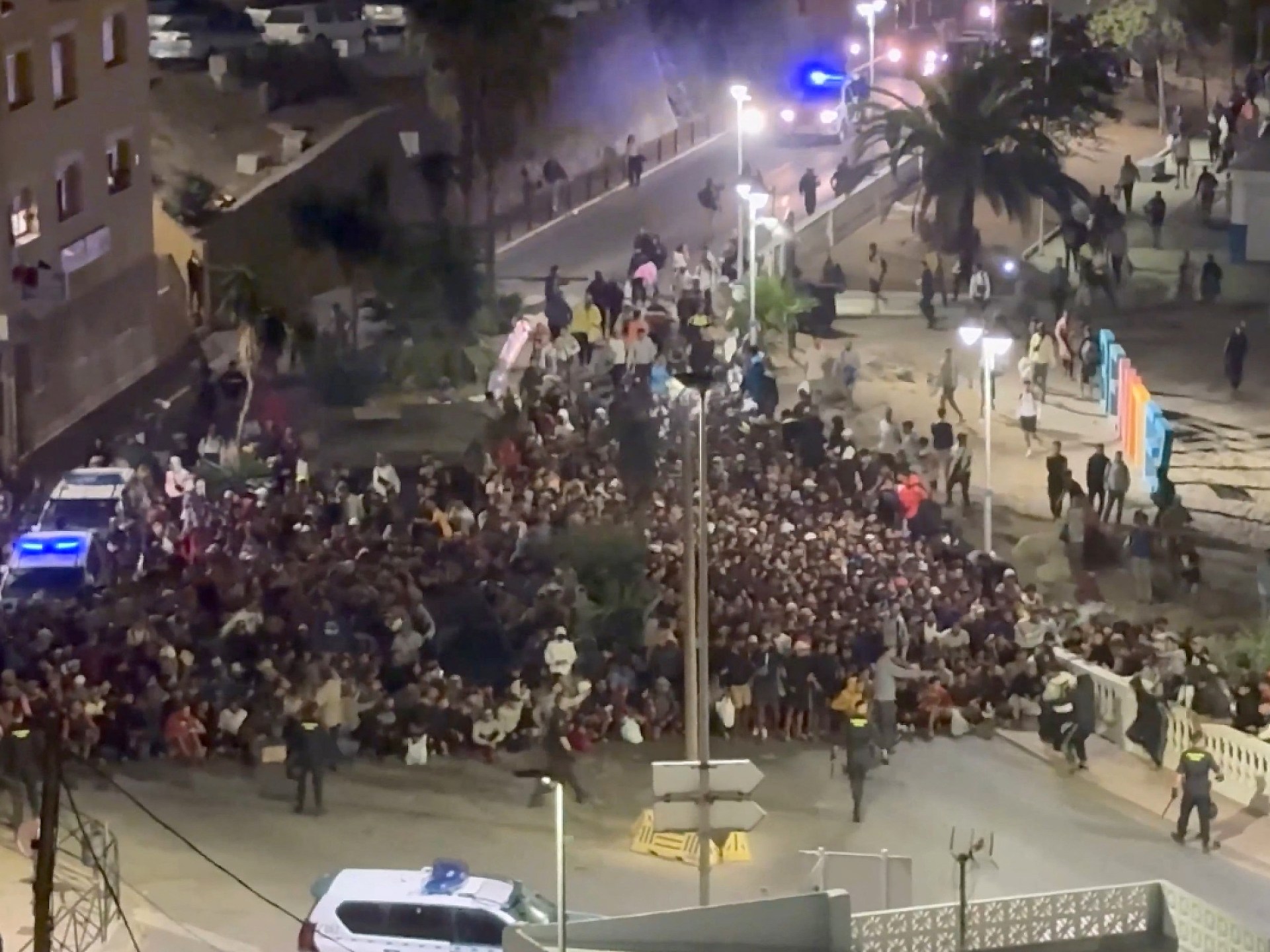
Spanish police began moving thousands of migrants from beaches in Ceuta to a temporary tent camp in the port area Friday, triggering chaotic scenes as crowds pushed to secure places after weeks of sleeping rough in the Spanish enclave on North Africa’s coast.
The operation started shortly before 7 a.m. local time, with more than 3,000 migrants set to be transferred, the Spanish government-owned news agency Efe reported, according to the BBC. More than 170 police officers were deployed, including drone technicians.
Officers struggled to control the crowds along a designated 2-kilometer route to the port. The BBC reported that shots could be heard, with reports that police fired into the air. Al Jazeera reported that riot police fired rubber bullets into the air and struck people with batons. Video showed young men running in the darkness after some migrants broke through the police cordon.
Efe said the situation was later “brought under control quickly” and the operation continued, the BBC reported. Several hundred migrants had reached the new site, which has capacity for 1,700 people.
The port camp is part of the Spanish government’s effort to concentrate migrants in facilities where they can be identified and cared for while their administrative status is determined individually. Al Jazeera, citing AFP, reported that the tents near the port include showers and beds. NGOs say thousands of migrants remain unhoused and have been sleeping in makeshift camps.
Ceuta, a 18.5-square-kilometer territory with an official population of about 80,000, saw an unprecedented border rush in late July, when more than 72,000 people crossed from Morocco by climbing the border fence or swimming around sea barriers. Most have since returned. Ceuta’s authorities estimate that 13,000 migrants remain in the enclave, while Spain’s central government has said the number is lower. Al Jazeera reported that Spain estimates at least 10,000 remain.
The July influx followed a Spanish Supreme Court ruling that migrants stopped at sea while trying to reach Ceuta cannot be summarily returned to Morocco. After the ruling, some social media accounts spread misinformation and offered to help migrants cross the Spanish border for hundreds of pounds. Local authorities say at least 100 people died during the crossing.
The crisis has strained Ceuta and sharpened political criticism of Prime Minister Pedro Sánchez. Residents have expressed safety concerns since the arrivals, and some have destroyed shelters and blocked aid deliveries to migrants.
Ceuta Mayor Juan Jesús Vivas told European Parliament lawmakers earlier this month that the enclave had become a “pressure cooker.”
“The city is completely different than it was before this event, Ceutans have lost their joy and their lifestyles have been completely shaken up,” said Vivas, a conservative.
Opposition politicians have accused Sánchez’s government of knowing about the influx in advance. Sánchez has said it was impossible to predict, though government documents cited by the BBC showed intelligence services had warned the day before of social media calls for a mass crossing into Ceuta.
Ester Muñoz of the conservative People’s Party said the government was “directly responsible for the invasion of Ceuta and for those who died.” Sánchez has blamed trafficking gangs and said the crisis was sparked by hoaxes and rumors spread on social media. He described Ceuta as “a humanitarian crisis and also an administrative challenge within the city itself.”
EU Migration Commissioner Magnus Brunner told Reuters on Friday that images from Ceuta had overshadowed declining irregular arrivals in Europe and “fuel the far right.” He said it was important “to return those people as soon as possible to show that we have control.”








Be First to Comment