Key takeaways:
- Burnham will replace Keir Starmer after meeting King Charles III and become the UK’s seventh prime minister in 10 years.
- His team has signalled plans to scrap a government-issued digital ID for all British adults and consider public control of water and energy companies.
- Al Jazeera reported that Burnham inherits tight public finances, including about 110 billion pounds in debt interest spending in 2025-26.
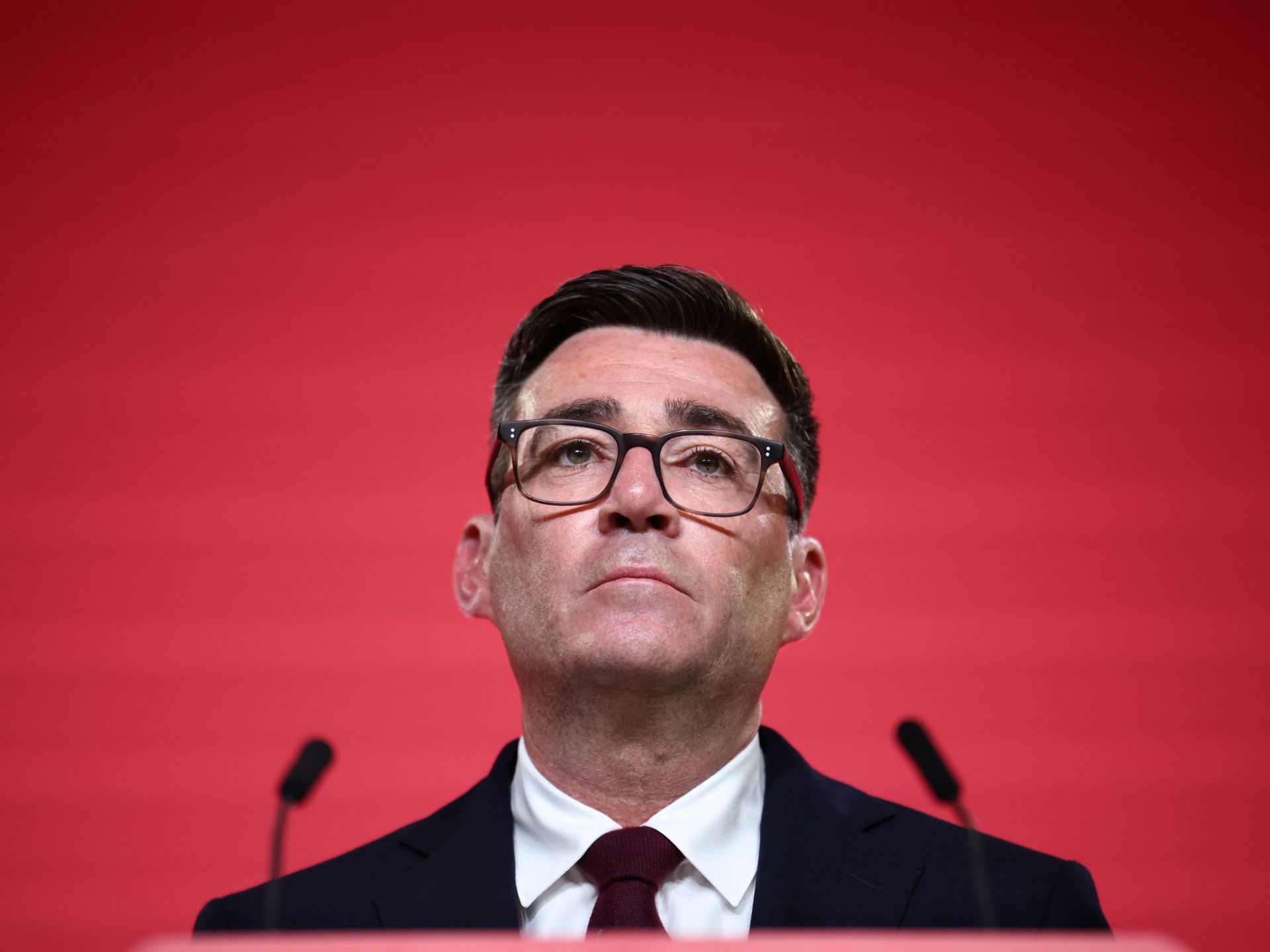
Andy Burnham will become the UK’s 59th prime minister on Monday and use his first speech outside Downing Street to promise “more breathing room” for people facing high living costs, as he takes office amid economic strain, political volatility and pressure to set out a clearer agenda.
Burnham, the former mayor of Greater Manchester and MP for Makerfield, will formally replace Sir Keir Starmer after Starmer meets King Charles III to offer his resignation. The King is then expected to ask Burnham to form a government, after which Burnham will travel to No 10 for his maiden speech as prime minister.
The BBC reported that Burnham is expected to say he is “acutely conscious” of the UK’s rapid turnover of leaders. He will be the country’s seventh prime minister in 10 years. He is also expected to describe the moment as one of “reflection and resolution” and argue that political stability must produce “tangible” improvements for households.
Burnham was declared Labour leader on Friday after a short contest in which he was the only candidate, having secured the backing of 379 MPs. In his speech after becoming leader, he promised to deliver “the most significant change moment in our politics for 40 years” and made five pledges, including working with other parties in a “distinctively Labour” direction and transferring power from Westminster to local authorities.
His cabinet remains unclear. The BBC reported that Burnham is expected to begin appointing senior ministers once inside No 10, with speculation focused on the chancellor’s job. Energy Secretary Ed Miliband had been seen as a likely candidate, but Home Secretary Shabana Mahmood has emerged in recent days as another possible replacement for Rachel Reeves at the Treasury.
Conservative leader Kemi Badenoch criticised Burnham before he took office, calling him a “people pleaser” when the country needed someone able to “take tough decisions” and “face down Labour MPs”. “The job is not a popularity contest. It is making the lives of all of the people outside this building better. And he has not said what he’s going to do. It’s all airy-fairy stuff,” she said.
Some opposition parties have urged Burnham to call a general election to secure a mandate. Labour deputy leader Lucy Powell told the BBC that Burnham would stick to the party’s 2024 manifesto promises but be more ambitious. “He really understands the bigger, bolder measures that are needed to live up to the manifesto promises,” she said.
Among the early measures trailed by Burnham’s team is scrapping plans for a government-issued digital ID for all British adults, described as part of a “reset of priorities”. Plans involving North Sea oil and gas are also expected to be considered, alongside proposals to bring water and energy companies under public control and launch a new council house-building programme. Environmental campaigners have urged Burnham to maintain Labour’s 2024 pledge not to issue new North Sea drilling licences. The BBC reported that he is expected to uphold that commitment and produce oil and gas only at sites that already have licences. US President Donald Trump welcomed the prospect of more drilling in a social media post on Sunday.
Al Jazeera reported that Burnham inherits an economy that has barely grown in two decades, limited fiscal room and a difficult geopolitical environment. Anand Menon, director of UK in a Changing Europe, said Burnham has “relatively little fiscal room for manoeuvre” and that new spending would likely need to come through taxation rather than borrowing. The government spent about 110 billion pounds, or $148 billion, on debt interest in 2025-26, around 8% of all public spending, while taxes are forecast to reach their highest share of the economy since World War II by the end of the decade.
Burnham will also face a diplomatic dispute over British Steel’s Scunthorpe works, which the government fully nationalised after Chinese owner Jingye Group said it planned to close the loss-making plant. Jingye has vowed to seek “full compensation through legal means,” while China’s Ministry of Commerce accused London of undermining Chinese investor confidence.
Labour also faces political pressure from Reform UK. Al Jazeera reported that Labour has trailed Reform in polls for 18 months, though recent polls put Reform at about 24% to 26% with Labour close behind. Menon said Burnham’s fortunes may depend on whether voters see improvements once he is in office: “People don’t just want to listen to what you’re saying, they want to see changes for the better in their lives.”







Be First to Comment