Key takeaways:
- Randy Bresnik will command Artemis III, with Luca Parmitano as pilot and Frank Rubio and Andre Douglas as mission specialists.
- Artemis III is expected to launch next year and spend about two weeks testing rendezvous and docking with at least one lunar lander in Earth orbit.
- Blue Origin and SpaceX are building the landers NASA needs for a planned Artemis IV moon landing attempt in 2028.
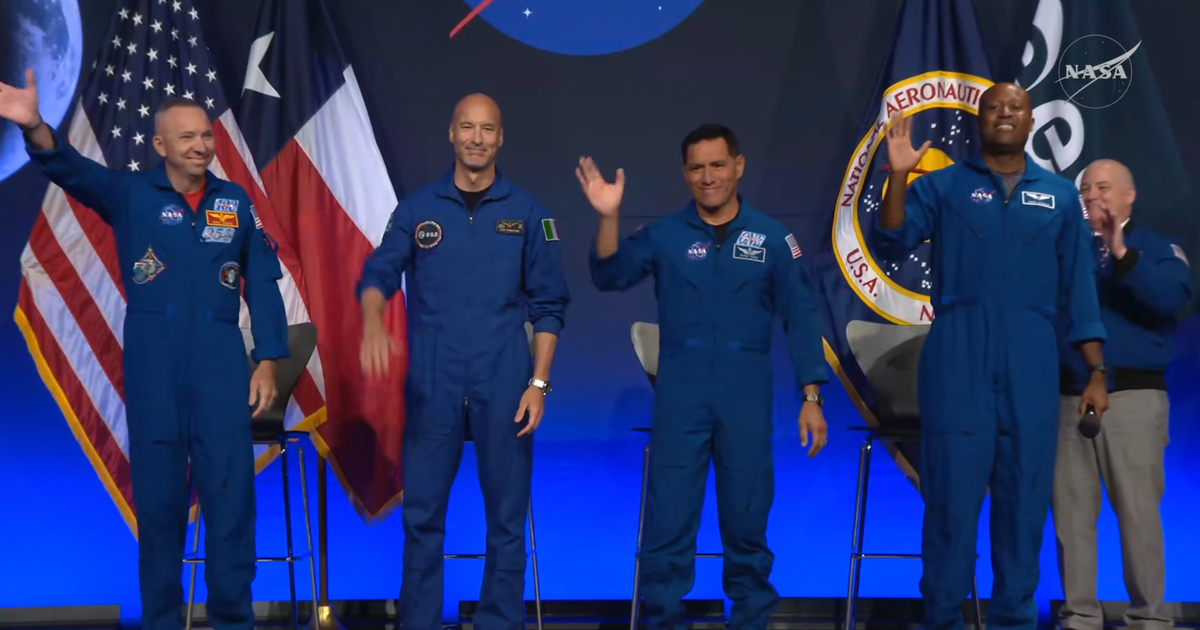
NASA has named the four astronauts it plans to send on Artemis III, a mission that will keep the agency’s next moon crew closer to Earth than originally planned while testing the landers needed for a lunar touchdown in 2028.
The crew, announced Tuesday at Johnson Space Center in Houston, will be commanded by NASA astronaut Randy Bresnik. Luca Parmitano, an Italian astronaut with the European Space Agency, will serve as pilot. NASA astronauts Frank Rubio and Andre Douglas will fly as mission specialists, and NASA astronaut Bob Hines will train as the backup crew member.
The astronauts are expected to launch next year aboard NASA’s Orion spacecraft atop the Space Launch System rocket from Kennedy Space Center in Cape Canaveral, Florida. Their mission is expected to last about two weeks, roughly four days longer than the Artemis II flight around the moon earlier this year, NASA Artemis Program Manager Jeremy Parsons said.
Instead of landing on the moon, Artemis III will test rendezvous and docking procedures in Earth orbit with at least one commercially developed lunar lander. SpaceX and Blue Origin are building competing landers for NASA, and both companies said Tuesday they expect their vehicles to be ready in time.
“This test flight will enable us to prove we can carry out highly choreographed operations with our partners across hardware interfaces, software propulsion systems, and life support elements with crew in the high stakes space environment,” Parsons said.
NASA’s lunar landing plan requires a lander to meet Orion while orbiting the moon. Two astronauts would transfer into the lander, descend to the surface, live in the vehicle while on the moon, then launch from the surface and dock again with Orion for the trip home. Artemis III is meant to rehearse key parts of that choreography before NASA attempts a crewed landing on Artemis IV.
“Every aspect of Artemis III will give us insight into how to refine our plans for Artemis IV,” Parsons said. “This mission is deliberately designed to take calculated risks, so that future crews will be safer and ultimately successful when we put boots on the lunar surface.”
NASA initially planned for Artemis III itself to land astronauts on the moon. NBC News reported that NASA Administrator Jared Isaacman overhauled the program this year to add missions and increase the pace of launches before a landing attempt. CBS News reported Artemis III is now the only planned test flight before a 2028 landing attempt, though it remains unclear whether additional tests may be needed.
The schedule depends heavily on SpaceX and Blue Origin. Blue Origin recently suffered a major setback when one of its New Glenn rockets exploded during an engine test at Cape Canaveral Space Force Station in Florida, destroying the rocket and causing extensive damage to the company’s only operational launch pad. The New Glenn system is needed to launch Blue Origin’s Blue Moon Mark II lander.
John Couluris of Blue Origin said work continues. “Manufacturing is well underway on the Artemis III Mark 2 lunar crew module, our storable reaction control system, our docking systems, and our environmental control and life support system,” he said. “Our factories are running around the clock shifts in a responsible manner. We expect to complete the vehicle for Artemis III and be ready for launch in 2027.”
CBS News reported that SpaceX has also faced problems perfecting the Super Heavy-Starship rocket needed to launch its lander, and that it is not yet known when the company will be ready for an orbital flight test.
NASA says key Artemis hardware is progressing. Parsons said a redesigned Orion heat shield has been built and tested after concerns over damage sustained during the uncrewed Artemis I mission. “Our improved heat shield has been fully inspected and is ready to be installed,” he said.
The Artemis program aims to establish a sustained human presence on the moon. NASA announced plans this year to spend $20 billion to build a lunar surface base, according to NBC News. China has said it plans to put astronauts on the moon by 2030.








Be First to Comment