Key takeaways:
- The Trump administration is expected to announce a U.S.-Saudi civilian nuclear agreement Wednesday and submit it to Congress for review.
- The deal could allow Saudi Arabia to enrich uranium domestically after a joint U.S.-Saudi study using a U.S.-built facility.
- Nonproliferation experts are questioning whether the agreement includes safeguards barring enrichment or reprocessing and enhanced IAEA monitoring.
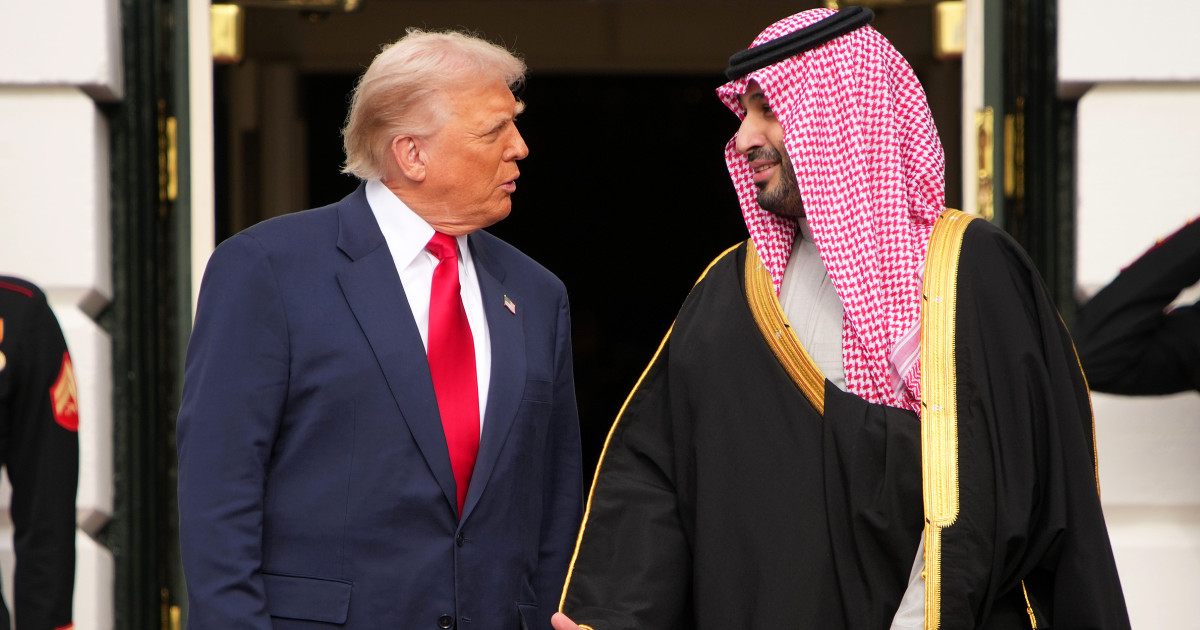
President Donald Trump has approved a major civilian nuclear cooperation agreement with Saudi Arabia that could allow the kingdom to develop uranium enrichment capability, according to U.S. media reports citing administration officials and people familiar with the matter.
The Trump administration is expected to announce the deal Wednesday and send it to Congress for review. The agreement would have the United States support creation of a Saudi nuclear power program, with American companies helping build it in the kingdom. The Wall Street Journal reported that the accord would last 30 years.
The plan could be worth billions of dollars to U.S. companies, the BBC reported, and is expected to involve firms such as Westinghouse in developing the program. Under terms described in U.S. media reports, Saudi Arabia may be allowed to enrich uranium on its own soil after a joint U.S.-Saudi study, using a U.S.-built enrichment facility rather than relying on imported fuel.
If Washington objects to enrichment in Saudi Arabia after that study, the kingdom would not be allowed to pursue it on its own or with another foreign partner for 10 years, The Wall Street Journal reported, according to the BBC.
Congress can review nuclear cooperation agreements, known as “123 agreements,” and vote to block them. NBC News reported that lawmakers would need a veto-proof majority to stop the deal. Some lawmakers from both parties are expected to oppose it, though Republicans control both chambers of Congress.
The agreement is drawing scrutiny because uranium enrichment can produce fuel for civilian power plants but also can be used in the production of nuclear weapons. Enrichment does not by itself create a bomb, which also requires other technologies, including the use of synchronized high explosives. Nuclear experts and former officials in Israel, the United States’ top Middle East ally, have voiced concern that the arrangement could ultimately enable Saudi Arabia to develop a nuclear weapon.
Asked Wednesday about proliferation concerns and reports of the expected deal, Secretary of State Marco Rubio said the United States would not “reach any agreement with any country in the world that leads to the risk of proliferation.”
The timing is sensitive. The United States and Israel launched a war against Iran in February, saying one reason was to prevent Tehran from developing a nuclear weapon. Iran has repeatedly denied that it plans to build one. In earlier negotiations in Geneva, The Guardian reported, Washington demanded that Iran accept a 10- to 20-year suspension of domestic enrichment, while Iran was willing to consider three years.
Saudi Crown Prince Mohammed bin Salman told CBS News in 2018 that Saudi Arabia was not planning to acquire a nuclear weapon, but added: “Without a doubt if Iran developed a nuclear bomb, we will follow suit as soon as possible.”
The deal is not expected to be contingent on Saudi Arabia normalizing diplomatic relations with Israel, The New York Times reported, according to the BBC. Earlier U.S. efforts had tied Saudi access to nuclear technology to normalization with Israel, but Saudi leaders said that would not be possible without meaningful progress toward a Palestinian state.
Nonproliferation specialists are also watching whether the agreement includes the “gold standard” safeguards that would bar Saudi Arabia from enriching uranium and reprocessing spent nuclear fuel. It remains unclear whether it will include the International Atomic Energy Agency’s Additional Protocol, which gives inspectors greater oversight of a country’s nuclear activities. The Guardian reported that the agreement is likely not to include that enhanced monitoring.
Darya Dolzikova, a senior research fellow at the Royal United Services Institute in London, said any deal without appropriate safeguards would be “concerning from a proliferation perspective.” She added: “Any country, period, but particularly countries of proliferation concern have to be really, really robust on their nonproliferation provisions.”
Saudi Arabia is a member of the IAEA, the Vienna-based U.N. agency that promotes peaceful nuclear work and inspects countries for clandestine weapons programs. The kingdom also signed a mutual defense pact with nuclear-armed Pakistan in September. Pakistan’s defense minister, Khawaja Asif, later said his country’s nuclear program would “be made available” to Saudi Arabia if required.








Be First to Comment