Key takeaways:
- Trump said he was not inclined to compensate Jan. 6 defendants who assaulted police, but added, “I have to see it.”
- A federal judge temporarily blocked the nearly $1.8 billion fund on May 29, and acting Attorney General Todd Blanche later told lawmakers the administration was not moving forward with it.
- About 1,600 people were charged in connection with Jan. 6, more than 140 police officers were injured, and Trump pardoned about 1,500 people tied to the attack on his first day back in office.
President Donald Trump declined to rule out taxpayer-funded compensation for people charged with assaulting police officers during the Jan. 6 attack on the U.S. Capitol, defending a nearly $1.8 billion “anti-weaponization” fund whose future remains uncertain.
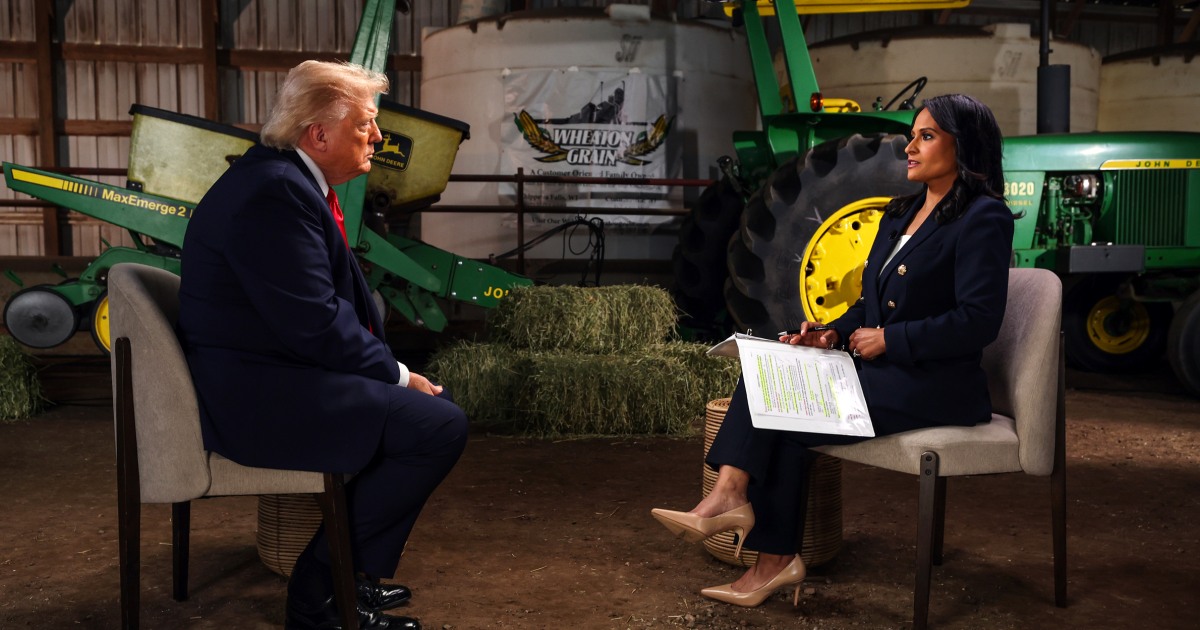
In an interview on NBC News’ “Meet the Press,” Trump said people prosecuted after the Capitol breach had been unfairly targeted and deserved payments. Asked by moderator Kristen Welker whether those who attacked police officers that day should receive money from taxpayers, Trump said, “I wouldn’t be inclined to say so, but I have to see it.”
He then broadened his defense of the fund. “Well, look. If it was up to me, I’d pay them the kind of money that they deserve,” Trump said. “People have been destroyed. Lives have been destroyed.”
The fund grew out of a settlement Trump reached after suing the Internal Revenue Service over the leak of his tax returns. But its status is unclear. On May 29, a federal judge temporarily blocked the administration from creating the fund while a lawsuit seeking to stop it proceeds. On June 2, acting Attorney General Todd Blanche told lawmakers the administration was “not moving forward with the fund, period.” The next day, Trump told reporters, “I’ll have to ask the lawyers. I don’t know.”
In the NBC interview, Trump said prosecutions tied to Jan. 6 were part of “a fake weaponization of government” and said “many of those people should be compensated.” He said those who pleaded guilty did so under pressure. “They pled guilty because they were frightened,” he said.
Trump also made unsupported claims about the attack, saying some people were “ushered” into the Capitol and that FBI agents had encouraged them to enter. When Welker said there was no evidence of that, Trump replied, “You had a bunch of dirty cops and frankly, what they did was weaponization of our government.” He added, “Try looking at the tapes one time.” He did not identify specific footage.
Video from Jan. 6 shows rioters beating police officers and forcing their way into the Capitol through broken windows. One widely circulated video showed Washington, D.C., police officer Daniel Hodges pinned in a doorway by a pro-Trump mob.
About 1,600 people were charged in connection with the attack, and 1,100 had been sentenced as the Biden administration wound down. More than 140 police officers were injured. Matthew Graves, who served as U.S. attorney for the District of Columbia during the Biden administration, called Jan. 6 “likely the largest single-day, mass assault of law enforcement officers in our nation’s history.”
Trump had promised clemency for many Jan. 6 defendants during his campaign. On the first day of his new term, he pardoned about 1,500 people connected to the riot, including some who had assaulted police.
The interview also touched on recent California elections. Trump claimed without evidence that “they’re cheating on the election” as votes were still being counted days after Tuesday’s contests. “Do you think it’s appropriate that they have an election and five days later, they’re nowhere close to picking a winner?” he said.
Under California law, ballots postmarked on or before election day and received within seven days are eligible to be counted, and close races often take several days to call. NBC News projected Democrat Xavier Becerra would advance to the general election for governor, while his opponent remained unclear as of Saturday. He was expected to face either fellow Democrat Tom Steyer or Republican Steve Hilton, a former Fox News host endorsed by Trump.
The Guardian reported that Trump also said the United States would work with Iran to retrieve and destroy its highly enriched uranium if he reached a deal with Tehran to end the U.S. and Israel’s three-month war there. Without a deal, he said, he would further degrade Iran’s military so U.S. forces could safely seize the material themselves.
The interview, held in a barn before a farming roundtable, was delayed repeatedly by rain on the metal roof and interrupted by a technical issue. NBC reported that Trump ended the interview after about 50 minutes, visibly frustrated during exchanges over election interference and press criticism. According to The Guardian, he told Welker, “You’re a one-sided, crooked network. Sorry. Let’s call it quits because I’ve had enough.”




Be First to Comment