Key takeaways:
- Xi Jinping and Vladimir Putin describe China-Russia relations as 'unyielding' and at a 'historic high,' signing nearly two dozen agreements.
- Both leaders call for a comprehensive ceasefire in the Middle East conflict and emphasize dialogue to resolve the Ukraine war's root causes.
- No timeline was set for the 'Power of Siberia 2' gas pipeline, despite a basic understanding on its route and construction.
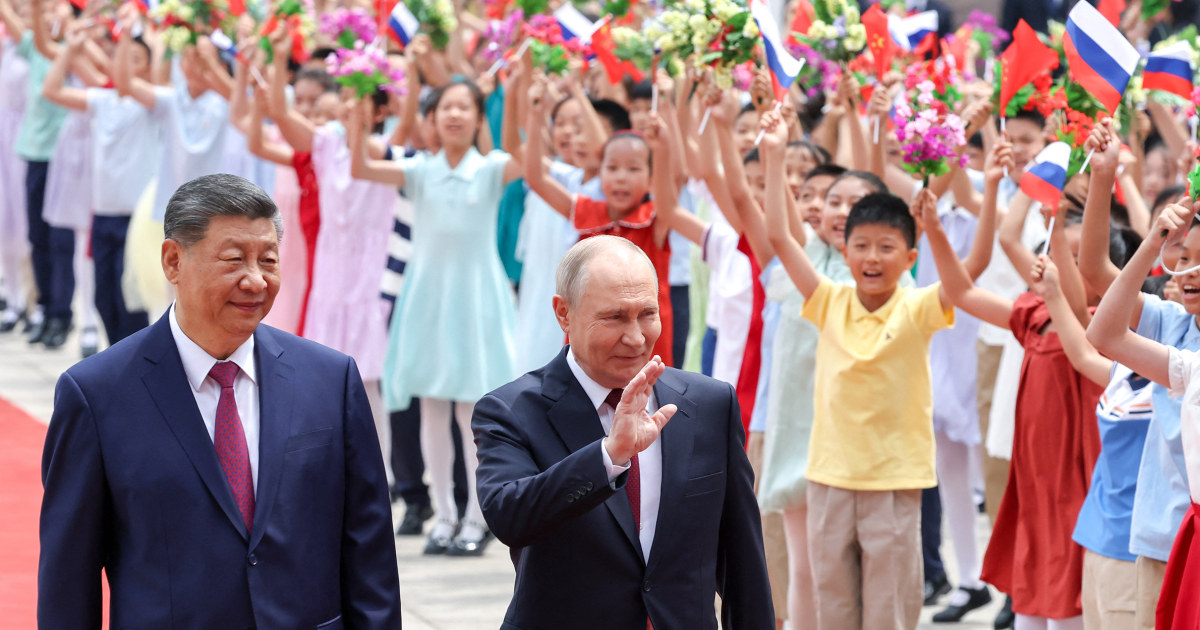
Chinese President Xi Jinping and Russian President Vladimir Putin met in Beijing on Wednesday to reinforce their strategic partnership, signing nearly two dozen agreements and emphasizing cooperation amid ongoing global tensions. The meeting followed U.S. President Donald Trump’s visit to the Chinese capital, highlighting the complex interplay among these major powers.
Xi described China-Russia relations as “unyielding” and at a “historic high,” while Putin called their ties “unprecedentedly high.” Both leaders refrained from directly naming the United States but criticized “unilateral and hegemonic countercurrents” affecting the international system. Xi warned of the world facing the danger of “sliding back into the law of the jungle,” underscoring the need for stability.
The two leaders signed agreements covering trade, media, energy, education, science, and technology. They extended their 2001 Treaty of Friendship and issued joint statements advocating for a multipolar world. They criticized U.S. policies such as the expiration of the 2010 New START nuclear arms control treaty and the “Golden Dome” missile defense project, describing these developments as threats to global stability.
Energy cooperation was a key topic. Putin described the energy sector as “the locomotive of economic cooperation” and reaffirmed Russia’s role as a “reliable supplier” to China amid disruptions caused by the Middle East conflict. Xi called for a “comprehensive ceasefire” and an early end to the conflict to secure energy supplies. However, no breakthrough was reached on the long-sought “Power of Siberia 2” natural gas pipeline, which could carry 50 billion cubic meters of gas annually to China. Kremlin spokesman Dmitry Peskov noted a “basic understanding” on the project but said details and timelines remain unresolved.
Regarding the Ukraine conflict, the leaders agreed on the need to address its “root causes” and supported dialogue and negotiations. The joint statement welcomed China’s “constructive role” in seeking a political and diplomatic resolution. While Putin has previously cited NATO expansion and other reasons to justify Russia’s invasion, these claims were not specifically reiterated during this meeting.
Putin invited Xi to visit Russia next year and expressed personal warmth, saying not seeing Xi for a day “is like being apart for three autumns,” using a Chinese idiom. Russian officials indicated that a meeting between Putin and Trump could be possible during the upcoming Asia-Pacific Economic Cooperation (APEC) summit in Shenzhen, which both Xi and Putin plan to attend, though no official confirmation has been made.
Separately, the Chinese Ministry of Commerce confirmed some details of recent U.S.-China agreements announced by the White House, including China’s purchase of 200 Boeing planes and commitments to restore market access for U.S. beef and poultry. However, the ministry has not officially confirmed China’s pledge to buy $17 billion in U.S. agricultural products annually through 2028.
United Nations Secretary-General António Guterres commented on the recent Trump-Xi summit, noting its cordiality but lack of major breakthroughs, which increases the significance of Xi’s planned visit to Washington later this year. The evolving interactions among these global leaders reflect shifting alliances and ongoing efforts to manage geopolitical tensions.







Be First to Comment