Key takeaways:
- Seventeen Americans from the Hondius cruise ship arrived in Nebraska for quarantine and monitoring.
- One passenger shows mild hantavirus symptoms; another tested mildly positive for the Andes strain but is asymptomatic.
- The outbreak has caused at least nine cases and three deaths linked to the cruise, involving a rare human-transmissible hantavirus strain.
Seventeen Americans evacuated from the hantavirus-stricken cruise ship Hondius have arrived safely in the United States, landing early Monday at Omaha Eppley Airfield in Nebraska. The passengers were transported on a State Department plane equipped with biocontainment units, with two individuals traveling in these units “out of an abundance of caution,” according to the Department of Health and Human Services (HHS).
One American passenger is experiencing mild symptoms of hantavirus and will be treated separately at a second medical facility. Another tested “mildly PCR positive” for the Andes strain of the virus but is currently asymptomatic, the University of Nebraska Medical Center stated. All evacuees are being assessed and monitored at the Nebraska Biocontainment Unit, where they will be quarantined individually. HHS confirmed that each person will receive clinical evaluation and appropriate care based on their condition.
The Hondius, a Dutch-flagged luxury cruise ship carrying nearly 150 people from over 15 countries, docked Sunday at Tenerife in Spain’s Canary Islands after a voyage that began April 1 in Ushuaia, Argentina. The ship’s journey included stops at remote locations such as South Georgia, South Sandwich Islands, Tristan da Cunha, Gough Island, and St. Helena. The outbreak has resulted in at least nine confirmed or suspected hantavirus cases linked to the vessel, including three fatalities: a Dutch couple and a German woman.
The initial fatality was a Dutch man who developed symptoms on April 6 and died aboard the ship on April 11. His wife later died in Johannesburg after being removed from a flight due to deteriorating health. The German woman died on the ship on May 2. Several other passengers have been evacuated to hospitals in the Netherlands, South Africa, Switzerland, and the British territory of Tristan da Cunha for treatment.
The virus involved is the rare Andes strain of hantavirus, known to be transmissible between humans, unlike other hantavirus strains typically spread through contact with infected rodents. The World Health Organization (WHO) and health officials have emphasized that the risk to the general public remains low. WHO Director-General Dr. Tedros Adhanom Ghebreyesus stated, “This is not another COVID, and the risk to the public is low. So, they shouldn’t be scared and they shouldn’t panic.”
French authorities reported that a woman among five French passengers repatriated Sunday tested positive for hantavirus and experienced worsening health overnight. French Prime Minister Sébastien Lecornu confirmed that all five French passengers were placed in strict isolation and that measures will be implemented to isolate close contacts and protect the population.
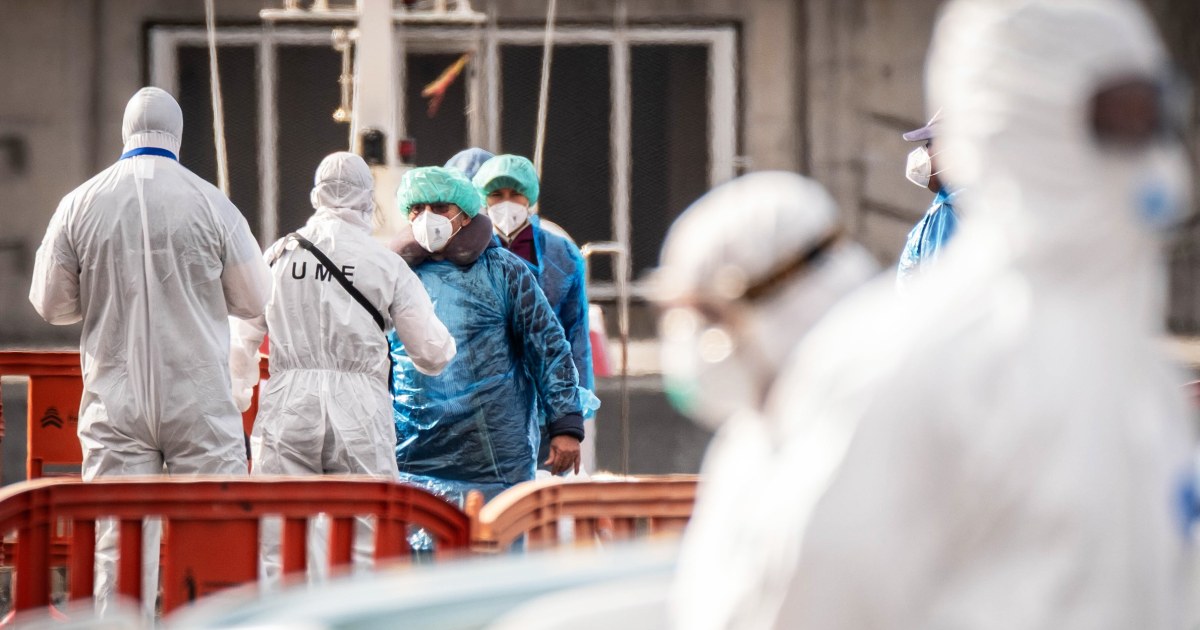
The evacuation process was carefully managed to prevent virus spread. Passengers disembarked in groups by nationality and were transported to their home countries under strict quarantine protocols. Spanish nationals were taken to a military hospital in Madrid, British passengers will be hospitalized upon return to the U.K., and Americans are quarantined at the Nebraska medical center. Protective gear including face masks, hazmat suits, and respirators were used by personnel during disembarkation and transport.
The Centers for Disease Control and Prevention (CDC) deployed epidemiologists to the Canary Islands to assess exposure risks and guide monitoring. CDC Acting Director Dr. Jay Bhattacharya noted that seven Americans who left the cruise earlier have been living across the U.S. under health monitoring.
The source of the outbreak is under investigation, with attention on a birdwatching trip in southern Argentina taken by the first deceased passenger prior to boarding. The virus can take up to eight weeks to manifest symptoms after exposure. Health officials continue to monitor the situation closely while reassuring the public of the low transmission risk beyond close contact scenarios.









Be First to Comment