Key takeaways:
- The U.S. Court of International Trade ruled 2-1 that Trump’s 10% tariffs imposed under Section 122 of the Trade Act of 1974 are unlawful.
- The court ordered the administration to stop collecting these tariffs within five days and to refund businesses that paid them, plus interest.
- The ruling found the administration failed to prove the existence of a ‘large and serious’ balance-of-payments deficit required by law to justify the tariffs.
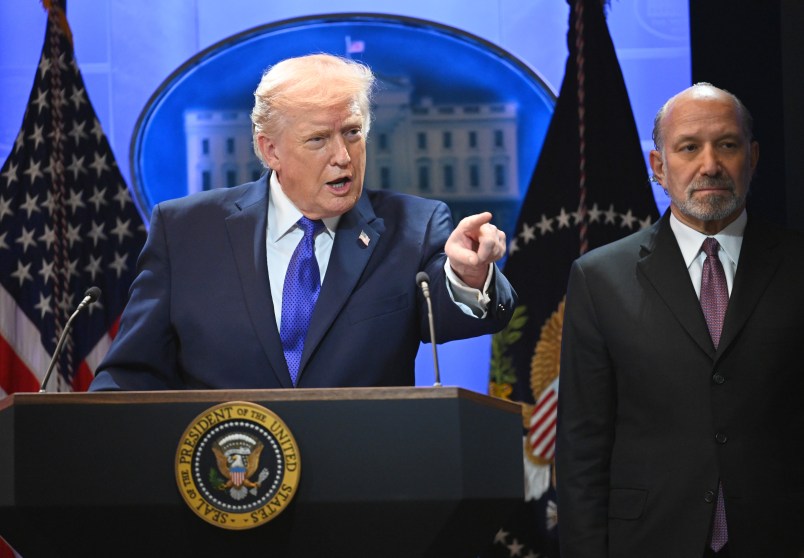
A U.S. trade court on Thursday struck down President Donald Trump’s latest round of 10% tariffs on imports, ruling them unlawful and ordering the government to refund businesses that paid the duties. In a 2-1 decision, a panel of judges from the U.S. Court of International Trade sided with 24 states and several small businesses that challenged the tariffs, which were imposed in February after the Supreme Court invalidated Trump’s previous tariffs under the International Emergency Economic Powers Act (IEEPA).
The Supreme Court had ruled 6-3 that the IEEPA did not grant the president authority to impose tariffs. In response, the Trump administration enacted new tariffs using Section 122 of the Trade Act of 1974, which allows the president to impose tariffs for up to 150 days under certain conditions. However, the trade court found that the administration failed to meet the legal requirements of Section 122, particularly the need to address a “large and serious” balance-of-payments deficit.
Chief Judge Mark A. Barnett and Judge Claire R. Kelly wrote in their 88-page ruling that the administration’s proclamation relied on current account deficits and trade deficits rather than the specific balance-of-payments deficits Congress intended in 1974. They noted that the legislative history showed Congress deliberately limited presidential discretion on tariffs to prevent overreach. The court also raised constitutional concerns, stating that the administration’s broad interpretation could raise non-delegation issues.
“Rather than identifying ‘balance-of-payments deficits’ as that term was intended in 1974, the Proclamation relies upon current account deficits, and a discussion of ‘a large and serious trade deficit,’” the judges wrote. They described the tariffs as “unlawful” and causing “economic harm,” ordering the administration to cease collection within five days and to refund tariffs paid plus interest.
Senior Judge Timothy C. Stanceu dissented from the majority opinion. The plaintiffs’ attorney, Jeffrey Schwab of the Liberty Justice Center, said on a press call that the administration is expected to appeal. He also noted that while the ruling applies to plaintiffs with standing, it remains unclear whether other importers not party to the case must continue paying the tariffs.
The lawsuit was filed in March by two small businesses—a New York spice distributor, Burlap & Barrel, and a Florida toy company, Basic Fun!—along with 24 states. The court granted standing to the small businesses and the state of Washington, which demonstrated direct impact from paying the tariffs, but denied standing to the other 23 states.
Schwab emphasized that the United States does not have a balance-of-payments deficit or international payments problems, making the tariffs unauthorized under Section 122. The tariffs, imposed by presidential proclamation on February 20, were set to remain in effect until July 24. The court’s ruling requires the administration to implement the order promptly and begin issuing refunds. CBS News has reached out to the White House for comment.
This ruling marks another legal setback for Trump’s signature economic policy on tariffs, following the Supreme Court’s earlier decision that invalidated his initial tariff authority under IEEPA. The administration is also expected to start refunding duties paid under the IEEPA tariffs this month.








Be First to Comment