Key takeaways:
- President Trump pauses Project Freedom to allow time for peace negotiations with Iran, while maintaining the U.S. blockade of Iranian ports.
- Iranian forces attacked U.S. Navy and commercial vessels in the Strait of Hormuz, prompting U.S. military retaliation and destruction of Iranian small boats.
- U.S. officials assert the ceasefire with Iran is still holding despite recent hostilities, and emphasize that Project Freedom is a defensive operation.
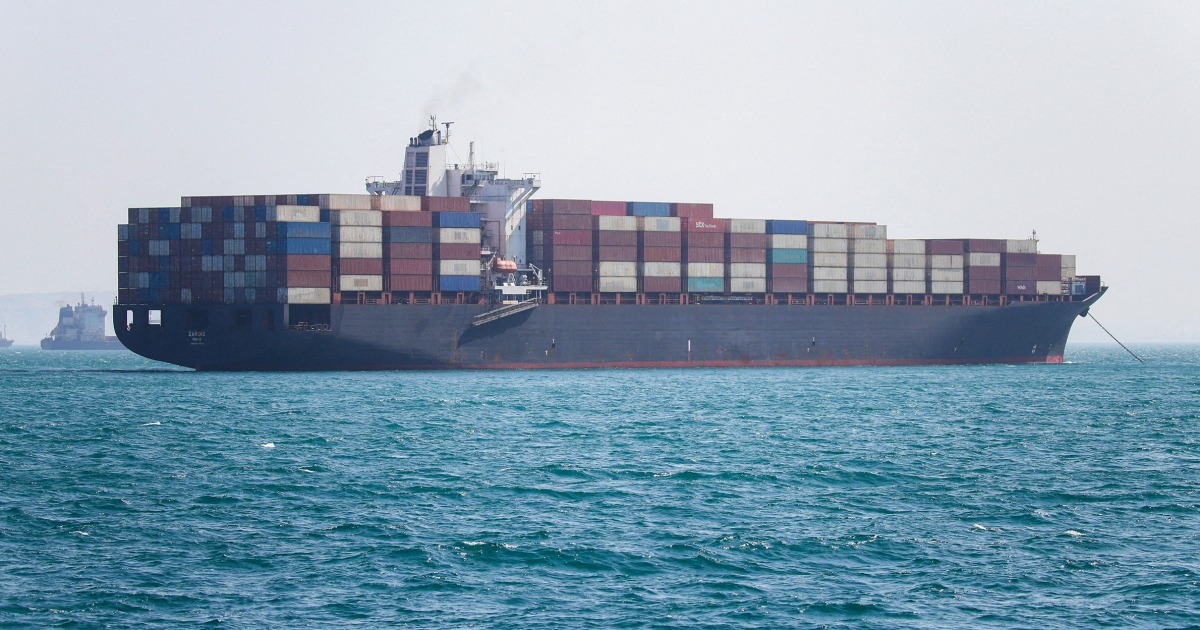
President Donald Trump announced Tuesday that he is pausing Project Freedom, a U.S. military initiative to escort commercial ships through the Strait of Hormuz, to allow time for potential peace negotiations with Iran. The decision came amid escalating hostilities in the strategic waterway, a vital chokepoint that carries about one-fifth of the world’s oil.
In a post on Truth Social, Trump said the pause was requested by Pakistan, a key mediator in talks between the U.S. and Iran, and cited “great progress” toward a “complete and final agreement.” He emphasized that the U.S. blockade of Iranian ports will remain in place despite the pause.
Project Freedom was launched late Sunday to counter Iran’s attempts to control the strait and disrupt vessel traffic, which has plummeted since U.S. strikes on Iran began in late February. The U.S. military has since escorted two American-flagged vessels safely through the strait and cleared Iranian mines from a less contested shipping route.
However, the initiative has provoked sharp Iranian reactions. Iranian forces attacked U.S. Navy and commercial ships with cruise missiles, drones, and small boats on Monday, though no American vessels were hit. The U.S. military responded by destroying six to eight Iranian small boats, according to Defense Secretary Pete Hegseth and President Trump. Iran denied these losses and claimed to have struck an American warship, a claim the U.S. rejected.
The clashes also involved attacks on non-U.S. commercial ships, including a French cargo vessel and an Abu Dhabi oil tanker. The United Arab Emirates reported Iranian missile and drone strikes on Monday that damaged an oil facility and injured three Indian nationals.
Despite the exchanges of fire, U.S. officials maintain the ceasefire agreed upon last month is still holding. Hegseth said the ceasefire is “not over,” and Secretary of State Marco Rubio described Project Freedom as a defensive operation, stating, “There’s no shooting unless we’re shot at first.”
Iranian Foreign Minister Abbas Araghchi criticized Project Freedom as “Project Deadlock,” warning it could derail peace talks. He stated on X (formerly Twitter) that “there’s no military solution to a political crisis” and urged the U.S. to avoid being drawn into further conflict.
The situation remains tense. Iranian parliamentary speaker Mohammad Bagher Ghalibaf declared that while the strait is “unbearable” for the U.S., Iran has “not even begun yet.” Trump warned in a Fox News interview that Iranian forces would be “blown off the face of the Earth” if they attacked American ships.
The U.S. military reported that hundreds of ships from around the world are waiting to transit the strait and that it is actively communicating with them. Shipping giant Maersk confirmed one of its vehicle carriers was escorted through the strait under U.S. military protection.
Shipowners and operators remain cautious. Bjorn Hojgaard, CEO of Anglo-Eastern Univan Group, said that without mutual and sustained assurances from both sides, “the risk profile for vessels and crews remains unchanged.” John Stawpert of the International Chamber of Shipping noted there is still “a huge amount of uncertainty” about what Project Freedom entails and what protections would be guaranteed in the event of an Iranian attack.
Meanwhile, Pakistan’s Prime Minister Shehbaz Sharif urged both sides to uphold the ceasefire to allow diplomatic efforts to continue. Iranian Foreign Minister Araghchi was scheduled to travel to Beijing, where China, a close ally of Tehran, faces increasing pressure to help resolve the conflict.
Oil prices retreated slightly but remained above $100 per barrel, while U.S. gas prices edged up to an average of $4.48 per gallon amid the ongoing instability in the region.







Be First to Comment