Key takeaways:
- Justice Sonia Sotomayor apologized for remarks about Justice Brett Kavanaugh's upbringing made during a public appearance.
- The dispute arose from Kavanaugh's opinion supporting broad ICE immigration sweeps in Los Angeles, which Sotomayor strongly dissented against.
- Supreme Court justices typically avoid personal criticisms, but recent comments reveal increasing tensions within the court.
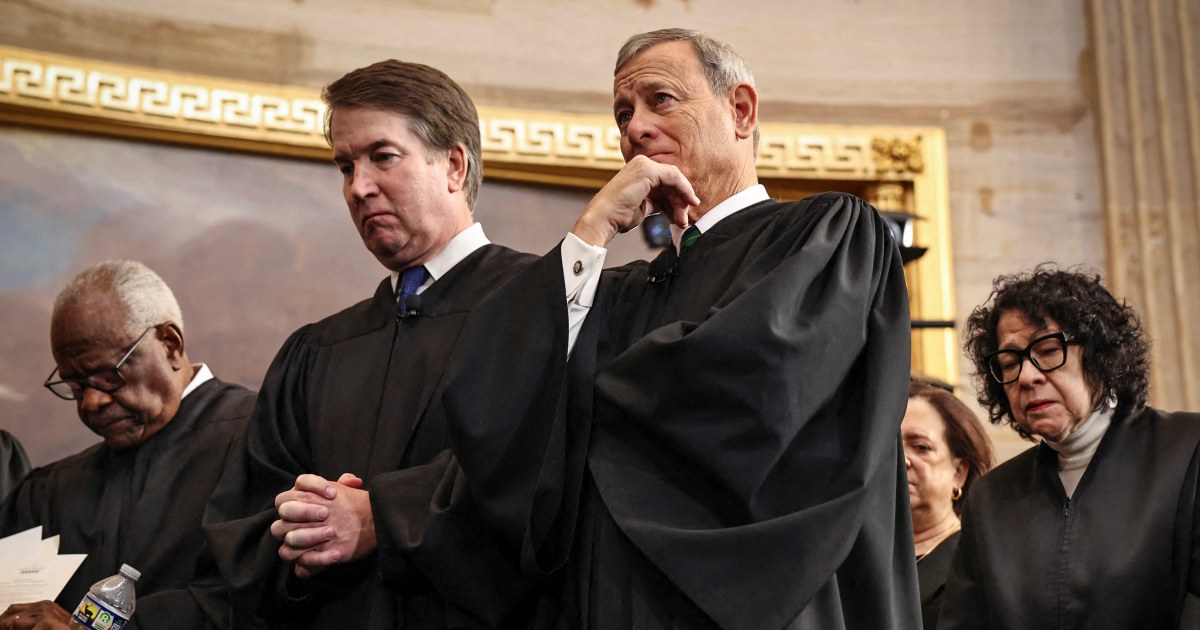
Supreme Court Justice Sonia Sotomayor issued a rare public apology Wednesday for remarks she made about Justice Brett Kavanaugh’s upbringing during a recent appearance at the University of Kansas School of Law. “At a recent appearance at the University of Kansas School of Law, I referred to a disagreement with one of my colleagues in a prior case, but I made remarks that were inappropriate,” Sotomayor said in a statement released by the court. “I regret my hurtful comments. I have apologized to my colleague.”
Last week, Sotomayor sharply criticized an opinion Kavanaugh wrote last year concerning a Supreme Court decision that allowed Immigration and Customs Enforcement (ICE) to conduct broad immigration sweeps in the Los Angeles area. Kavanaugh was in the majority supporting the ruling, while Sotomayor dissented. The court currently holds a 6-3 conservative majority.
Without naming Kavanaugh, Sotomayor referenced his opinion, which sought to explain why he joined the majority. According to Bloomberg Law, she said, “This is from a man whose parents were professionals. And probably doesn’t really know any person who works by the hour.”
Kavanaugh, who grew up in the Maryland suburbs of Washington, D.C., is the son of a lobbyist father and a prosecutor and judge mother. Sotomayor, the first Latina Supreme Court justice, was raised primarily by her mother, a nurse from Puerto Rico, in a public housing project in the Bronx, New York. Both justices attended Yale Law School, though 11 years apart.
The case at issue involved ICE’s immigration enforcement practices in Los Angeles. Kavanaugh wrote a concurrence questioning a lower court ruling that had found ICE unlawfully detained people by relying on factors such as race, occupation, or use of Spanish to establish reasonable suspicion. He argued that while ethnicity cannot be the sole reason for stops, it could be a relevant factor, noting that the immigration stops were typically “brief encounters” with detainees free to leave once they prove legal status.
Sotomayor dissented from the court’s order, joined by two other liberal justices, writing that the government had “all but declared that all Latinos, U.S. citizens or not, who work low wage jobs are fair game to be seized at any time.” She added, “We should not have to live in a country where the Government can seize anyone who looks Latino, speaks Spanish, and appears to work a low wage job. Rather than stand idly by while our constitutional freedoms are lost, I dissent.”
Supreme Court justices typically avoid public personal criticisms of one another, emphasizing collegiality despite ideological differences. Sotomayor’s remarks revealed tensions within the court, which have been noted by other justices. Liberal Justice Ketanji Brown Jackson recently criticized the court’s handling of cases involving the Trump administration, while conservative Justice Clarence Thomas expressed concern Wednesday about the fraying of relations on the court, citing social media and name-calling as factors undermining civility.
The Supreme Court is preparing to issue major rulings before its term ends in late June, a period often marked by heightened tensions among the justices.









Be First to Comment