Key takeaways:
- DHS inspectors found 79 detainees were placed in 16- to 18-square-foot metal enclosures between July 2025 and January 2026.
- The inspector general said the cages were less than half the minimum 37 square feet required for single-person spaces under ICE detention standards.
- The report also cited overcrowding, limited recreation, poor food hygiene, inoperable phones, bug-infested showers and detainee complaints about access to clean drinking water.
Immigrants detained at Florida’s now-closed “Alligator Alcatraz” were held in cramped metal cages for up to nearly two hours at a time, a Department of Homeland Security watchdog found, calling the practice “highly unconventional” and inconsistent with humane treatment standards.
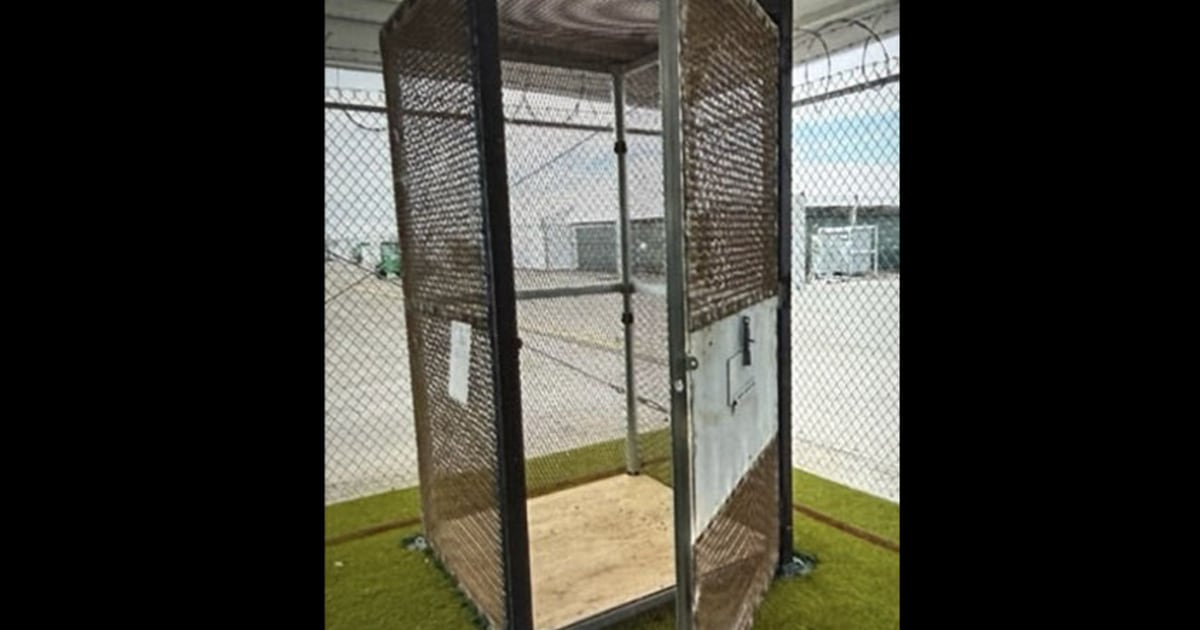
The report by DHS Inspector General Joseph Cuffari provides the first official confirmation that detainees at the South Florida detention site were placed in small enclosures that staff described as “calming areas” where people could “de-escalate and have time alone.” Inspectors found the outdoor cages measured about 16 to 18 square feet — roughly the size of a phone booth — and that similar indoor enclosures measured about 18 square feet.
“The use of such restrictive spaces is highly unconventional and does not align with standards for humane treatment,” the inspector general’s report said. The report also said use of the enclosures was “unprecedented among ICE facilities inspected by OIG” and posed “significant risks to detainee health and wellbeing.”
Records reviewed by investigators showed 79 detainees were placed in the cages between July 2025 and January 2026. The average time was just under an hour, and the longest recorded confinement was nearly two hours. Inspectors found at least one documented instance in which a cage was used as discipline for a detainee who “failed to comply with a lawful command.”
ICE detention standards say single-person rooms should provide at least 37 square feet. The cages at the Florida facility were less than half that size. Staff told inspectors detainees were not locked in, though inspectors observed locking mechanisms on the enclosures. A sign on one “holding cell” said it was meant to provide “a safe and secure place in the general population for detainees to reflect on their behavior choices, manage their emotions, reduce stress and practice self-directed behavior.”
The findings follow a December report by Amnesty International, based on a facility tour and interviews with four detainees, that said the cages were used as punishment and amounted to torture. Detainees described the enclosure as the “box.” Amnesty said people placed there had their hands shackled and feet restrained to the ground, leaving them unable to sit or shift position while exposed to heat, insects and limited water. ICE told the inspector general detainees were shackled while being escorted to the enclosures, but not while inside them.
Amy Fischer, Amnesty International USA’s director for refugee and migrant rights, said the watchdog report “confirm what we documented months ago: the horrific treatment of people detained at Alligator Alcatraz was real, not a hoax.”
The inspector general also cited broader problems at the facility, including overcrowding, insufficient living space, limited recreation time, poor food hygiene, inoperable telephones and showers infested with small bugs. Detainees told inspectors they had limited or no access to clean drinking water and could not clean the plastic cups they used.
The Everglades detention center was built by Gov. Ron DeSantis’ administration and opened in July 2025 under a state-federal immigration enforcement partnership known as a 287(g) agreement. Florida’s attorney general dubbed it “Alligator Alcatraz.” DeSantis and President Donald Trump toured the site and described it as important to the administration’s deportation effort.
DHS said in a response included with the report that Florida, not the federal government, controlled day-to-day operations and that ICE had no contract with the state to run the facility. The inspector general noted ICE personnel were on site and that detainees received an ICE handbook calling the site “a facility of the United States Immigration and Customs Enforcement.”
DeSantis said he had not read the report when asked about it and said the goal was “not to apply those standards but to exceed those standards.” His communications manager, Alex Lanfranconi, said the “confinement area” adhered to federal standards for criminal confinement and added: “We’d make it even smaller if we could.”
The facility closed in June. DeSantis has said it was always meant to be temporary, and detainees were deported or transferred to other federal facilities. State records made public in litigation showed the site cost Florida more than $1 billion, with the Federal Emergency Management Agency providing $608 million for operations, according to the inspector general’s report.








Be First to Comment