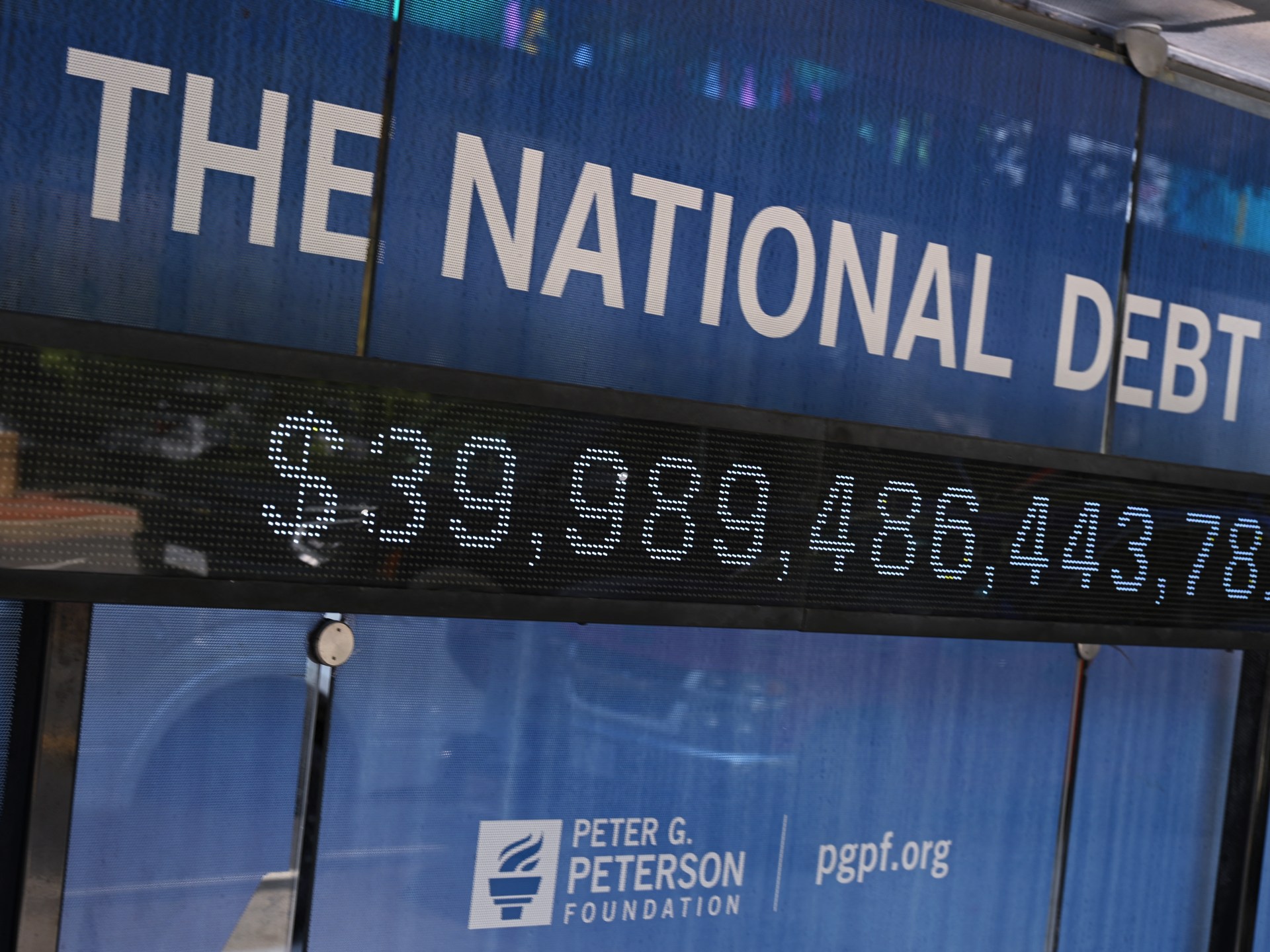
Key takeaways:
- Treasury data showed U.S. debt at $40.047 trillion on Tuesday afternoon, the highest level in the nation’s history.
- The debt has roughly doubled from $19.95 trillion in January 2017, when Donald Trump began his first term.
- Congress remains split over a spending bill, with the federal government scheduled to shut down on Sept. 30 if no measure is enacted.
The United States’ national debt has crossed $40 trillion for the first time, a record that underscores how years of federal spending have outpaced revenue through the Trump and Biden administrations.
The Treasury Department’s latest debt balance showed $40.047 trillion on Tuesday afternoon, the highest level in U.S. history, The Guardian reported. Treasury data cited by Al Jazeera showed the debt stood at $19.95 trillion in January 2017, when Donald Trump was sworn in for his first term, meaning the total has roughly doubled since then.
The rise has accelerated during and after the COVID-19 pandemic. About one-third of the increase occurred in the two years after the outbreak of COVID-19, declared a pandemic in March 2020, as the government borrowed heavily for pandemic response under both Trump and Joe Biden, Al Jazeera reported.
Watchdog groups had expected the $40 trillion threshold for weeks after debt reached $39 trillion in March. “For perspective, it took nearly 200 years for America’s gross debt to reach $1 trillion for the first time in 1981,” Maya MacGuineas, president of the Committee for a Responsible Federal Budget, said in a statement. “$40 trillion of debt doesn’t exist solely on the government’s ledgers; it is felt throughout the economy and finds its way to the pocketbooks of people one way or another. The more we borrow, the more we exacerbate inflation, squeeze out other priorities in the budget, and leave ourselves vulnerable to emergencies at home and turmoil abroad.”
Estimates differ on how much debt was added under each president. The Guardian, citing the Committee for a Responsible Federal Budget, reported that Trump approved $8.4 trillion worth of debt during his first term, much of it for COVID-19 relief, while Biden approved $4.3 trillion. Al Jazeera reported that debt increased by $8.4 trillion during Biden’s term, driven by pandemic recovery spending as well as infrastructure investment, clean energy subsidies and other Democratic priorities. Since Trump took office a second time in January 2025, the debt load has risen by $3.8 trillion, contributing to $11.6 trillion in total debt growth across his two terms so far, according to Al Jazeera.
The debt figure equals about $117,000 per person in the U.S. and $297,000 per household, and is roughly the combined size of the economies of China, Germany, Japan, the United Kingdom and India, according to the Peter G. Peterson Foundation, cited by Al Jazeera.
The Treasury last week reported a $432 billion deficit for July, the fourth-highest monthly deficit in U.S. history, as the Trump administration refunded tariffs struck down by the court system, Al Jazeera reported. Those refunds pushed customs receipts negative for a third straight month. The Guardian reported that $1.8 trillion has been added to the debt so far in fiscal year 2026, with tariff refunds totaling $100 billion, according to the Bipartisan Policy Center.
“Our federal programmes spend much more than the government takes in, and the biggest-ticket items in the federal budget are all running on autopilot,” Margaret Spellings, CEO of the Bipartisan Policy Center, said last week as the threshold neared. “Federal debt is already raising the cost of living and choking out other spending and investment, threatening our economy and Americans’ long-term prosperity.”
The milestone comes as Congress remains at an impasse over a spending bill. The House and Senate have passed different measures to fund the federal government, which is scheduled to shut down on Sept. 30 if a bill is not approved by both chambers and signed by the president.
Earlier Wednesday, the Treasury said it would double its buyback of government debt after the bond market balked at ongoing inflation and continued conflict between the U.S. and Iran, The Guardian reported. The move does not increase the debt, but it points to the growing challenge of attracting investors to absorb U.S. borrowing.










Be First to Comment