Key takeaways:
- The Census Bureau report says 24,000 of more than 128 million voter records reviewed from 2020 involved ineligible noncitizen voters, with 32 million records still unanalyzed.
- Experts told NPR and Talking Points Memo that the report lacks authorship, detailed methodology and safeguards needed to verify its conclusions.
- NPR reported that the analysis was not conducted by career Census Bureau civil servants and included people affiliated with the America First Policy Institute, according to an unnamed bureau employee.
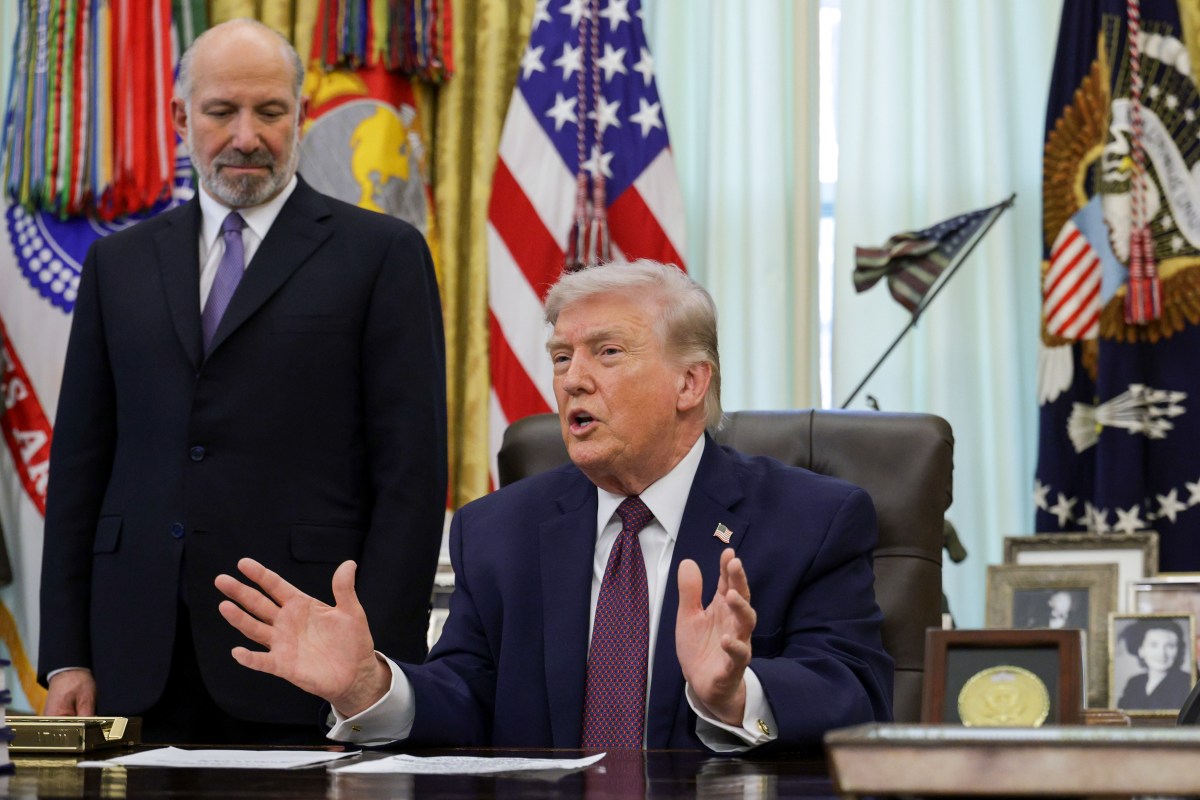
President Donald Trump is seizing on an unusual Census Bureau report that says 24,000 noncitizens voted in the 2020 presidential election, even as data and election experts warn that the seven-page analysis lacks transparency, relies on disputed methods and does not support claims of widespread fraud.
The report, titled in part “Noncitizen Voting in the 2020 Election, A Beginning Analysis,” says the bureau reviewed more than 128 million voter records from 2020 and identified 24,000 voters as ineligible noncitizens. It also says the bureau has not yet analyzed 32 million additional voter records. According to Pew, 158.4 million ballots were cast in the 2020 election. The Census Bureau report puts the total at 159.9 million.
Trump, who lost the 2020 popular vote by 4.4%, cited the report Tuesday on Truth Social and urged passage of the SAVE America Act, a voting bill he has pressed Congress to approve. “On the first 128,000,000 Voters,” Trump wrote, “the Census Bureau proves that over 24,000 non-citizens voted illegally! The Census Bureau is going to analyze the next 32,000,000 Voters, and this number will explode. I WON THE ELECTION!”
The initial figure amounts to just under 0.02% of the 128 million records analyzed. “This analysis is laughable. Census data cannot reliably be matched to voter data,” David Becker, executive director of the Center for Election Innovation & Research, told NPR. “That said, it’s good to see the president admit these numbers are so small that they couldn’t have changed the outcome in 2020.”
The report says it used a commercial voter file and federal administrative records. But experts said the document does not provide enough detail to evaluate its findings. It lists no authors or bureau department, which former and current data specialists described as atypical for Census Bureau publications.
“My biggest concern would be there’s no author attached to the report, which is not common practice within the Census Bureau,” Misty Heggeness, a former bureau economist whose work is cited in the report, told NPR. “Usually there are layers and layers of rigor and testing because the Census Bureau is a neutral statistical agency.”
NPR reported, citing a Census Bureau employee it did not name because of fear of workplace retaliation, that career civil servants at the bureau did not conduct the analysis and that the team behind it included people affiliated with the America First Policy Institute, a think tank launched by officials from Trump’s first administration. NPR said spokespeople for the bureau, the think tank and the White House did not respond to requests for comment. The America First Policy Institute highlighted the analysis on social media, saying it “maintains that maximizing transparency is a critical step to restoring confidence in our elections.”
Talking Points Memo reported that the Census Bureau and Commerce Department also did not respond to its requests for comment. Commerce Secretary Howard Lutnick, whose department oversees the bureau, promoted the report on X.
Several specialists said the matching process described in the report could produce errors. Michael Morse, a University of Pennsylvania law professor who has studied voter registration files, told NPR the exercise may be affected by “the lack of unique identifiers in voter records and outdated or incomplete naturalization records.” Amy O’Hara, a former chief of the bureau’s Center for Administrative Records Research and Applications, said matches between voter files and federal records could involve people with the same names rather than the same individuals.
Omar Noureldin, senior vice president of policy and litigation strategy at Common Cause, wrote on X that the 2020 Census did not collect citizenship status and that the bureau does not have a comprehensive citizenship records file to definitively match against voter rolls. He said the data used in the report are “modeled population estimates, not evidence that 24,000 people voted illegally.”
The report concludes that the Census Bureau is “uniquely capable of compiling and publishing statistics on election crime and other forms of fraud.” O’Hara told NPR she found that claim “very surprising because even if they observed anomalies in the data, those anomalies aren’t necessarily fraud.”
Former bureau officials warned that the document could damage public trust in the agency ahead of the 2030 census. “Anything that casts a negative light on the Census Bureau’s motives or operations or transparency or lack of adherence to policy could be detrimental,” O’Hara said.





Be First to Comment