Key takeaways:
- U.S. Central Command paused bombings Friday and Saturday after 13 straight days of strikes, and Iran said it also halted attacks Sunday.
- Iranian and Omani officials have reported progress in talks on safe passage and reopening waterways around the Strait of Hormuz.
- Israeli Prime Minister Benjamin Netanyahu said he backs Trump’s efforts on Iran but warned Israel would respond “very, very forcefully” to any Iranian attack.
The United States and Iran held their fire for a second straight day Sunday as mediators pushed to revive negotiations over shipping through the Strait of Hormuz and reduce a conflict that has shaken the region and raised concerns over energy supplies.
Talks between Iranian and Omani officials over reopening waterways around the Strait of Hormuz have been constructive and are “moving in a positive direction,” an Iranian official told CBS News. NPR reported that Iran’s Foreign Ministry spokesperson, Esmail Baghaei, said discussions with Oman on safe ship passage had made progress and were continuing.
The diplomatic effort follows 13 straight days of U.S. strikes before U.S. Central Command paused bombings Friday and Saturday, according to CBS News. Iran also paused its attacks Sunday, its army spokesperson told Iranian state television, NPR reported. Tehran had recently counterattacked against countries in the region hosting U.S. military forces, killing at least three people at a base in Jordan, according to NPR.
A regional official involved in mediation told NPR that the pause in U.S. and Iranian strikes was a “positive signal” for efforts to de-escalate. The official said both countries want to return to an interim ceasefire deal signed in mid-June and that a compromise under discussion would allow Iran to manage vessel transit through the Strait of Hormuz with fewer restrictions on ships.
U.S. Ambassador to the United Nations Mike Waltz said on CBS’ “Face the Nation with Margaret Brennan” that the pause was intended to give diplomacy room. “It’s giving diplomacy a little bit of time,” Waltz said. “The president tried diplomacy last year, tried it this year. He is a president of peace. He is giving diplomacy a chance.” He added that the U.S. would assess developments in the coming days, saying, “Make no mistake, assets, additional military assets, are moving into the region. The regime should believe the president when he says they’re locked and loaded.”
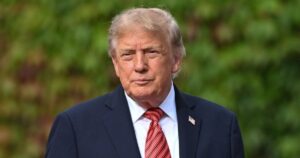
White House communications director Steven Cheung told NPR that President Donald Trump “has always been consistent in saying he prefers a diplomatic solution, but he continues to retain all options if Iran continues terrorist activities in the Strait of Hormuz or against allies.” Cheung added: “It would be wise for Iran to work toward a negotiated deal. Otherwise, they know what will happen.”
The status of the Strait of Hormuz remains disputed. CBS News reported that diplomacy is directly linked to the U.S. pause, though Trump and Defense Secretary Pete Hegseth say the Strait is already open and under U.S. control. Baghaei said the strait’s status was unchanged, NPR reported. Tehran says the interim deal allows it to manage shipping there for now and has objected to U.S. support for a route close to Oman.
The U.S. military said Saturday that its reimposed naval blockade against Iran continued, with a dozen commercial ships redirected, two disabled and two boarded, NPR reported. CBS News reported that the military said Friday it disabled a commercial ship that tried to evade the blockade on Iranian ports. Separately, the U.K. Maritime Trade Operations agency said an incident involving a tanker and military forces in the Gulf of Oman was reported Saturday and occurred Friday; it gave no further details and said investigations were ongoing.
Israeli Prime Minister Benjamin Netanyahu, who is scheduled to meet Trump in Washington on Tuesday, told Fox News he “fully” backs Trump’s efforts to weaken Iran and press it to end its nuclear program. “If he can do so without returning to intense military fighting, that’s fine. Why not?” Netanyahu said. He also warned that if Iran attacks Israel directly or through proxies, “it will make a terrible mistake,” adding that Israel’s response would be “very, very forceful.”
In Washington, Sen. Bernie Sanders, an independent from Vermont, called for negotiations to end the war. “That’s what we’ve got to do: Sit down and negotiate, and let’s end this war,” Sanders said on CBS. He called the war “unconstitutional” and “illegal” and criticized Hegseth’s request to Congress for $67 billion in emergency funding to pay troops and restock munitions.
A CBS News poll found Americans describing the conflict largely with uncertainty and frustration, with most saying it has been harder than the Trump administration expected and could last months or years longer.







Be First to Comment