Key takeaways:
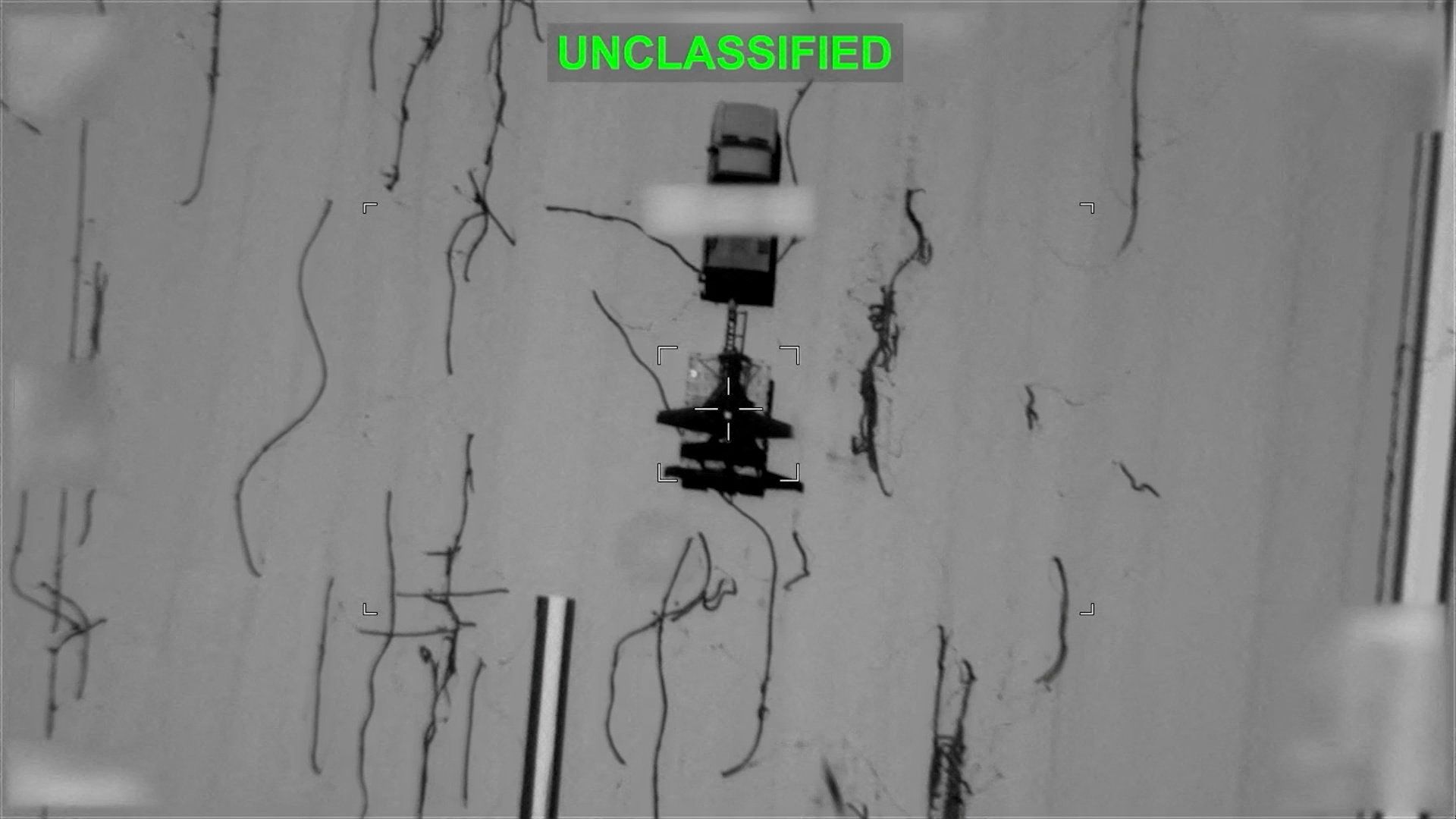
- CENTCOM said the seventh night of U.S. strikes targeted Iranian surveillance sites, military logistics infrastructure, underground weapons storage and maritime capabilities.
- Iran accused the United States of striking civilian infrastructure, while the White House said U.S. attacks were limited to military targets.
- Shipping through the Strait of Hormuz has sharply declined, with CBS News reporting only eight vessels transited the waterway Thursday.
The U.S. military carried out a seventh consecutive night of strikes on Iran, extending a week of renewed attacks after President Donald Trump declared a temporary ceasefire agreement “over.”
U.S. Central Command said the latest strikes began Friday at 19:00 GMT and were “designed to continue degrading Iranian military capabilities at the Commander in Chief’s direction.” CENTCOM said early Saturday local time that the operation had concluded and targeted “surveillance sites, military logistics infrastructure, underground weapons storage, and maritime capabilities,” using fighter jets, drones and warships.
Iranian state media reported explosions in several areas, including Yazd in central Iran, Qeshm island and the port of Bandar Abbas near the Strait of Hormuz. IRNA reported five explosions in Yazd early Saturday, while Iranian state television said three explosions were heard in the southern city of Sirik. Mehr news agency said blasts were heard “in several provinces in the south.”
Tehran has accused Washington of striking civilian infrastructure and committing war crimes. Iranian state media published footage and images showing damage to bridges and railway lines in southern Iran. BBC Verify and BBC Persian verified footage of damage to Gariveh Bridge, including night videos showing flames on the bridge and daylight images of a crumbled stretch of road and rubble around the broken span. Provincial authorities in Hormozgan province said seven people were killed in attacks.
The White House denied targeting civilian sites. A spokesperson told the BBC the United States had “carried out strikes exclusively on military targets, including military logistics infrastructure.” U.N. Secretary-General Antonio Guterres, through a spokesman, said he was “particularly concerned about attacks on civilian infrastructure in Iran and across the region,” adding: “Such attacks are unacceptable.”
Iran has retaliated by targeting what it says are U.S.-linked assets across the region. The Islamic Revolutionary Guard Corps claimed attacks Friday on U.S. military facilities in Kuwait, Bahrain, Oman, Qatar, Jordan and Syria, including a depot housing U.S. unmanned aerial vehicles in Bahrain. The U.S. military denied Iranian claims of attacks on multiple U.S. facilities, and Washington has not confirmed the Bahrain attack.
Multiple U.S. officials told CBS News that Iran attacked at least two Jordanian bases this week, injuring several American service members. No American or Jordanian fatalities have been reported, and the severity of the injuries was unclear. Kuwaiti officials said Iranian drone strikes wounded a number of soldiers, while Kuwait’s electricity and water ministry said a power and water plant was damaged, sparking a fire that was later extinguished. Residents were urged to ration electricity.
A senior Iranian official warned that Tehran could escalate further. Major-General Mohsen Rezaei, an adviser to Iran’s supreme leader, said Iran would move into a phase of “offence and complete destruction” if U.S. attacks continued for another two or three days, according to Iranian news agency IRIB. “Iran will no longer limit itself to retaliatory, like-for-like responses … and no political border will be safe,” he said.
The conflict is also disrupting the Strait of Hormuz, a vital route that in normal times carries about one-fifth of the world’s oil and liquefied natural gas supplies. Shipping traffic has largely stopped, the BBC reported. CBS News, citing maritime tracking firm Kpler, said only eight ships passed through the strait Thursday, the lowest level in three weeks. The head of a Greek maritime risk management company told CBS News: “We’ve gone back to the worst case scenario. Nobody is willing to move.”
The IRGC claimed two oil tankers exploded while passing through a mined route south of the Strait of Hormuz, but CENTCOM dismissed the claim on X, saying: “Like most IRGC claims, this is false.” Brent crude rose above $88 a barrel Friday afternoon, CBS News reported, its highest level in a month.








Be First to Comment