Key takeaways:
- The Supreme Court will hear the Arizona voting case in its next term, which begins in October.
- Arizona’s 2022 law requires proof of citizenship, such as a birth certificate or passport, for voters registering with the state form.
- Lower courts blocked parts of the law, finding conflicts with the National Voting Registration Act and a 2018 consent decree.
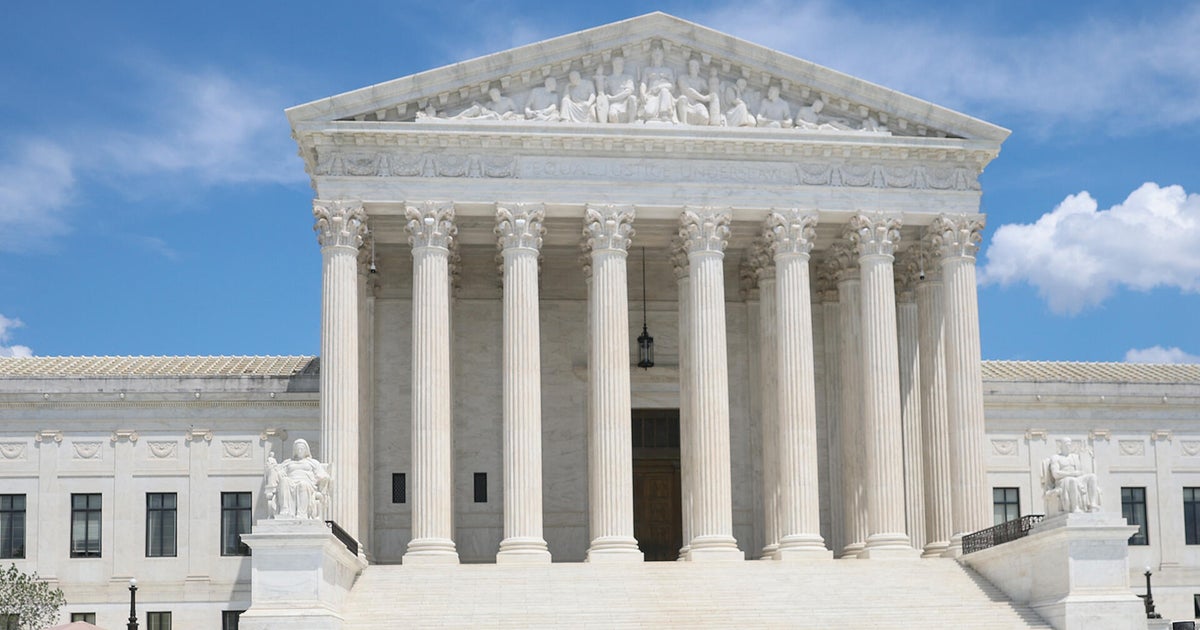
The Supreme Court agreed Monday to decide whether Arizona may require proof of citizenship from people registering to vote with a state form, taking up a dispute over voting rules adopted by the Republican-led Legislature in 2022.
The justices will hear arguments in the court’s next term, which begins in October. The case asks whether Arizona’s requirements are barred by the National Voter Registration Act, a federal law that sets rules for voter registration, and whether state officials may use related procedures to remove noncitizens from voter rolls before an election.
Under the Arizona law, people using the state registration form would have to provide a birth certificate, passport or other documentary proof of citizenship. It is already illegal for non-U.S. citizens to vote in federal and state elections.
The case comes amid Republican warnings about alleged election fraud. President Donald Trump has frequently alleged, without offering evidence, that noncitizens regularly vote in elections. NBC News reported that his Justice Department has struggled to provide evidence of widespread voter fraud, and that noncitizen voting is illegal and rare.
Arizona voters can also register using a federal form, which requires applicants to attest that they are U.S. citizens but does not require documentary proof. In Arizona, applicants who use the federal form and do not provide citizenship proof may be registered as “federal-only” voters. CBS News reported, citing court records, that more than 19,000 Arizonans had not supplied proof of citizenship and were registered that way as of July 2023. NBC News reported there were about 20,000 such voters in 2023.
The Arizona dispute centers on two 2022 laws. One requires prospective voters registering on the state form to provide proof of citizenship. The other sets procedures for election officials to review voter rolls and cancel registrations of noncitizens.
After the laws passed, the Democratic National Committee, the Arizona Democratic Party and nonprofit groups sued to block enforcement. NBC News identified civil rights groups Mi Familia Vota and Voto Latino among the challengers. The plaintiffs argued that the provisions violated or were preempted by the National Voter Registration Act and conflicted with a 2018 consent decree involving Arizona’s secretary of state and the Maricopa County recorder.
A federal district court barred election officials from rejecting state voter registration forms that lacked proof of citizenship, citing the consent decree. It also ruled that the National Voter Registration Act prevented Arizona from systematically canceling voter registrations within 90 days of a federal election.
The 9th U.S. Circuit Court of Appeals upheld that order last year. A divided panel agreed that applying the proof-of-citizenship requirement to people registering for federal elections on the state form violates the federal registration law. The court also said the requirement that county recorders reject state-form applicants without citizenship proof violates the 2018 consent decree, and that Arizona could not systematically cancel registrations of voters officials have “reason to believe” are not citizens within 90 days of a federal election.
The Supreme Court previously weighed in before the 2024 election, when Arizona Republicans and the Republican National Committee sought emergency relief. The court allowed the state to enforce the proof-of-citizenship requirement for the state form, but declined to allow enforcement of rules requiring proof of citizenship to vote for president or by mail. Arizona has continued enforcing the citizenship rule for registration on the state form while the litigation has continued.
The new case comes from an appeal by the Republican National Committee. The Trump administration urged the justices to take up that appeal, which involves the state-form proof-of-citizenship requirement and Arizona’s voter-roll purge program.
The court will also consider the Arizona provision allowing officials to remove noncitizens from voter rolls ahead of an election. In a separate case in October 2024, the Supreme Court allowed Virginia to proceed with removing roughly 1,600 alleged noncitizens from its voter rolls after the state began its program exactly 90 days before the federal elections.






Be First to Comment