Key takeaways:
- The American tourist was found in cardiac arrest around 8 p.m. Sunday in a restricted area on Mount Etna and flown to Cannizzaro Hospital in Catania.
- Authorities have limited access to more areas of Etna because of increased volcanic activity, including upper slopes with little shelter above the tree line.
- Recent ash eruptions from Etna have clouded skies over eastern Sicily and disrupted operations at Catania International Airport, including hundreds of flights in the past week, according to the BBC.
A 30-year-old American tourist died Sunday after being struck by lightning while hiking on Mount Etna, where recent eruptions have drawn visitors even as authorities restrict access to parts of Europe’s most active volcano.
The man, whose name has not been confirmed by authorities, was on the volcano in Sicily when a powerful thunderstorm moved through the area, Italian media reported. Firefighters and emergency crews found him at about 8 p.m. local time in cardiac arrest in a restricted area that hikers sometimes use to get closer to the summit.
Rescuers reached the man by helicopter and flew him to Cannizzaro Hospital in Catania. CBS News, citing local newspaper Catania Today, reported that doctors were unable to revive him and that he was declared dead at 9:30 p.m. The BBC, citing Italian media, reported that he was declared dead on arrival.
Initial reports from Italy’s ANSA news agency and other outlets said the man had entered an area designated as off-limits to hikers, apparently in an effort to move nearer to the summit of the active volcano.
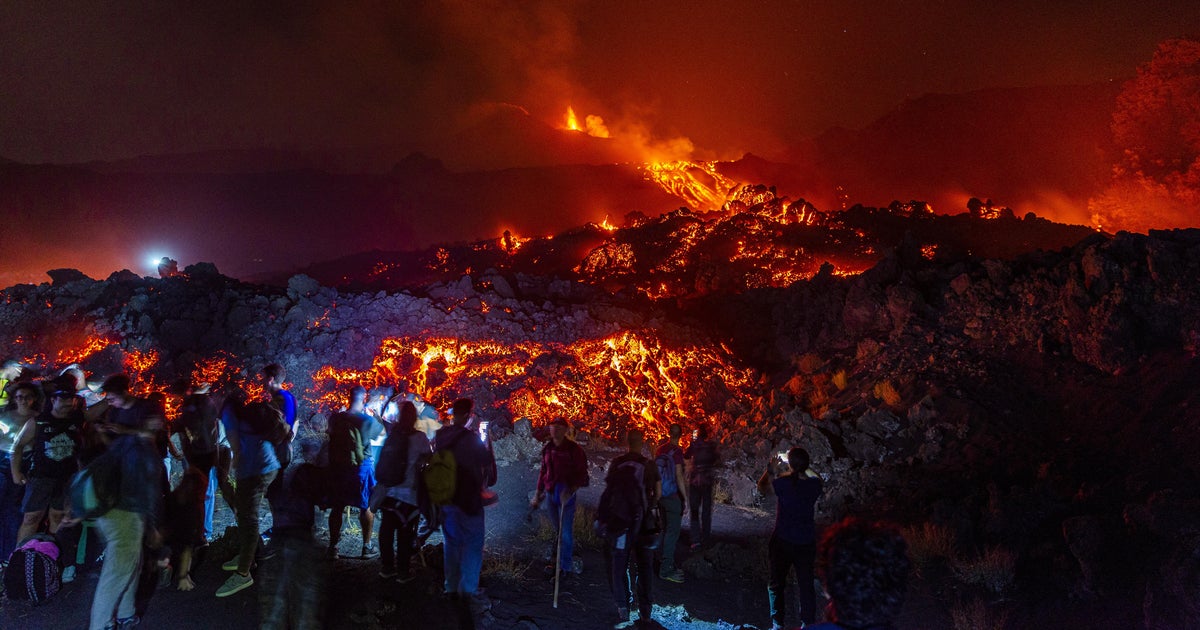
The death occurred during a particularly active period for Mount Etna, which is Europe’s tallest volcano and one of the most active in the world. Recent weeks have brought repeated lava flows and ash eruptions, clouding skies over eastern Sicily and disrupting operations at nearby Catania International Airport.
The BBC reported that ash from Etna’s eruptions disrupted hundreds of flights at Catania International Airport in the past week. An aviation alert was downgraded Saturday from the highest warning level, red, to orange.
Authorities have been limiting access to more areas of Etna because of increased volcanic activity, including upper slopes where there is little shelter above the tree line. About 1.5 million people visit the volcano each year.
Italy’s Civil Protection agency warns that visitors climbing Etna can encounter high-mountain conditions quickly, despite starting near sea level. “The passage from sea level to high mountain within a few kilometers causes sudden changes in weather due to currents of humid air coming from the sea meeting masses of cold air,” the agency says.
Officials have warned that the mix of volcanic activity and sudden weather changes can make conditions on the mountain hazardous, particularly in exposed areas higher up the volcano.
The fatal strike on Etna was one of two deadly lightning incidents reported in Italy on Sunday. Authorities said an Italian man also died after being struck while hiking in the Alps in South Tyrol province.






Be First to Comment