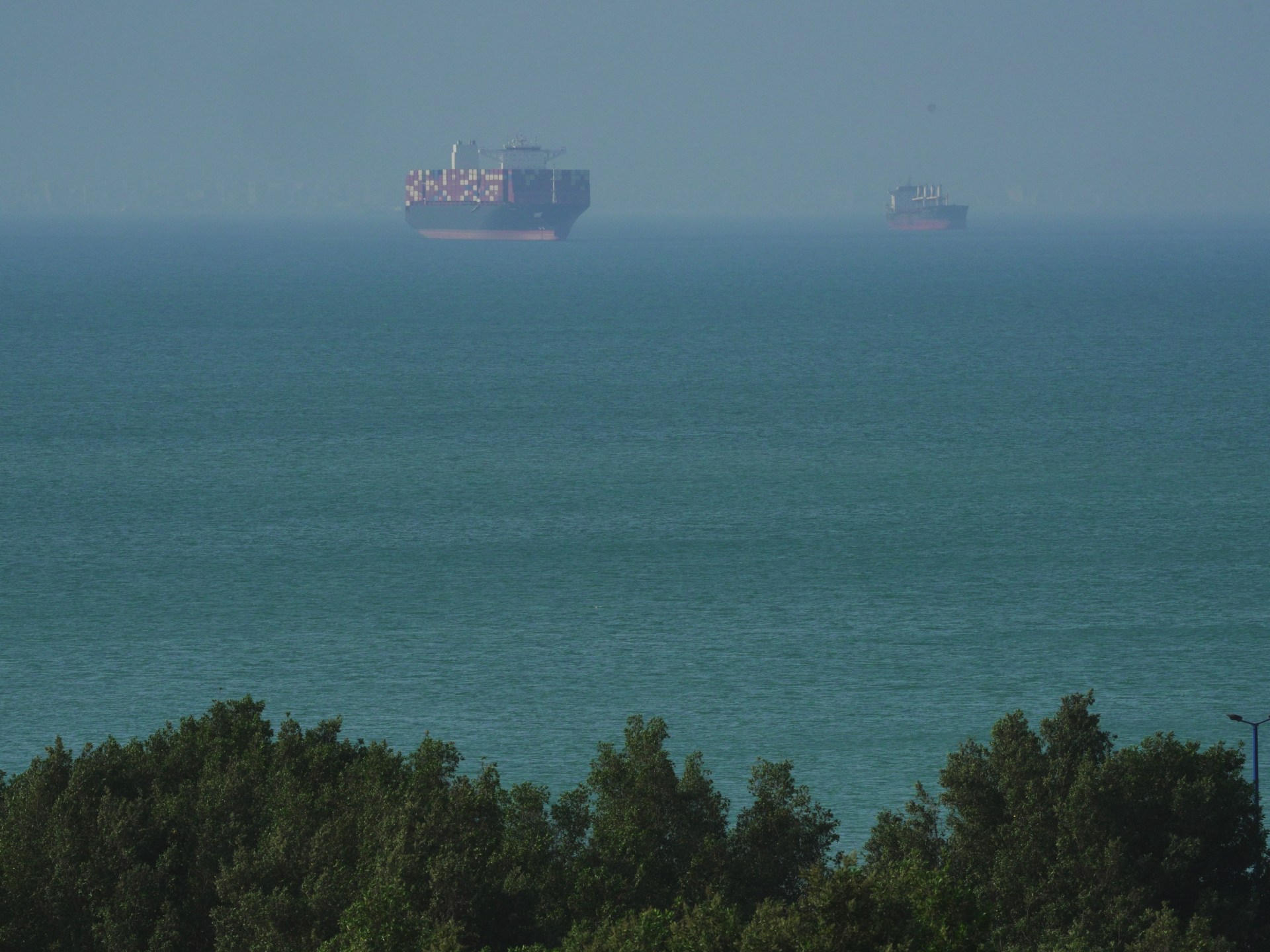
Key takeaways:
- US Central Command said all US military blockade enforcement efforts involving Iranian ports and coastal areas have ceased.
- The US-Iran agreement begins a 60-day negotiation period and includes reopening the Strait of Hormuz, ending military operations on all fronts and commitments tied to Iran’s nuclear program.
- Iran’s supreme leader Mojtaba Khamenei said Trump signed the agreement “out of desperation” and that future talks would not mean accepting Washington’s position.
The United States has lifted its naval blockade of Iranian ports under a newly signed agreement with Tehran, even as Iran’s supreme leader said President Donald Trump backed the deal “out of desperation” and signaled that future talks would not mean accepting Washington’s position.
US Central Command said Thursday that it had ended all blockade enforcement “in accordance with the President’s direction.” In a post on X, CENTCOM said American forces were “not impeding the transit of vessels to or from Iranian ports” and that “all US military blockade enforcement efforts have ceased.” It added that US naval ships would remain in the area to ensure the agreement is followed.
The agreement, described as a memorandum of understanding, calls for an immediate halt to military operations “on all fronts,” an end to the blockade and the reopening of the Strait of Hormuz. It also includes a commitment that Iran never have a nuclear weapon and a $300 billion fund for the country’s “reconstruction and economic development,” though the BBC reported that the United States is not required to contribute to that fund.
Vice President JD Vance said at a White House briefing that the agreement had taken effect, beginning a 60-day period of further negotiations. He said he would likely travel to Switzerland for “technical negotiations,” though he did not say when, adding that Iran was “not an easy country” and that officials were still working out the timing.
Vance said Iran would not receive money or sanctions relief unless it meets obligations in the agreement. Those include destroying its stockpile of enriched uranium and showing it will not fund proxy groups in the region, according to the BBC.
“I think that when people get to understand not just the agreement, [but] our negotiating posture as a country, they will realise this is an excellent thing for the American people,” Vance said, according to Al Jazeera.
A formal signing ceremony had been expected in Switzerland on Friday, but mediator Pakistan told the BBC it was canceled because the deal had already been signed remotely. US and Iranian representatives are still expected to meet in Switzerland for further talks.
Iran’s supreme leader, Mojtaba Khamenei, said in a written statement published by Iranian media that he initially held a “different view” of the agreement but allowed it to proceed after assurances from President Masoud Pezeshkian. Khamenei said officials involved had acted “out of sincere concern and goodwill,” while Trump “out of desperation, used all kinds of leverage to bring this about.” He said future in-person negotiations with Washington “will not mean acceptance of the enemy’s position.”
The BBC reported that it was Khamenei’s first response to the agreement. He has not been seen in public since taking office in March after the killing of his father and predecessor, Ayatollah Ali Khamenei, in US-Israeli strikes on Iran on Feb. 28 that sparked the regional war.
Trump did not directly answer Khamenei’s remarks, but wrote on Truth Social that he expected a ceasefire to take effect “on all fronts,” including between Israel and Iran-backed Hezbollah in Lebanon. He also said he expected Middle Eastern countries to “maintain their commitment to allowing our negotiations” to proceed.
Al Jazeera reported that Vance said 12.5 million barrels of oil passed through the Strait of Hormuz on Wednesday as the US Navy allowed “north of a dozen ships” through the blockade. Iran’s Supreme National Security Council said its Persian Gulf Strait Authority would speed authorization for ships and take steps to clear mines laid during the war, according to Iranian state TV cited by Al Jazeera. The same statement said no fees would be collected during the 60-day negotiation period, but ships “must submit their request” to a new government body.
Israeli Prime Minister Benjamin Netanyahu said after the agreement was signed that Israel must maintain close ties with the United States, saying Washington had stood “shoulder to shoulder” with Israel during the war with Iran. Some members of Netanyahu’s cabinet criticized the deal.
Vance responded that critics should “wake up and smell the reality.” Referring in a New York Times interview to Israeli ministers Itamar Ben Gvir and Bezalel Smotrich, he said, “What is your exact proposal? You’re a country of nine million people. You can’t just kill your way out of solving every single national security problem that you have.”
The agreement remains fragile. The BBC reported that Israel and Hezbollah have carried out strikes since the US-Iran deal was announced, including strikes in Lebanon on Thursday that killed three people. Israel says its conflict with Hezbollah is separate from its war with Iran, while Hezbollah has rejected the terms of the US-Iran deal.








Be First to Comment