Key takeaways:
- NBC News projected Abdul El-Sayed defeated Rep. Haley Stevens for the Democratic nomination for Michigan’s open U.S. Senate seat.
- El-Sayed overcame more than $60 million in outside spending, including more than $30 million from an AIPAC-affiliated group backing Stevens.
- El-Sayed will face former Rep. Mike Rogers, who ran unopposed in the Republican primary, in a November race to succeed retiring Democratic Sen. Gary Peters.
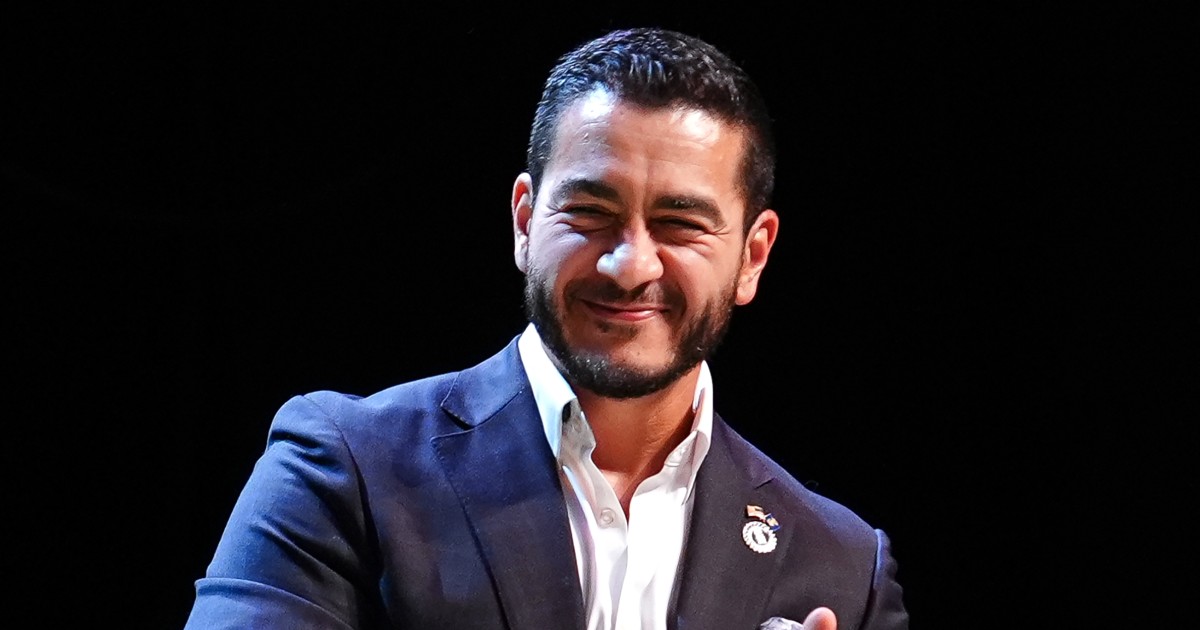
Abdul El-Sayed won Michigan’s hard-fought Democratic Senate primary, NBC News projected, defeating Rep. Haley Stevens after a costly and bitter race that tested the strength of the party’s progressive wing in a battleground state.
El-Sayed, a former public health official and progressive advocate, will face former Rep. Mike Rogers in November. Rogers won the Republican nomination without opposition. The race to replace retiring Democratic Sen. Gary Peters is expected to be one of the country’s most competitive Senate contests and could help determine which party controls the chamber.
Republicans hold 53 Senate seats, while Democrats are trying to flip four seats to regain the majority while also defending battleground seats, including in Michigan and Georgia. President Donald Trump, whose early endorsement helped clear the Republican field for Rogers, won Michigan in 2016 and 2024 and lost the state to Joe Biden in 2020.
El-Sayed overcame more than $60 million in outside spending, including more than $30 million from a group affiliated with the American Israel Public Affairs Committee, the powerful pro-Israel organization known as AIPAC. NBC News reported that Stevens and her allies spent nearly nine times as much on advertising as El-Sayed and his allied groups, citing the ad-tracking firm AdImpact.
“If you need a $60 million crutch, you probably can’t be elected on your own terms,” El-Sayed said at a debate last week in Detroit.
Stevens, a four-term congresswoman, had the backing of much of the Democratic establishment, including Michigan Gov. Gretchen Whitmer, Peters and Senate Minority Leader Chuck Schumer. Whitmer endorsed Stevens late last month in a move seen by some Democrats as an effort to halt El-Sayed’s rise.
El-Sayed drew support from Sen. Bernie Sanders, Rep. Alexandria Ocasio-Cortez and the United Auto Workers. His campaign centered on support for “Medicare for All,” opposition to money in politics and criticism of Stevens’ support for aid to Israel. He has accused Israel of committing genocide against Palestinians in Gaza, a position with particular resonance in Michigan, home to large Muslim and Arab American communities. Al Jazeera reported that, if elected in November, El-Sayed, who is of Egyptian descent, would become the first Muslim senator in U.S. history.
National Republicans had indicated they viewed El-Sayed as an easier general election opponent than Stevens. The National Republican Senatorial Committee produced a digital ad highlighting his progressive positions and Sanders’ endorsement, a move widely interpreted as an attempt to boost him in the primary.
The contest intensified after state Sen. Mallory McMorrow, who had run as a middle-ground candidate, dropped out last month. McMorrow quickly endorsed El-Sayed after the race was called.
“I’m proud to give Abdul my full endorsement and support as we head to November together as a unified party,” McMorrow said in an emailed statement. “Take it from me — this was a brutal primary. But whatever differences there were between the candidates in this race, those differences are nothing compared to the contrast in November.”
On election night, before the race was called, El-Sayed urged Democrats to unite against Rogers, calling him a “corporate sellout” who “should never see the inside of the US senate,” The Guardian reported.
“However we might feel about the campaign we’ve just come through, I want you to understand that it pales in comparison to the cynicism, in comparison to the corporatism, in comparison to the lies that Mike Rogers and Donald Trump are going to tell,” he told supporters.
Stevens had argued that El-Sayed focused too much on national politics and not enough on Michigan. At last week’s debate, she responded to criticism and social media mockery of her accent and appearance by saying, “These folks are making fun of the way I sound. But yet, I sound like the people who need help, who are talking to me about what they need.”
El-Sayed closed the primary with a sharper contrast: “This is about whether or not you deserve a politics of the people, by the people and for the people,” he said, “or of the corporations, by the billionaires and for the special interests.”





Be First to Comment