Key takeaways:
- The Supreme Court ruled 9-0 that prosecuting Ali Danial Hemani for gun possession based on his marijuana use was inconsistent with the Second Amendment.
- Justice Neil Gorsuch said the decision does not affect bans on gun possession by addicts, intoxicated people, felons or defendants shown to be dangerous because of drug use.
- The federal law at issue carries penalties of up to 15 years in prison, and the Justice Department estimates about 300 people are charged under it each year.
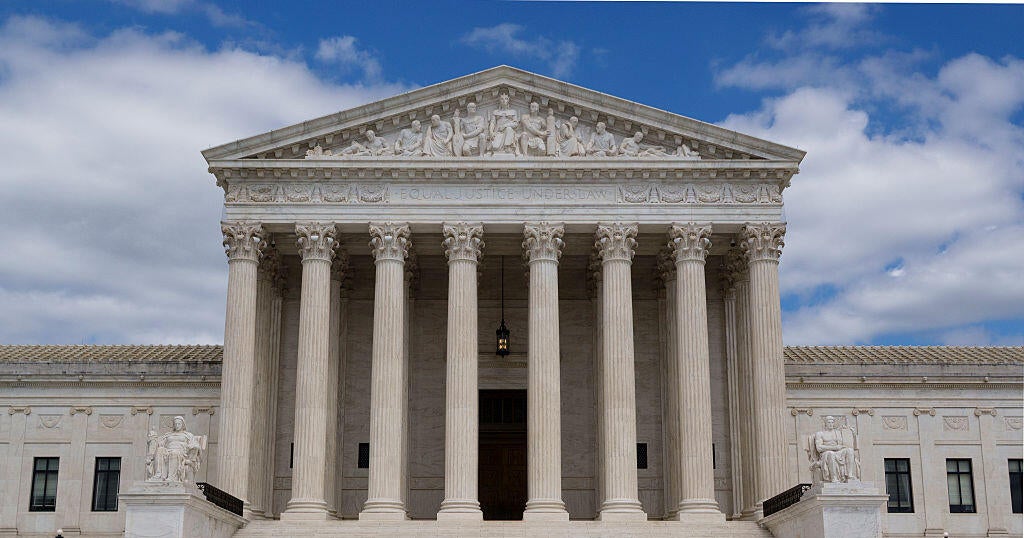
The Supreme Court ruled unanimously Thursday that the federal government violated the Second Amendment when it prosecuted a Texas man for possessing a firearm while using marijuana, narrowing the reach of a law that bars unlawful drug users from having guns.
The 9-0 decision sided with Ali Danial Hemani, who was charged after federal agents searched his Texas home in 2022 and found a pistol and marijuana. According to NPR, court filings said agents found 60 grams of marijuana and that Hemani told them he used marijuana “about every other day.” CBS News reported that Hemani was allegedly only an occasional user of marijuana when the FBI found a handgun at his home.
Justice Neil Gorsuch, writing for the court, said the ruling was limited and did not strike down the federal law in full. The justices said the government cannot automatically disarm a person based on marijuana use a few times a week without more evidence of danger.
“The Court’s decision is narrow,” Gorsuch wrote, according to NPR. “It does not address efforts to ban addicts or those presently intoxicated from possessing a firearm,” nor does it affect laws disarming felons or cases involving “individualized proof that the defendant’s drug use renders him a danger to himself or others.”
Gorsuch also rejected the government’s argument that regular marijuana users could be treated as categorically dangerous. The government, he wrote, “asks us to conclude that anyone who regularly uses marijuana is categorically violent and dangerous without any further showing.” Giving the government that kind of power, he said, would risk allowing it to “quickly swallow” the Second Amendment.
The case centered on a provision of the 1968 Gun Control Act that makes it illegal for anyone who “is an unlawful user of or addicted to any controlled substance” to possess a firearm. Violations can carry up to 15 years in prison, and the Justice Department estimates that about 300 people are charged with the offense each year.
Hemani argued that the law violated his Second Amendment right to bear arms and was unconstitutionally vague. His lawyers said the statute does not define “unlawful user,” raising questions about whether someone who uses a controlled substance once a year, every six months or every two weeks would qualify. They argued that enforcing the law against Hemani “would empower the government to deprive tens of millions of Americans who pose little if any risk of firearm misuse of a fundamental constitutional right.”
The government defended the statute, saying it was not vague and was applied only to “habitual users” of illegal drugs. It also argued that the restriction resembled historical laws that limited gun rights for “habitual drunkards.” Hemani’s lawyers responded that “habitual user” was no clearer than “unlawful user.”
The decision is a loss for the Trump administration, which defended the law despite taking other steps to bolster Second Amendment rights. Gun violence prevention groups, including the Brady Center to Prevent Gun Violence and Giffords Law Center to Prevent Gun Violence, backed the government, CBS News reported. NPR reported that Everytown for Gun Safety and California and some other liberal states also supported the law.
Hemani drew support from an unusual coalition that included the American Civil Liberties Union, the National Rifle Association and other gun rights and civil liberties groups.
The same federal restriction led to Hunter Biden’s 2024 conviction. He was later pardoned by his father, then-President Joe Biden, in December 2024.
The ruling is the latest firearms case following the Supreme Court’s 2022 decision establishing a new test for gun regulations, requiring the government to show that restrictions are consistent with the nation’s historical tradition of firearm regulation. The court upheld a federal ban on gun possession by people subject to domestic violence restraining orders in 2024 and is considering a challenge to a Hawaii law restricting where concealed-carry permit holders may bring guns on private property open to the public.









Be First to Comment