Key takeaways:
- The rejected amendment would have abolished Kansas’ commission-based Supreme Court appointment system and allowed direct elections for justices.
- More than $12 million was spent on ads, with opponents outspending supporters by more than 2 to 1, according to AdImpact.
- Kansas’ Supreme Court ruled in 2019 that the state constitution protects abortion rights, and voters rejected a separate anti-abortion constitutional amendment in 2022.
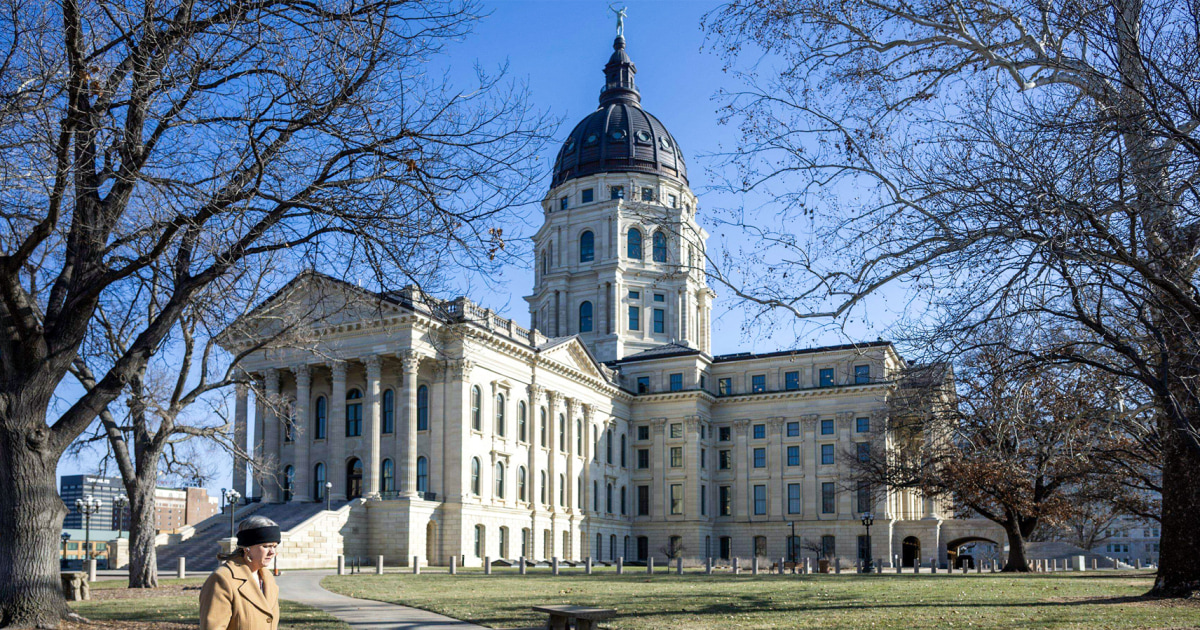
Kansas voters rejected a Republican-backed constitutional amendment Tuesday that would have replaced the state’s system for choosing Supreme Court justices with direct elections, according to an Associated Press projection.
The measure, placed on the ballot by the GOP-controlled Legislature, would have abolished the current selection process, under which the governor appoints justices from a list created by a nine-member commission. Since 2019, that appointment power has belonged to Democratic Gov. Laura Kelly.
Kansas has used a commission-based system for 68 years, Talking Points Memo reported. The commission includes lawyers and nonlawyers and publicly livestreams interviews with applicants, according to the outlet. After appointment, justices face a retention vote after one year and then every six years.
Supporters said the amendment would give voters more direct control over the state’s highest court. Voters in 21 states directly elect state Supreme Court justices, according to the Brennan Center for Justice.
In an ad from Kansans for Democracy Inc., the largest spender on the pro-amendment side, a narrator criticized the current system as one in which “elites” get to “decide who’s on the Kansas Supreme Court, behind closed doors, trading favors, rewarding friends.” The narrator added: “The public can’t see it or control it. Voters like you completely cut out.”
Opponents argued that the existing retention-vote system already gives Kansans a voice while keeping courts insulated from partisan politics and major donor influence. Kansas United for Impartial Courts, one of two major groups opposing the measure, put that argument in blunt terms in an ad: “‘No’ stops judges from becoming politicians. ‘No’ prevents billionaires from buying seats on the court.”
The campaign drew heavy spending. More than $12 million was spent on television and radio ads, according to tracking firm AdImpact, with opponents outspending supporters by more than 2 to 1. The Sunflower State Journal also reported that spending on the amendment topped $12 million, according to Talking Points Memo.
The fight unfolded against the backdrop of recent Kansas Supreme Court rulings that angered conservatives, including a 2019 decision that the state constitution protects the right to abortion. Kansas voters sided with that ruling in 2022, after the U.S. Supreme Court overturned Roe v. Wade, when they rejected a GOP-backed constitutional amendment that would have said the Kansas Constitution does not protect abortion rights.
Neither side’s ads mentioned abortion rights or other divisive issues that state supreme courts often decide, NBC News reported. But Kansas Democratic Party Chair Jeanna Repass said before the vote that the purpose of the amendment was clear.
“This is about abortion,” Repass told NBC News. “Plain and simple.”
Democrats pointed to comments by Republican Kris Kobach, now the state attorney general, who had urged lawmakers as far back as 2019 to advance a measure allowing direct elections of justices. In 2022, Kobach told The Wichita Eagle that such a change would allow, “slowly and quietly,” anti-abortion justices to be placed on the court, NBC News reported.
Talking Points Memo also reported that Ty Masterson, a gubernatorial candidate, told anti-abortion voters in November 2025 that Supreme Court elections were the “solution” they had been waiting for, citing the Marion County Record. “You can’t go out there and say it,” Masterson said, according to that report. “Because they’ll say that if you elect your Supreme Court, you won’t have any right to abortion anymore.”
Progressives also argued that Republicans chose an August primary ballot instead of the November general election to benefit from lower turnout. The defeat leaves Kansas’ current judicial selection system in place.





Be First to Comment