Key takeaways:
- TankerTrackers said Iranian tankers carrying millions of barrels of crude crossed the U.S. blockade line near the Strait of Hormuz, marking Iran’s first crude exports in two months.
- The United States and Iran are expected to formalize a memorandum Friday in Switzerland, starting a 60-day negotiation period on Iran’s nuclear program and sanctions relief.
- Iran says Israeli forces must leave southern Lebanon for the conflict to be fully over, while Israeli officials say the U.S.-Iran agreement does not bind Israel.
Iranian oil tankers have crossed a U.S. blockade line near the Strait of Hormuz for the first time in two months, a maritime tracking service said Wednesday, as Washington and Tehran prepared to formalize a memorandum of understanding meant to extend a ceasefire, reopen the waterway and launch negotiations over Iran’s nuclear program.
The TankerTrackers website, which monitors oil shipments and storage, said digital tracking data corroborated by satellite imagery showed Iran’s “first crude oil exports in two months.” It identified two National Iranian Tanker Company supertankers, Diona and Hero 2, as carrying a combined 3.8 million barrels of Iranian crude beyond the U.S. Navy blockade perimeter. TankerTrackers later said a third tanker had also exited. Al Jazeera reported that the Sonia I, an NITC-operated tanker carrying 1 million barrels of crude, crossed the blockade line in the Gulf of Oman on Wednesday.
The movement came two days before U.S. and Iranian officials are expected to meet at Switzerland’s Burgenstock mountain resort. A signing ceremony is expected Friday to formalize the memorandum, which U.S. and Iranian officials say should open a 60-day phase of direct talks on a final settlement, including the future of Iran’s nuclear program and sanctions relief.
The Wall Street Journal reported Tuesday, citing unnamed people familiar with the agreement, that the United States will allow Iran to immediately resume selling oil and fuel after the memorandum is signed. The newspaper said a sanctions waiver would take effect immediately and would cover services including banking, transportation and insurance. Al Jazeera, citing a senior U.S. official speaking anonymously, reported that the framework agreement has already been signed electronically by President Donald Trump, Vice President JD Vance, Iranian Deputy Foreign Minister Majid Takht-Ravanchi and Tehran’s top negotiator, Mohammad Bagher Ghalibaf.
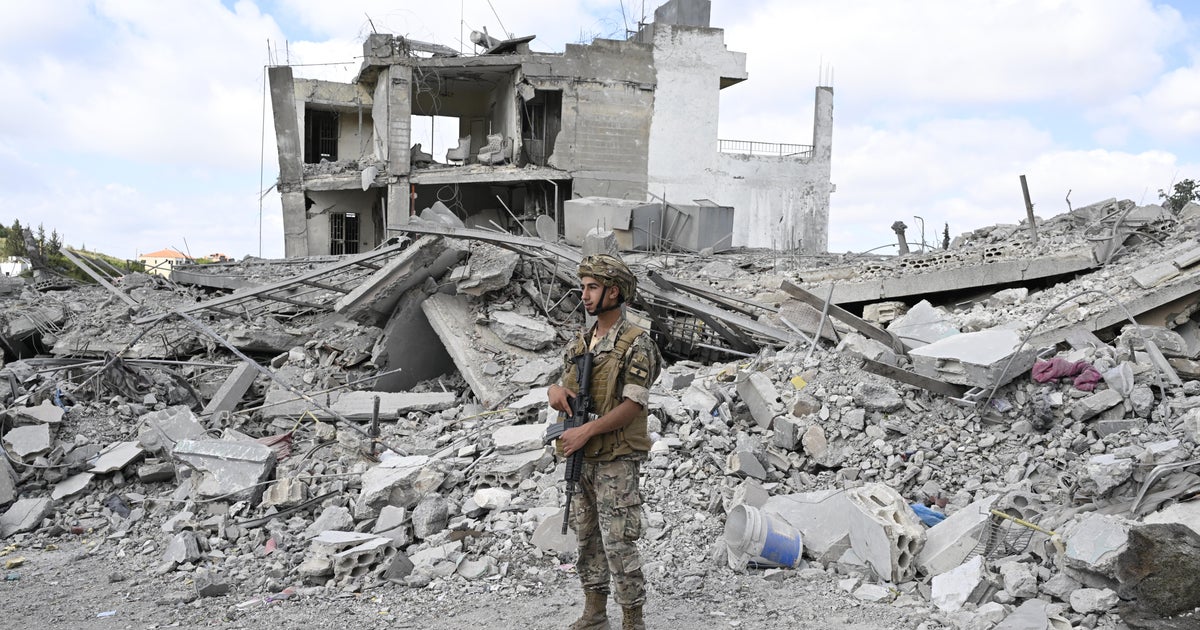
The deal has already drawn disputes over what it covers. Iranian Foreign Minister Abbas Araghchi said Tuesday that any continued Israeli military presence in southern Lebanon or any further Israeli attack there would violate the memorandum. “The end of the war in Lebanon is an inseparable part of the complete end of the conflict. Ending the war also includes ending the occupation,” Araghchi said. “Without the withdrawal of Israeli forces from the territories they occupied during this war, the war cannot be considered fully concluded.”
Israel has rejected that position. Israeli officials said Monday troops would remain in a broad section of southern Lebanon that they have effectively occupied for three and a half months, forcing tens of thousands of residents to evacuate. “Trump’s agreement does not bind us,” Israeli National Security Minister Itamar Ben-Gvir said.
U.S. Ambassador to Israel Mike Huckabee also said the Israel-Hezbollah fight was not tied to the U.S.-Iran memorandum. “Fortunately @SecRubio made clear that Iran & Hezbollah aren’t linked in a deal,” Huckabee wrote on X. “@Israel doesn’t need Iran permission to defend itself. The tether of terror must end.”
Lebanon’s state-run National News Agency reported Israeli airstrikes Wednesday in several parts of south Lebanon, including Nabatieh al-Fawqa, the outskirts of Kfar Tebnit and Ansariyeh. The agency said Israeli drone strikes Tuesday killed at least four people in the Nabatieh area, bringing reported deaths from Israeli strikes in the south to at least five since Monday.
In Washington, lawmakers pressed the Trump administration for details. Senate Democratic leader Chuck Schumer demanded the release of the memorandum, saying Trump should “stop keeping America in the dark after more than 100 days of bloodshed.” Trump said Tuesday he would release the text Friday, adding, “I’ll probably have a press conference and read it to you word by word.”
The Senate on Tuesday narrowly rejected a measure to limit Trump’s war powers on Iran, voting 48-47 against moving the resolution out of committee. Republican Sen. Lindsey Graham said he was “pretty skeptical” about future talks but added, “I like the idea of opening the straits and ending the conflict.”










Be First to Comment