Key takeaways:
- The Florida Supreme Court ruled 6-1 that it would not block the new congressional map before the midterm elections.
- Voting rights groups argue the map violates Florida’s 2010 Fair District Amendment by favoring Republicans.
- Republicans hold 20 of Florida’s 28 U.S. House seats, and the new map could help the party win up to four more seats.
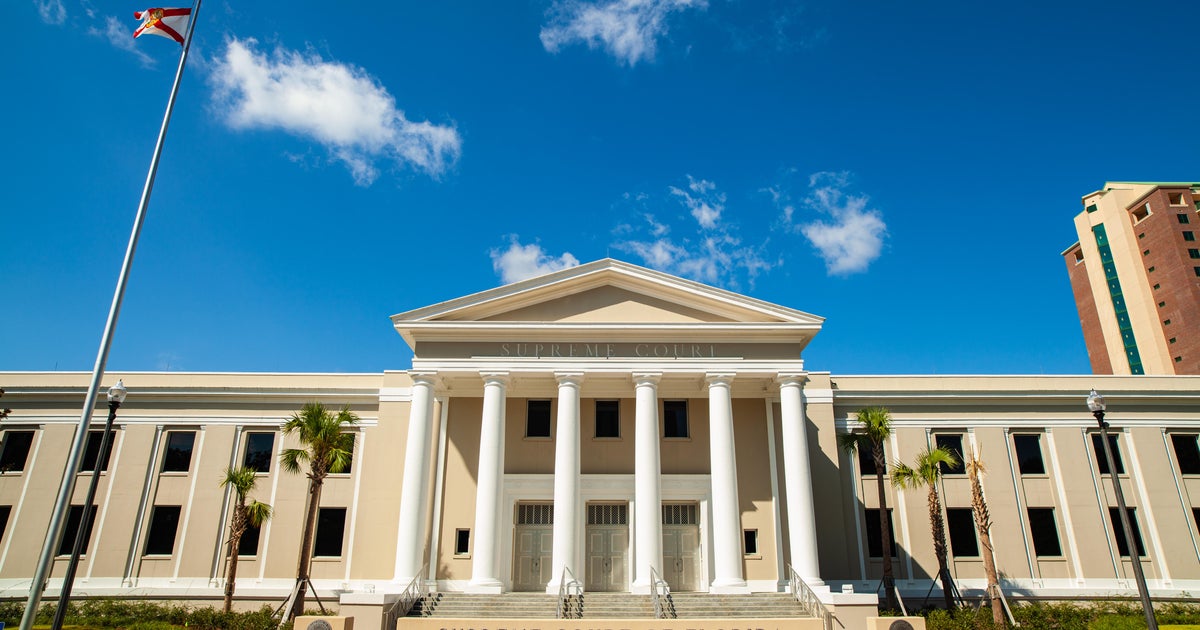
Florida’s new congressional map will be used in the midterm elections after the state Supreme Court rejected an emergency effort by voting rights groups and voters to block districts they say were drawn to benefit Republicans.
The court, in a 6-1 decision, denied a request for a temporary injunction without deciding whether the map violates the state constitution. The justices said the case should continue in the First District Court of Appeal before the state’s highest court considers the merits.
“At this time, we do not have jurisdiction over that matter, and we do not simply assume that the First District’s decision will provide an appropriate basis for this Court’s review,” the ruling states.
The decision leaves the map in place as candidates face a Friday noon deadline to qualify for U.S. House races ahead of Florida’s Aug. 18 primaries. The underlying lawsuit will continue, but the ruling means the challenged districts will govern this election cycle.
Equal Ground Education Fund and other voting rights groups argue the map violates Florida’s Fair District Amendment, a voter-approved 2010 constitutional provision that bars districts drawn to favor or disfavor a political party. The amendment also prohibits districts that diminish the ability of racial or language minorities to elect representatives of their choice and requires compact districts that use existing political and geographic boundaries where feasible.
Republicans currently hold 20 of Florida’s 28 U.S. House seats. The new map, signed into law by Gov. Ron DeSantis after a swift special legislative session, could improve the GOP’s chances of winning four additional seats, The Guardian reported. DeSantis pushed for the new districts after President Donald Trump urged Republican-controlled states to adopt maps favoring the GOP ahead of the midterms.
An aide to DeSantis, Jason Poreda, drew the map and gave it to the Republican-led Legislature, which passed it without changes during an April special session. Opponents noted that Poreda told lawmakers he used partisan data. DeSantis’ office also sent the map to Fox News with partisan coloring showing Republicans could flip up to four seats based on 2024 presidential voting patterns, CBS News reported.
DeSantis has pointed to a U.S. Supreme Court ruling issued during the special session that weakened part of the Voting Rights Act involving districts drawn to favor racial or ethnic minorities. He has argued that the ruling required District 20 to be redrawn. His office has asserted that no racial data was used in the map presented to lawmakers.
James Uthmeier, Florida’s Republican attorney general, who defended the districts in court, called the ruling a “complete and total victory” in a social media post.
Opponents criticized the decision and said they would continue the legal challenge, even if the case extends into the 2028 election cycle.
“The Florida supreme court’s failure to stop this brazen partisan power grab is not only an assault on democracy, but an abdication of its duty to the people of Florida,” said Genesis Robinson, executive director of Equal Ground.
Amy Keith, executive director of Common Cause Florida, called the new districts “a pretty clear partisan gerrymander” and said, “We’re going to do everything we can to prevent this map from impacting further, future elections.”
Justice Jorge Labarga dissented, arguing the court did have jurisdiction and faulting the First District Court of Appeal for not expediting review. He wrote that, with the filing deadline and election approaching, the court would not be able to review “issues of statewide importance” before the map took effect.
Justice Adam Tanenbaum, writing separately in concurrence, said Floridians could be assured that elections would proceed under laws enacted by the Legislature and administered by election officials. He added that the plaintiffs would still have “their days in court, in due course, to be heard on the merits of their challenge.”







Be First to Comment