Key takeaways:
- JD Vance said a U.S.-Iran nuclear deal could happen next week or months from now and could “absolutely” come before the midterm elections.
- President Donald Trump said talks were in their “final throes” and later vowed a U.S. response after saying Iran shot down an Apache helicopter near the Strait of Hormuz.
- CBS News reported the two Apache crew members were rescued by a sea drone and were not injured.
Vice President JD Vance said the United States is “very close” to a deal aimed at curbing Iran’s nuclear program for the long term, even as tensions escalated after an Apache helicopter crashed near the Strait of Hormuz and President Donald Trump vowed a U.S. response.
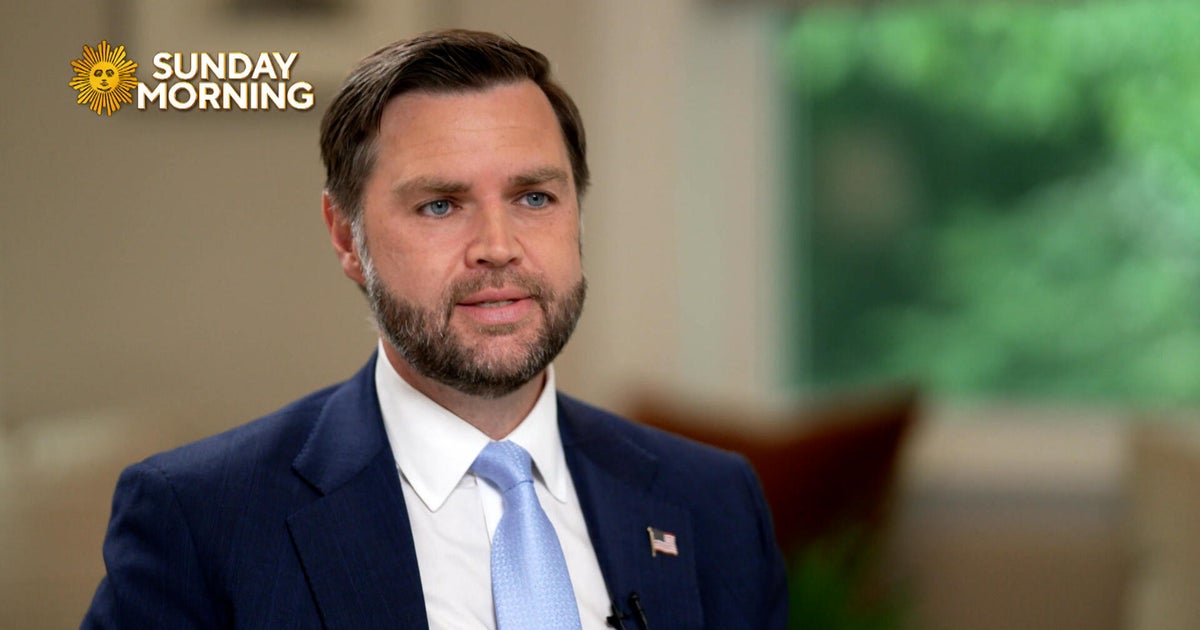
In an interview with CBS News taped Tuesday for “CBS Sunday Morning,” Vance said an agreement could come quickly or take months, but he said it could “absolutely” be reached before November’s midterm elections.
“Right now, I feel that we are in a position to get a deal that is good for the United States economically and that really does deal with the Iranian nuclear program, not just now, not just while Donald Trump is president, but for the long term, to where my kids can say when they’re adults, ‘Iran is not going to have a nuclear weapon,’” Vance told Robert Costa.
“That’s the goal of the policy,” he added. “And I think we’re very close to achieving that goal. But we still got some wood to chop. We’re going to keep doing it.”
Vance said the timing remains uncertain. “I think we’re going to know a lot before the midterm elections,” he said. “Look, I think that the deal could happen in the next week, but the deal could also happen months from now.”
Trump also described the talks as close to completion Tuesday, saying negotiations were in their “final throes” and that a deal could be possible in “two or three days,” CBS News reported. Later, he said Iranians had shot down an Apache helicopter that crashed near the Strait of Hormuz on Monday and said the United States would respond.
CBS News reported that the two Apache crew members were rescued by a sea drone in the first such operation ever carried out by the U.S. military. Officials told the outlet the crew members were not injured.
The Guardian reported that U.S. Central Command announced shortly after 5 p.m. ET Tuesday that U.S. forces had begun launching “self-defense strikes” on Iran in response to the downing of the Apache helicopter near the Strait of Hormuz. “The mission is a proportional response to unjustified Iranian aggression,” Centcom said in a social media post, according to The Guardian.
Vance told CBS he did not believe Iran was stringing Trump along in the negotiations.
“Again, I think their system takes a long time to reach consensus,” Vance said. “I always hear people ask me, ‘Do you trust the Iranians?’ And what the president has said is: ‘I don’t trust anybody. I don’t trust anybody. What I do trust is my own ability to negotiate. I trust our administration’s ability to negotiate, and I trust the enforcement provisions that we’re going to get in place.’”
The Guardian reported that since the United States and Israel launched a war against Iran in February, the conflict has led to retaliatory strikes from Iran against U.S. Gulf allies, a blockade of the Strait of Hormuz, soaring energy costs worldwide and a fragile ceasefire.
Iran has acknowledged in recent weeks that discussions with the United States are continuing but that no final agreement has been reached, The Guardian reported. The outlet said the talks have been complicated by Israel’s recent strikes across Beirut, which triggered retaliatory strikes from Iran, which views Israel’s attacks as a violation of the ceasefire.
Iran’s parliamentary speaker and top negotiator, Mohammad Bagher Ghalibaf, condemned the attacks this week and said U.S. bases and assets across the region had become “legitimate targets,” according to The Guardian. “They are neither committed to a ceasefire nor believe in dialogue, and through the naval blockade and violation of agreements regarding Lebanon they showed that they only understand the language of power,” he said.
Secretary of State Marco Rubio told Congress last week that Trump’s demands include “severe and long-term limitations” on Iran’s nuclear program, The Guardian reported. Trump also told NBC this week that if a deal is reached, the United States would cooperate with Iran to destroy its uranium stockpile. If not, he said, “we’re going to take them out militarily very harshly.”



Be First to Comment